Trump to Personally Welcome Xi at Airport Ahead of Washington Summit in Calculated Show of Deference
Summary
- Trump will personally greet Xi at the airport and is delaying pressure tied to tariffs and Section 301 of the Trade Act ahead of the US-China summit.
- The US is seeking from China at the summit an increase in purchases of US agricultural goods, easing of non-tariff barriers, more investment in the US, and stronger military ties.
- Trump may discuss arms sales to Taiwan and possible changes to the US position on Taiwan independence as part of talks with China, while the summit could end with only a vague “truce.”
Forecast Trend Report by Period


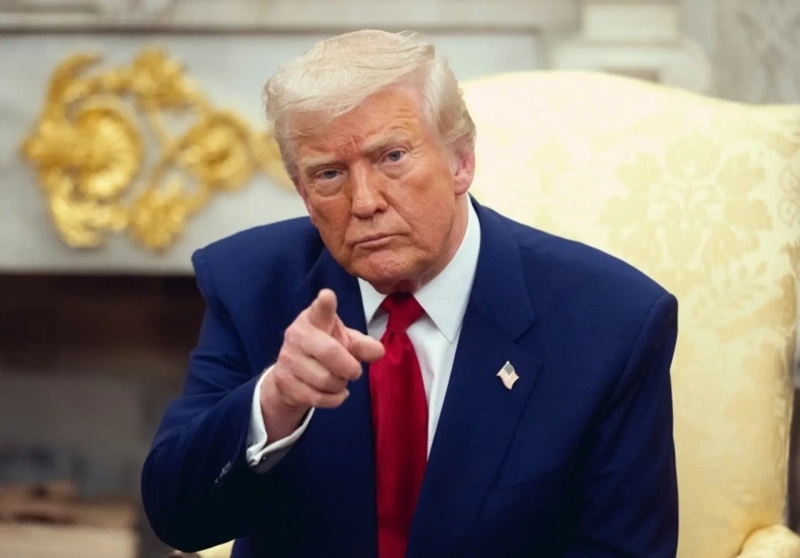
President Donald Trump plans to personally welcome Chinese President Xi Jinping when he arrives in Washington on Sept. 23 for a US-China summit.
AFP and Politico reported on Sept. 17 that Trump will greet Xi at Joint Base Andrews near Washington at about 4 p.m. on Sept. 23. Politico said it would be the first time in Trump’s second term that he has welcomed a foreign leader at the airport, describing the move as part of a courtship effort. Trump typically receives visiting leaders at the entrance to the Oval Office.
Bilateral and Expanded Talks Set for Sept. 24
Xi, for his part, sent Vice President Han Zheng to the airport when Trump visited Beijing in May. China rolled out a red carpet and had children wave flags to greet the US president. Still, the decision to send Han, who ranked eighth in the Communist Party hierarchy, was widely seen as a subtle show of Xi’s pride.
At that meeting, Xi opened with a blunt warning that mishandling the Taiwan issue could lead to conflict between the two countries. He also stressed that Taiwan was China’s “core interest of core interests.” The two leaders agreed to build what they called a “constructive and strategically stable relationship” between the US and China. That was interpreted as a signal that Washington would respect Beijing’s red lines.
Trump’s plan to greet Xi at the airport shows he is still approaching the Chinese leader cautiously. One former senior US official said Xi wants to be seen as Trump’s equal and that an airport welcome would satisfy his desire to be treated as the leader of one of the two Group of Two powers.
The US has also postponed a plan to step up tariff pressure on China. Bloomberg reported on Sept. 17 that the Trump administration had originally planned to release a Section 301 report on overcapacity before the summit, but decided to delay it. The report was expected to include a proposal for an additional 7.5 percentage-point tariff on Chinese goods.
The main talks between the two leaders will take place on Sept. 24. They are scheduled to hold a bilateral meeting at the White House, followed by an expanded session with cabinet officials and other senior aides present. Xi will return to Beijing on Sept. 25. Details of that day’s schedule, including his departure time, have not been disclosed.
Cooperation on Iran War Also on Agenda
Heading into the midterm elections, Trump is looking to secure several gains from the summit. If China visibly increases purchases of US agricultural products and lowers non-tariff barriers, that could help him politically. The leaders are also set to discuss extending the agreement reached at a US-China summit in Busan in October last year to pause the tariff war for another year. US Trade Representative Jamieson Greer said this month that the two countries would make several announcements on agriculture and non-tariff barriers.
China’s cooperation is also important to Trump on Iran. China is the largest importer of Iranian crude oil. Trump, who wants to pull back from the Iran war, is expected to ask Xi for help. Treasury Secretary Scott Bessent announced a policy of maximum economic pressure on Iran last month, but did not place Chinese banks under sanctions.
Artificial intelligence and Chinese investment in the US are also among the main agenda items. Trump has invited business leaders tied to AI, including Nvidia Chief Executive Officer Jensen Huang, to a state dinner on Sept. 24. Chinese business executives are also expected to visit, though no names have been released. Trump had earlier struck a conciliatory note by saying he might allow Chinese automakers to invest in the US.
There is also talk that the two sides could announce steps to strengthen military ties. Hong Kong’s South China Morning Post reported on Sept. 17, citing sources, that options under review include resuming military arms-control talks between the two countries. The sides are discussing ways to activate more military communication channels and strengthen existing ones, the newspaper said. That view gained support after a commander-level meeting in Canada on Aug. 31 between Yang Zhibin, commander of China’s Eastern Theater Command, and Samuel Paparo, head of the US Indo-Pacific Command. It was the first such meeting in two years.
Attention Turns to Whether Trump Gives Ground on Taiwan
The question is what Trump may give up in return. Around Washington, there is concern that Taiwan could become part of the bargain. Trump has been using planned US arms sales to Taiwan worth as much as $14 billion as a negotiating chip with China. Those sales have remained on hold since May.
Reuters reported, citing Chinese sources, that Beijing wants Washington to go beyond saying it does not “support” Taiwan independence and publicly state that it “opposes” it. Reuters noted that such a step by Trump could unsettle allies across Asia and provoke backlash in Congress.
Many also believe the summit could end without a clear outcome. A former senior US official told reporters the previous day that China is uneasy with a US trade policy being pursued without clarity. In the short term, the only outcome to expect is a vague “truce,” the official said. Some in Washington believe the two leaders will hold a high-profile event and then agree to meet twice more, in November and December.
Separately, Kyodo News reported on Sept. 17 that Japanese Prime Minister Sanae Takaichi is seeking a bilateral meeting with Trump in New York on Sept. 22, the opening day of the United Nations General Assembly. The meeting is intended to convey Japan’s position before Trump meets Xi and to coordinate the two countries’ China policy, Kyodo said.
Lee Sang-eun, Washington correspondent selee@hankyung.com

Korea Economic Daily
hankyung@bloomingbit.ioThe Korea Economic Daily Global is a digital media where latest news on Korean companies, industries, and financial markets.