Trump-Xi Tariff Truce Extension in Focus as Global Markets Brace for Diplomatic Superweek
Summary
- The article said the US-China summit could sway global stock markets as the two sides discuss an extension of the tariff truce, imports of US farm goods, a resumption of rare-earth supplies, and the creation of a trade committee.
- It said related stocks could react immediately if Trump comments on allowing Chinese automakers to build factories in the US or if the possibility of US investment by Chinese auto and battery companies such as BYD is raised.
- It said progress in Iran talks, including the reopening of the Strait of Hormuz and the lifting of the blockade on Iranian ports, could become a major driver for oil prices, stock markets, and US Treasury yields.
Forecast Trend Report by Period


US-China Summit, Iran Talks Drive ‘Diplomatic Superweek’
Farm Goods, Autos at Center of Negotiations
Oil Could Swing if Iran Talks Falter
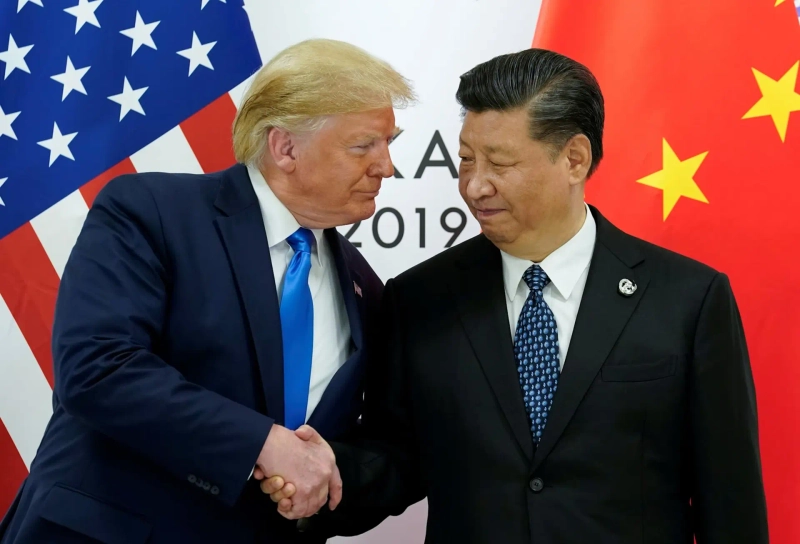
Global developments are set to move at a breakneck pace even during South Korea’s Chuseok holiday. President Donald Trump and Chinese President Xi Jinping will hold a summit in Washington from Sept. 23 for three days. In New York, the United Nations General Assembly will discuss artificial intelligence regulations through Sept. 28.
The Trump-Xi summit is the most closely watched event of the holiday period. Key agenda items include a possible extension of the tariff truce, renewed Chinese imports of US agricultural products, a resumption of rare-earth supplies and the creation of a trade committee. Auto-related shares could react immediately if Trump signals he would allow Chinese carmakers to build factories in the US.
Negotiations tied to the Iran war are another potential market mover. Trump administration officials, including Middle East envoy Steve Witkoff, held three hours of talks with Iran’s leadership. A senior Iranian official earlier told Reuters that Tehran could reopen the Strait of Hormuz within seven days if the US eases military pressure and lifts its blockade of Iranian ports. Visible progress on those fronts could send oil prices lower and push stocks higher.
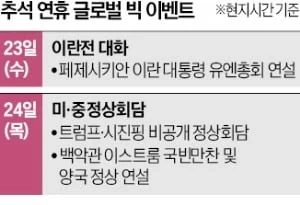
Key Issues in Diplomatic Superweek
The US-China summit in Washington, which begins on Sept. 23 and runs for three days, is the biggest event this week for global equity markets. Investors are poised to scrutinize every comment, from the bilateral meetings to the state dinner.
Particular attention is on the corporate executives set to attend the state dinner on Sept. 24. The US side is expected to include Amazon founder Jeff Bezos, Tesla Chief Executive Officer Elon Musk, Microsoft CEO Sundar Pichai, Dell Technologies CEO Michael Dell, Nvidia CEO Jensen Huang and OpenAI CEO Sam Altman.
Whether Xi will be accompanied by Chinese business leaders remains unclear. If executives from Chinese auto and battery companies such as BYD attend, markets could read that as a sign of potential Chinese investment in the US, with related shares likely to move.
If Beijing again leaves out major corporate leaders, as it did at the summit in Beijing in May, that could be interpreted as a sign that the two countries have little interest in economic cooperation or in coordinating on artificial intelligence regulation.
Another key question is how much progress the two sides make in tariff negotiations. Jamieson Greer, the US Trade Representative, has said a “grand bargain” is unlikely, helping keep market expectations in check.
Markets could face a major jolt if the two countries remain divided over rare earths, critical minerals and agricultural trade, and show signs of sliding back into a tariff war. Inflation concerns could then intensify, sending US Treasury yields sharply higher again after they fell back from 5%.
Trump, who faces midterm elections, also wants to avoid getting drawn deeper into the Iran war. Iranian leaders, including President Masoud Pezeshkian, met for three hours on Sept. 22 at the UN General Assembly with Steve Witkoff, the Middle East envoy, and Jared Kushner, Trump’s eldest son-in-law.
Trump said he expects progress in the negotiations after the US midterm elections. Any positive signal on reopening the Strait of Hormuz could stabilize oil prices and support equities.
Clashes between Houthi rebels and Saudi Arabia, along with whether Ukraine continues attacks on Russian refining facilities, are also key variables for oil prices and stock markets.
Lee Sang-eun, Washington correspondent selee@hankyung.com

Korea Economic Daily
hankyung@bloomingbit.ioThe Korea Economic Daily Global is a digital media where latest news on Korean companies, industries, and financial markets.