‘This Isn’t the Time for a Bonus Party at Samsung’: Stark Warning Drawn From Elpida’s Collapse [Kang Kyung-ju’s TechX]
Summary
- Japan’s Elpida went bankrupt in 2012 with 448 billion yen in debt after relying on PC DRAM and avoiding investment.
- Experts said preemptive investment and diversifying product portfolios become even more important during a semiconductor down cycle.
- An industry veteran said that if companies neglect preparing for a downturn during the HBM boom, they could eventually be overtaken by China.
Forecast Trend Report by Period


Japan’s Elpida went bankrupt in 2012 with 448 billion yen in debt
It cut investment and stayed reliant on PC DRAM, missing the shift to mobile
“If the industry fails to prepare for a slump during the HBM boom, China will overtake it”
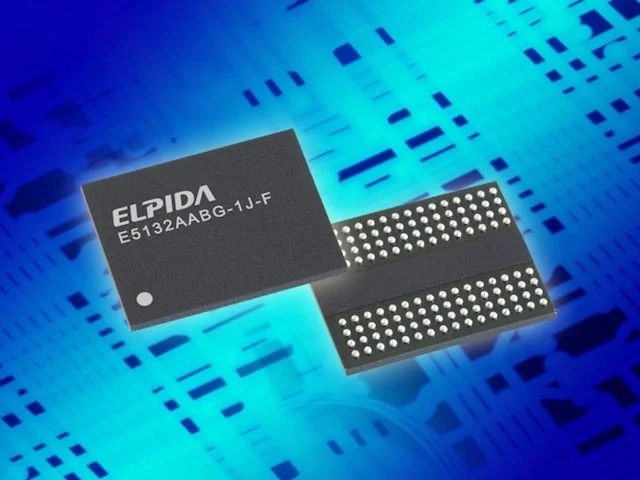
Semiconductor executives and employees have increasingly been revisiting the rise and fall of the memory-chip industry in the 2000s. A case cited repeatedly is Japan’s Elpida, then one of the world’s top three DRAM makers, which went bankrupt after failing to withstand a down cycle. The comparison is being invoked as a warning for South Korea’s chip industry, where the current boom in high-bandwidth memory, or HBM, is underscoring the importance of investment and technological competitiveness needed to survive the next downturn.
As of Sept. 26, industry officials said Japan decided to rebuild its semiconductor competitiveness after losing ground to South Korea and Taiwan in the 1990s. It combined the DRAM operations of Toshiba, Hitachi and NEC to launch Elpida in 1999. At the time, Elpida ranked among the world’s top three DRAM makers and remained competitive in commodity DRAM for servers and graphics applications as well as in advanced process technology.
In 2003, Elpida also acquired Mitsubishi’s DRAM business. It listed on the Tokyo Stock Exchange the following year. In 2006, it expanded further by setting up backend-processing subsidiary Akita Elpida. The company remained profitable, and some in the industry even said its technology was not inferior to Samsung Electronics.
Elpida’s decline began in 2007, when the semiconductor industry entered a down cycle in a boom-and-bust pattern that typically repeats every three to four years. The company posted its first quarterly loss in the second quarter of 2007. In 2008, the Lehman Brothers collapse drove it to a full-year loss of 177.9 billion yen. Japan’s government provided 30 billion yen in public funds in 2009, and creditor banks injected another 100 billion yen.
That outside support helped Elpida briefly return to profit in 2009 and 2010. But another drop in DRAM prices in 2011 pushed the company to the brink. Earnings deteriorated so sharply that it struggled even to repay its borrowings. In February 2012, Elpida filed for bankruptcy protection. Its debt had swollen to about 448 billion yen, equivalent to roughly $4.7 billion at the exchange rate at the time.
The global semiconductor cycle in 2011, just before Elpida’s bankruptcy, was one of the worst on record. After the 2008 global financial crisis, PC demand dropped sharply. Average selling prices for DRAM plunged from about $3 in 2008 to less than $0.50 by the end of 2011. Elpida was hit head-on by that down cycle.
Its product mix proved especially damaging. The mid-2000s marked the start of smartphones moving into the mainstream, yet Elpida remained heavily exposed to PC DRAM. It failed to read the market shift, lacked a mobile DRAM strategy and could not reduce its reliance on commodity DRAM. Technology development continued, but it did not lead to large-scale mass production or a broader customer base. Worried about worsening results, Elpida avoided major investment.
Experts also cite policy failure as another major cause of Elpida’s collapse. In the late 2000s, the company pursued a shift to 50-nanometer and 40-nanometer processes, but relied mostly on debt to finance that investment. After the financial crisis, Japanese banks cut exposure to risky assets. Elpida’s funding costs rose sharply, and a stronger yen compounded the pressure, crushing profitability.
Japan’s government did step in, but the structure of the support was the problem. Most aid came in the form of short-term working capital and guarantees. It amounted to emergency funding rather than capital designed to help the company survive a downturn. One industry official said semiconductor cycles typically repeat every four years, but support for Elpida was managed on a quarterly basis. In effect, the state took too short-term a view of a strategic industry.
At the time, the Sankei Shimbun wrote that Elpida’s managerial collapse had completely derailed the Japanese government’s effort to revive the country’s semiconductor industry to its glory days and compete against South Korea. Another industry official said the DRAM business is an ultra-capital-intensive industry. To stay one generation ahead, preemptive investment worth tens of trillions of won is essential, and it becomes even more important during a downturn.
Since Elpida’s bankruptcy, Japan’s government has treated a semiconductor revival as one of the biggest tasks in overcoming the country’s “lost 30 years.” At the center of that effort is Rapidus, a foundry venture established in 2022 through joint investment by eight major Japanese companies: Toyota, Sony, Kioxia, NTT, SoftBank, NEC, Denso and Mitsubishi UFJ Bank. Japan’s Ministry of Economy, Trade and Industry has described Rapidus as the country’s most important advanced-industry project since the Meiji era and has backed it with large-scale subsidies, equity investment and debt guarantees.
Rapidus aims to move beyond the roughly 40-nanometer level where Japan’s existing chipmakers have stagnated, secure cutting-edge foundry technology below 2 nanometers and begin mass production in 2027. To that end, Japan has put about 1.7 trillion yen into Rapidus so far, equivalent to roughly $12 billion. It plans to provide additional support, including statutory debt guarantees, bringing total funding to about 2.9 trillion yen, or roughly $19.8 billion.
Japan has also formalized an unprecedented policy to provide more than 10 trillion yen in public funds to the AI and semiconductor sectors by 2030, equivalent to about $65.2 billion. Unlike the short-term support Elpida received, the policy makes clear that Tokyo now sees semiconductors as central to economic security.
Samsung Electronics, unlike Elpida, continued heavy research-and-development spending even during semiconductor down cycles. Late Chairman Lee Kun-hee pushed for more investment despite opposition from finance executives. His bet was that even in the worst market conditions, moving to finer process technology and expanding production capacity would allow Samsung to seize the initiative in the next cycle.
Samsung also lowered costs through process migration, and its NAND flash and smartphone businesses gave it a buffer against deteriorating market conditions. The day after Elpida filed for bankruptcy protection, the Yomiuri Shimbun wrote that one of Japan’s signature semiconductor companies had lost to an emerging powerhouse, Samsung Electronics, because it had neglected technology development.
A former Samsung executive said Elpida’s bankruptcy comes to mind when he looks at Samsung’s current management, employees and labor union. He said the company should ask itself whether it has become too focused on performance and compensation, as if the current memory boom will last forever, and whether it is truly preparing for the next down cycle.
Memory prices can turn down at any time, and alternatives can emerge suddenly, he said. If the industry fails to prepare for a downturn during a boom, China will inevitably overtake it. Had late Chairman Lee seen Samsung as it is now, he would have delivered a severe rebuke, the former executive added.
Kang Kyung-ju, Hankyung.com reporter memory@hankyung.com

Korea Economic Daily
hankyung@bloomingbit.ioThe Korea Economic Daily Global is a digital media where latest news on Korean companies, industries, and financial markets.