‘Don’t Shy Away From Being the Bad Cop’: Lee Hyeong-il Faces Test as South Korea’s Economic Point Man
Summary
- Officials in government circles said Deputy Prime Minister Lee Hyeong-il will now need to serve as the real economic commander.
- They said the conditions for leading the economic team are far from easy because of the split in budget authority, tensions with the budget office and a clash over the sovereign wealth fund contribution budget.
- They said controversy over the effectiveness of the tougher property-tax policy Lee helped design, along with the weakening organizational capacity of the finance ministry, is being cited as a drag on policy momentum.
Forecast Trend Report by Period


With Kim Yong-beom Gone, Lee Must Become the Economic Team’s Real Commander
Coordinating Ministries and Policies Will Test His Flexibility
Restoring the Finance Ministry’s Organizational Clout After Losing Budget Authority Is Also a Task
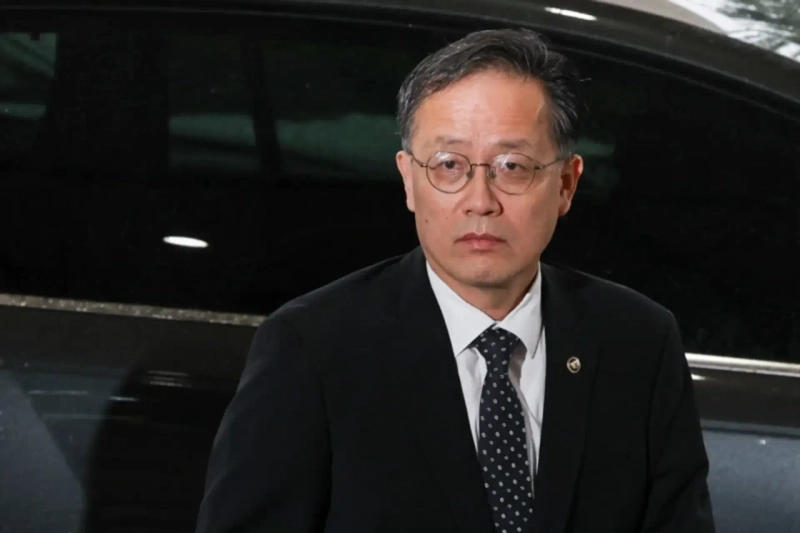
“There’s no situation in which he loses his temper.”
“He’s one of those rare civil servants with both exceptional ability and character.”
It is hard to find anyone who speaks ill of Deputy Prime Minister Lee Hyeong-il, who also serves as finance minister. That is the consistent view among officials who worked with him at the Ministry of Finance and Economy, the former Ministry of Planning and Budget, and the National Data Agency, formerly Statistics Korea. Having served as assistant minister at the finance ministry under both the Moon Jae-in and Yoon Suk Yeol administrations, Lee was also selected three times by staff as the superior they most wanted to emulate.
He has clear strengths as a policy aide. But he has yet to prove himself as a commander who can resolve inter-ministerial clashes and relay dissenting views to the president. A deputy prime minister sometimes cannot avoid playing the bad cop. Lee’s leadership, shaped by his reputation as a mild-mannered policy official, is now facing its first real test.
President Lee Jae-myung, who is visiting the US to attend the United Nations General Assembly, approved Lee’s appointment on Sept. 22. In government circles, there is a growing view that Lee must now serve as the country’s real economic commander. The broad assessment has been that Kim Yong-beom, the former presidential chief of policy, had been the administration’s de facto economic czar.
With former Deputy Prime Minister Koo Yun-cheol playing a relatively limited role, Kim oversaw policy design and coordination among ministries. Lee, then a vice minister, and Lim Ki-geun, now head of the Office for Government Policy Coordination, worked closely with Kim to draw up implementation plans.
In and around government, some expect Kim’s successor as policy chief to come from the social-policy bureaucracy, where the pace of reform has been slower. That would leave the policy chief overseeing social policy and the deputy prime minister in charge of economic policy.
Even so, the conditions for leading the economic team are far from easy. The budget office and the Ministry of SMEs and Startups are both led by former politicians. Industry Minister Kim Jeong-kwan and Financial Services Commission Chairman Lee Eok-won are, respectively, Lee’s civil-service classmate and senior. That has raised doubts about whether he can reconcile their differences as well. Inside the budget office, some officials have kept their distance from the finance ministry’s authority, saying they are not part of the economic ministries but a coordinating body under the prime minister’s office. A dispute between the two ministries over next year’s budget for capital contributions to the sovereign wealth fund highlighted those tensions.
Public criticism of economic policy is also a burden for Lee. Many point to economic policy, including housing measures, as a main reason for President Lee’s recent decline in approval ratings. A tougher property-tax policy that Lee helped design as vice minister has drawn criticism because its effect on stabilizing home prices remains unclear. Critics say he needs to review both the effectiveness and side effects of policies he designed himself and present revisions to the president.
There is also a view inside government that aides find it difficult to speak candidly. Officials describe President Lee as deeply familiar with issues in each ministry and meticulous enough to catch even small numerical errors in reports. As a result, aides focus less on debating policy direction and more on answering the president’s questions flawlessly and carrying out his instructions.
Some officials say the finance ministry’s organizational capacity is no longer what it once was. The separation of budget authority has left it with fewer tools to move other ministries, even though it still bears overall responsibility for economic policy. That shift is also visible in staffing. Within the ministry, departments under the assistant minister are increasingly seen as undesirable postings because promotion bottlenecks are severe, workloads are heavy and authority is perceived as weak.
The role of the policy coordination bureau, which mediates differences among ministries, is also seen as diminished. Unless those departments can attract strong personnel, the deputy prime minister’s ability to drive policy will inevitably weaken. Reflecting their performance in promotions and assignments to revive the organization is another task Lee will have to address.
Kim Ik-hwan, Hankyung.com reporter lovepen@hankyung.com

Korea Economic Daily
hankyung@bloomingbit.ioThe Korea Economic Daily Global is a digital media where latest news on Korean companies, industries, and financial markets.