China, Taiwan Gain as South Korea and Japan Focus on High-End AI MLCCs
Summary
- Demand for AI MLCCs is surging on the back of the AI infrastructure investment boom, leading to shortages and higher ASPs.
- Samsung Electro-Mechanics and Murata are focusing on high-value AI MLCCs, leaving commodity MLCC supply capacity increasingly tight.
- Chinese and Taiwanese companies, including Taiwan’s Yageo and Walsin and China’s Viiyong, are poised to benefit in commodity MLCCs through rising orders and revenue.
Forecast Trend Report by Period


AI MLCCs in Short Supply
Samsung Electro-Mechanics, Murata Cut Back Commodity Products
Taiwan’s Yageo, Walsin Move Into the Gap
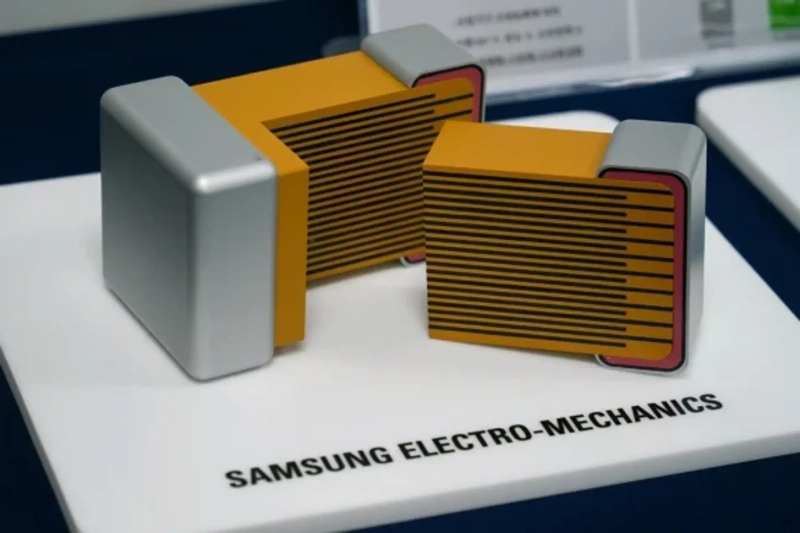
A boom in artificial intelligence infrastructure spending is splitting the multilayer ceramic capacitor, or MLCC, market in two. Leading suppliers such as Samsung Electro-Mechanics and Japan’s Murata Manufacturing are focusing on high-value MLCCs for AI applications, opening gaps in the commodity MLCC market that Chinese and Taiwanese rivals are moving to fill. The pattern echoes developments in memory chips, where Samsung Electronics and SK Hynix have prioritized high-bandwidth memory, tightening supply of commodity DRAM and pushing up prices while China’s ChangXin Memory Technologies, or CXMT, benefited.
Murata, the world’s largest MLCC maker, recently told customers it would begin discontinuing some commodity MLCCs used in information-technology equipment as well as some automotive MLCCs, according to industry officials on September 25. The move suggests the company has started reducing lower-margin commodity MLCC production to focus on AI products. Demand for AI MLCCs has surged amid the AI infrastructure investment boom, leading to shortages.
MLCCs are key components that store electricity and supply it stably when needed. They are used in most electronic products, including smartphones, televisions and automobiles, earning the nickname the rice of the electronics industry. MLCCs for AI servers require more advanced technology because AI semiconductors such as graphics processing units and high-bandwidth memory process large amounts of power and must operate under high-temperature, high-voltage conditions.
That has left only a small group of suppliers with an established position in the AI-server MLCC market. Murata and Samsung Electro-Mechanics are the leading players. Samsung Electro-Mechanics holds a 40% share of the AI-server MLCC market, and the two companies together are estimated to control nearly 90%.
AI MLCCs are highly profitable. Demand has jumped on the back of the AI data-center investment boom, but the small number of suppliers has created a seller’s market. Suppliers can be selective in taking orders on favorable terms, pushing up average selling prices. Samsung Electro-Mechanics said in its half-year report that first-half MLCC ASP rose 13.9% from a year earlier.
Shortages have persisted in recent months. Samsung Electro-Mechanics is running its MLCC lines at utilization in the high-90% range, close to full capacity. Murata is in a similar position, industry officials said. Major suppliers have started adding capacity, but the industry cannot sharply raise supply in the short term.
AI MLCCs require far more material than commodity MLCCs. To store larger amounts of electricity, ceramic dielectric layers must be stacked much more densely within a limited size. Industry officials say AI MLCCs have roughly 10 times as many layers as commodity products. That means when manufacturers such as Samsung Electro-Mechanics raise AI output within fixed production capacity, their ability to make commodity products declines by the same amount.
Orders from commodity MLCC customers that Murata and Samsung Electro-Mechanics can no longer take are increasingly flowing to companies in Taiwan and China. Those suppliers do not yet have the technology to make high-specification AI MLCCs like those produced by Samsung Electro-Mechanics and Murata, but they do have capacity for commodity MLCC production.
TrendForce said production capacity for X5R, a commodity MLCC, is becoming severely constrained as South Korean and Japanese companies shift capacity from X5R to AI products. Taiwan’s Yageo and Walsin Technology, along with China’s Viiyong, stand to benefit in the third quarter from rising X5R demand, it said.
Walsin Technology President Tseng Ming-chan recently told Taiwan’s Economic Daily News that some major global suppliers were cutting part of their MLCC production capacity for consumer electronics and other suppliers were taking on the transferred orders. Walsin Technology has also seen a sharp increase in MLCC orders recently, leaving it unable to ship on time.
Yageo recently said its August revenue rose 51.8% from a year earlier to T$16.332 billion, or about $510 million, a monthly record. Growth came across all products, including commodity items, the company said. It also projected third-quarter factory utilization would exceed 90%.
DB Financial Investment said switching barriers for IT MLCC suppliers are relatively low, and Murata’s production halt could quickly shift volumes to Chinese and Taiwanese suppliers. Meritz Securities said supply shortages and price increases are likely to spread across the broader commodity MLCC market.
Roh Yoo-jung, Hankyung.com reporter yjroh@hankyung.com

Korea Economic Daily
hankyung@bloomingbit.ioThe Korea Economic Daily Global is a digital media where latest news on Korean companies, industries, and financial markets.