Xi, Trump Extend US-China Trade Truce by Two Months, Choose Management Over Confrontation
Forecast Trend Report by Period


Xi, Trump extend truce amid strategic rivalry
Trade compromise reached, Taiwan and semiconductors still deadlocked
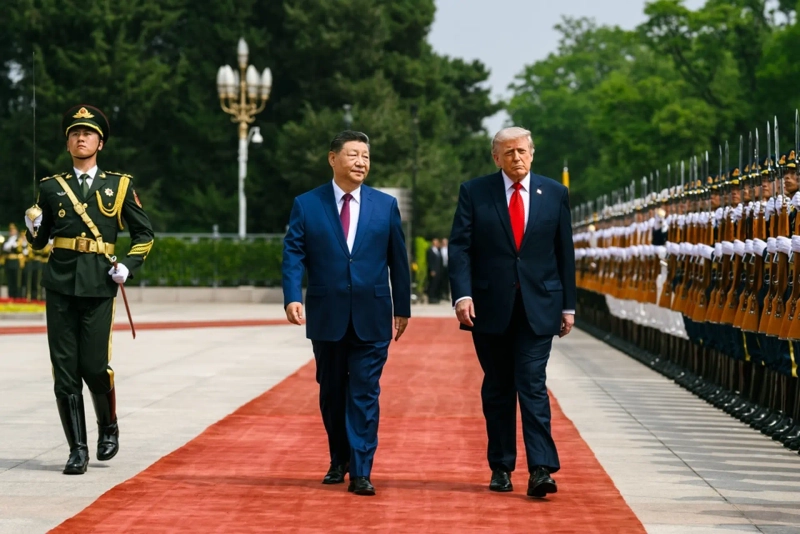
Chinese President Xi Jinping and US President Donald Trump agreed at a summit in Washington to extend the US-China trade truce by two months. But the talks ended without a clear breakthrough on core issues including Taiwan, artificial intelligence and advanced semiconductors.
The two sides set a minimum guardrail to avoid direct confrontation. Even so, the meeting stopped short of a big deal that could alter the broader landscape of US-China strategic competition, ending instead with a smaller agreement focused on managing the status quo.
US-China trade truce extended until Jan. 10
According to statements released by China’s Foreign Ministry and the US government on September 26, the two leaders met at the White House on September 24 and discussed trade, AI, Taiwan, the war in Ukraine, the Middle East and the Korean Peninsula.
Xi’s state visit to the US was his first in 11 years. Trump called the meeting very productive for both countries. Xi said the two countries’ economic and trade negotiating teams had recently reached a new joint agreement.
The most concrete outcome came in trade. The two sides agreed to extend their existing trade truce, previously set to expire on November 10, by two months to January 10.
The agreement also raised the likelihood that the two countries will flesh out a so-called trade committee framework to lower tariffs on goods not directly related to national security.
US Trade Representative Jamieson Greer said the two sides had reached a partial understanding on managed trade and would disclose the specific product categories and details of the agreement on September 28. Agricultural products, medical devices and consumer goods were among the items under discussion.
Still, there was no sign of progress on export controls for advanced AI semiconductors, a central front in the US-China technology rivalry. Greer said export controls on advanced semiconductor shipments to China were barely discussed in the latest trade talks.
China’s Foreign Ministry said the two sides agreed to expand dialogue and cooperation in AI. It did not disclose any details related to easing US restrictions on advanced semiconductor exports to China. That left strategic competition over core technologies unchanged even as some trade friction was shifted into a more manageable area.
Taiwan and AI chips remain unresolved
Xi raised Taiwan as a central issue at the meeting. According to China’s Foreign Ministry, Xi told Trump that the US should maintain what China called the correct position of opposing Taiwan independence and handle the Taiwan issue prudently.
China described that stance as the foundation for strategic cooperation and for the development of bilateral ties. In its summary of the summit, the White House did not disclose any specific remarks by Trump on Taiwan or any separate agreement on the issue.
Throughout the visit, Xi emphasized a constructive and strategically stable relationship. China described that as a new principle for managing ties that the two leaders had presented during Trump’s visit to China in May.
Xi said cooperation should remain at the center, competition should be kept at an appropriate level and differences should be managed. At the summit, Trump said the two countries should keep economic and trade talks going and work toward a better agreement.
The two leaders also agreed to maintain direct communication. Xi and Trump are due to meet again at the Asia-Pacific Economic Cooperation summit in Shenzhen in November and at the Group of 20 summit in Miami in December. China’s Foreign Ministry said the two sides also agreed to support each other’s hosting of the APEC and G20 meetings.
The summit produced no broad agreement capable of resolving structural conflicts over Taiwan and advanced technology. Instead, it put in place mechanisms to reduce the risk of confrontation over tariffs and other non-sensitive goods while keeping leader-level dialogue open.
Experts say the two countries are building a framework for managing ties, expanding limited economic deals while continuing to compete in security and advanced technology as their broader rivalry drags on.
Kim Eun-jung, Beijing correspondent, Korea Economic Daily, kej@hankyung.com

Korea Economic Daily
hankyung@bloomingbit.ioThe Korea Economic Daily Global is a digital media where latest news on Korean companies, industries, and financial markets.