Joseph Lubin Says ‘All Roads Lead to Ethereum’ at EastPoint: Seoul 2026
Summary
- Joseph Lubin said the expansion of the Ethereum (ETH) ecosystem could ultimately make it a neutral payments and settlement system, and that all roads will eventually lead to Ethereum.
- Lubin said that as more companies move on-chain, holding Ethereum as both a digital asset and a collateral asset could become a driver for using a broad range of applications in the future.
- Chief Executive Officer Joseph Chalom said digital asset treasury companies (DATs) could pursue returns and accelerate ecosystem growth through long-term Ethereum holdings, staking, DeFi, asset tokenization, and the spread of AI agents.
Forecast Trend Report by Period


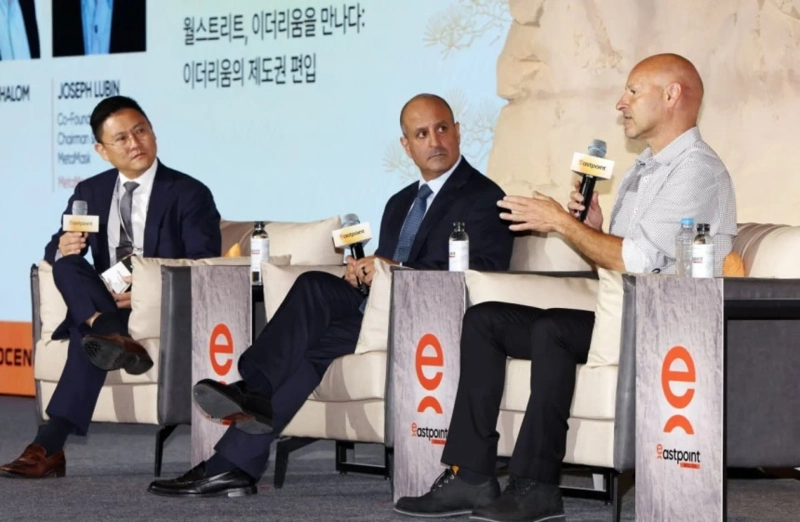
“The Ethereum ecosystem could ultimately establish itself as a neutral payments and settlement system as it expands. Going forward, all roads will run through Ethereum.”
Joseph Lubin, co-founder of Ethereum and Consensys, made the remarks on Sept. 28 at EastPoint: Seoul 2026, held at the Westin Seoul Parnas in Seoul’s Samseong-dong.
Lubin described Ethereum not simply as a digital asset or blockchain network, but as a new “trust infrastructure.” He called Ethereum “a fundamentally new architecture,” adding that if trust is treated as a product, it can create more value and reduce risk.
He cited “credible neutrality” as Ethereum’s core competitive advantage over other blockchains. While the market now includes a range of Layer 1 networks, Lubin said it is difficult to find a protocol other than Ethereum that offers credible neutrality. Nearly everything is already collaborating with Ethereum, he added, and the ecosystem’s development will ultimately mean that all roads lead to Ethereum.
Lubin also said Ethereum’s role will expand as institutions and companies move on-chain in earnest. In that environment, holding Ethereum as both a digital asset and a collateral asset could become a driver for using a broad range of applications in the future.
He also underscored the role of digital asset treasury companies, or DATs. Referring to how web-related companies supported startup growth in the early internet era, Lubin said treasury companies such as SharpLink could help support the ecosystem’s growth as Ethereum moves into the mainstream.
Joseph Chalom, SharpLink’s chief executive officer, who appeared on the panel alongside Lubin, said treasury companies have an advantage in being able to hold Ethereum for the long term while seeking returns through staking and decentralized finance, or DeFi. SharpLink is the second-largest Ethereum DAT. Companies that build an Ethereum treasury can hold the token as a permanent asset while pursuing returns through staking and DeFi, Chalom said, adding that they can remain invested for years while participating in the ecosystem.
Chalom also pointed to asset tokenization and the spread of artificial intelligence agents as factors that could accelerate growth in the Ethereum ecosystem. Citing BlackRock Chief Executive Officer Larry Fink’s view that all assets will be tokenized, along with related policy shifts by the U.S. Securities and Exchange Commission, he said the future in which everything is tokenized is clear.
Once assets are tokenized, agents will take on many roles, Chalom said. For those agents to operate, they will need reliable, high-quality infrastructure, and Ethereum can serve that role, he added.
Chalom also expressed strong interest in South Korea’s digital-asset market. South Korea is clearly a hub for digital assets, he said, and because stablecoins, tokenization and DeFi are all closely tied to AI agents, regulators also need to prepare for agent-based finance.
Lubin struck a similar note. South Korea is one of the countries at the forefront of digital assets, he said, and he is watching with interest how the country will embrace agents going forward.
Kim Jin-seong, reporter / Jin Uk, Bloomingbit reporter

Korea Economic Daily
hankyung@bloomingbit.ioThe Korea Economic Daily Global is a digital media where latest news on Korean companies, industries, and financial markets.