Arthur Hayes Says Robinhood’s Choice of Ethereum for Security Layer Could Drive Ether to $5,000 at EastPoint: Seoul 2026
Forecast Trend Report by Period


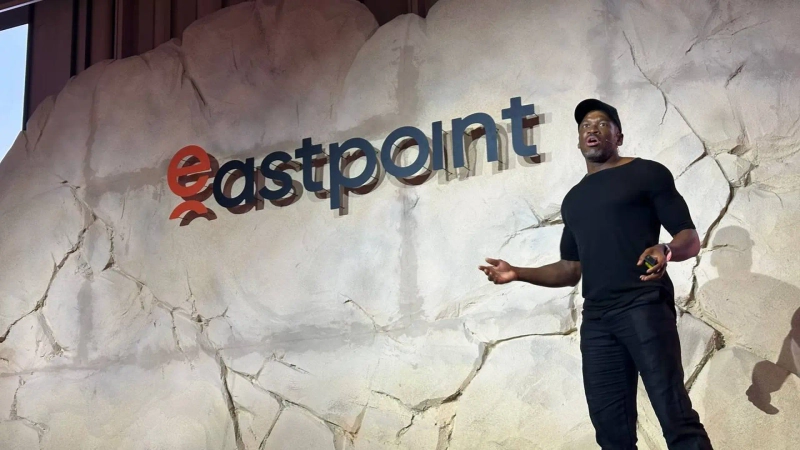
"Robinhood chose Ethereum as the security layer for its own blockchain. Robinhood has started a new narrative for Ethereum."
Arthur Hayes, chief executive of Flop Labs and chief investment officer of Maelstrom, made the remarks on Sept. 28 at the Web3 private conference EastPoint: Seoul 2026, held at the Westin Seoul Parnas in Seoul’s Gangnam district.
Hayes again stressed Ethereum’s security. Robinhood, one of the world’s largest retail financial platforms, chose Ethereum as the security layer for its new tokenization platform, he said, adding that the decision makes it much easier for other institutions to argue internally that they should use Ethereum as well.
He said Robinhood’s shift would make it easier for other large institutions to choose Ethereum as a base layer. That narrative, he said, could lift Ether to about $5,000 within roughly a year, implying nearly a doubling from the current level of about $2,650.
Hayes also discussed Ethena, the issuer of the USDe stablecoin. He said USDe expanded rapidly and became one of the largest stablecoins by circulating supply, but the Ethena token price fell because Bitcoin basis yields declined.
If investors cannot earn sufficient yield, there is little reason to hold USDe while taking crypto risk, he said.
Still, Hayes said the near-term outlook is not bleak. Bitcoin has recently risen quickly from $60,000 to $85,000, and basis yields are climbing again. That means the gap between yields available through Ethena and yields on U.S. Treasuries is widening.
He added that USDe supply, after contracting, is increasing again. If those two factors work together, they could create momentum to push the Ethena token, now around $0.27, to $1.
On decentralized exchange Uniswap, Hayes said the protocol is moving toward returning value to token investors through fees. Uniswap is using protocol revenue to buy back tokens and reduce supply, a mechanism similar to corporate share repurchases that is positive for token prices, he said.
He added that such token buybacks are taking place within the broader trend of rising on-chain assets. Uniswap is one of the core protocols used to execute on-chain transactions as institutions tokenize assets, he said.
Oh Yu-rim / Lee Jun-hyung, Bloomingbit reporter

Korea Economic Daily
hankyung@bloomingbit.ioThe Korea Economic Daily Global is a digital media where latest news on Korean companies, industries, and financial markets.