World Liberty Financial Says It Will Expand USD1 Real-World Use in South Korea With MOA Protocol, Linking MOA Card and DeFi [Coin Interview]
Summary
- World Liberty Financial said it plans to expand USD1 beyond exchange listings into real-world use cases including payments, DeFi, and medical tourism.
- World Liberty Financial and MOA Protocol said they will broaden USD1-based asset management and everyday payment use through the MOA Card and MOA-Fi.
- World Liberty Financial said it will use South Korea as the starting point for expansion into Asia after testing USD1 real-world use models in medical tourism and payments.
Forecast Trend Report by Period


Interview with Ryan Ballantyne, Chief Business Officer at World Liberty Financial
"USD1 to Expand Real-World Use Across Payments and DeFi"
Partnership With MOA on Cards and Medical Tourism
"South Korea Is the Starting Point for Expansion in Asia"
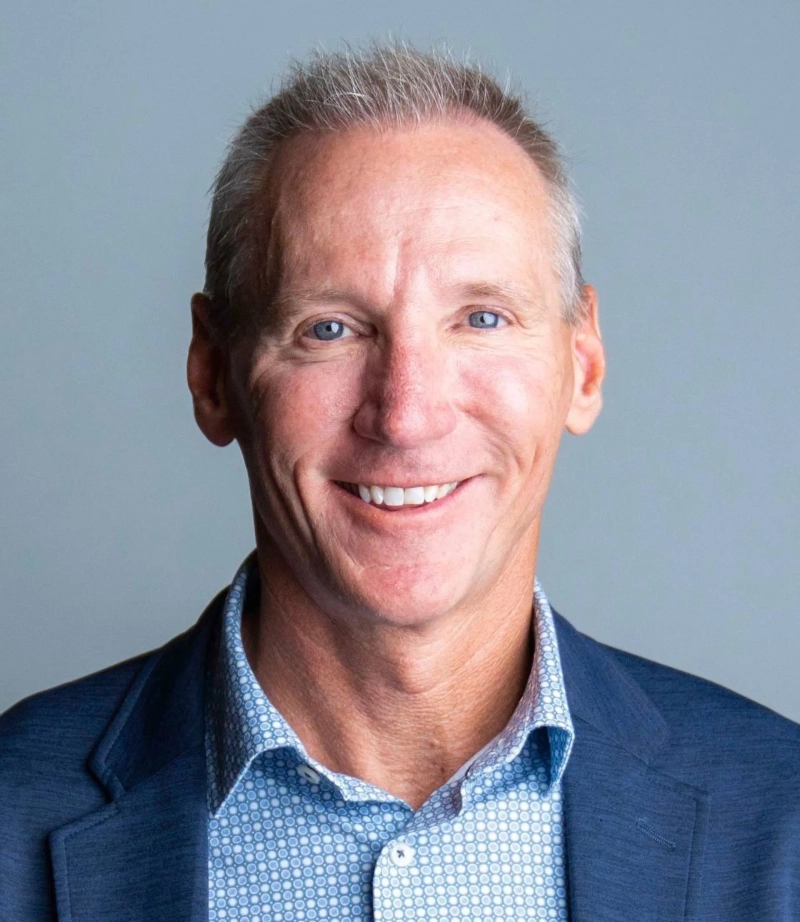
"We want to work with MOA Protocol so USD1 can be used in everyday services and expand into more real-world use cases. South Korea is a strong market for that, especially because it has many users who are comfortable with technology and digital assets. That makes it a good place to expand practical models in areas such as payments and medical services."
Ryan Ballantyne, chief business officer at World Liberty Financial, or WLFI, made the remarks in an interview with Bloomingbit on Oct. 7. He said the company aims to expand the use of its dollar stablecoin USD1 beyond exchange listings and liquidity provision into payments, decentralized finance, and medical tourism. The plan is to test those real-world use cases in South Korea before expanding them across Asia.
WLFI, whose key stakeholders include members of U.S. President Donald Trump's family, issues the USD1 stablecoin. In August, it received preliminary conditional approval from the Office of the Comptroller of the Currency for its application to establish a national trust bank to handle USD1 issuance and redemptions. WLFI is now focused on building distribution channels and use cases that allow USD1 to be used in actual services, beyond simply securing access and liquidity.
As part of that strategy, WLFI recently entered into a strategic partnership with MOA Protocol. Ballantyne said listings on major crypto exchanges make USD1 accessible, but do not by themselves translate into real-world usage. For USD1 to function as financial infrastructure, it also needs applications and distribution channels that users can access in practice.
Ballantyne compared USD1 to the PC industry's "Intel Inside." Just as Intel chips were not always visible in finished products but powered personal computers at their core, USD1 can serve as the foundation supporting a range of financial and payment services.
"USD1 to Move Beyond Holding Into Real Use Cases" as MOA Links DeFi and Payments
The two companies plan to work together to broaden USD1's role in real financial services, including DeFi asset management and payments through the MOA Card.
Ballantyne cited MOA Protocol's technology and distribution network as key reasons for the partnership. He said the company had demonstrated technical maturity by building a multichain USD1 market. Its partnerships in areas including the MOA Card and medical tourism also provide a base for expanding real-world use cases and distribution channels.
In DeFi, a USD1 market is already operating on MOA Protocol's asset-management service, MOA-Fi. MOA-Fi connects stablecoins held across different blockchain networks and gives users access to on-chain asset-management products. Users can deposit USDT on three networks — BNB Chain, Tron, and Ethereum — and use USD1-based asset-management services.
In payments, the companies plan to deepen integration with the MOA Card. The card service is designed to connect users' digital assets with everyday spending. MOA plans to expand features this year that allow digital assets including USD1 to be linked to the MOA Card for real-world payments.
"South Korea Is the Starting Point for Asia Expansion" as Medical Tourism and Payments Test Real-World Demand
World Liberty Financial sees South Korea as a key market for testing USD1's real-world viability and gauging demand across Asia.
Medical tourism has emerged as a new focus in the partnership. Ballantyne said it was not an application the company had initially anticipated, but research showed South Korea's medical tourism market is worth about $2 billion a year. MOA Protocol recently signed a memorandum of understanding with the Korea Medical Tourism Promotion Association and is seeking to expand related partnerships.
The idea is to let overseas visitors pay for medical services in South Korea by linking digital assets including USD1 to the MOA Card, while also receiving partner benefits. The companies plan to test USD1's potential at points of real consumer spending, including hospitals and medical institutions, and later expand a model combining payments and partner benefits into other everyday services.
WLFI believes the real-world model it tests in South Korea can be expanded into other Asian markets. Ballantyne said South Korean users are familiar with technology and comfortable with digital assets. If the model works in South Korea, it could be applied elsewhere in Asia. He added that South Korea is a useful starting point for assessing how other Asian markets may receive such services.
Ballantyne also said the two companies plan to work together on on- and off-ramp liquidity, local regulation and licensing, and payment structures to expand USD1 use through the MOA Card.
Kang Min-seung, Bloomingbit reporter minriver@bloomingbit.io

Minseung Kang
minriver@bloomingbit.ioBlockchain journalist | Writer of Trade Now & Altcoin Now, must-read content for investors.