Vance Says Alaska LNG Project Will Proceed Without South Korea; Seoul Reviews Economics
Summary
- U.S. Vice President JD Vance said the Alaska LNG project will be completed regardless of whether South Korea invests.
- The South Korean government said it will decide whether to invest in the Alaska LNG project only after reviewing its economic feasibility and commercial viability.
- Questions remain over the Alaska LNG project’s $54 billion price tag, its financing structure, ownership structure, and long-term purchase agreements.
Forecast Trend Report by Period


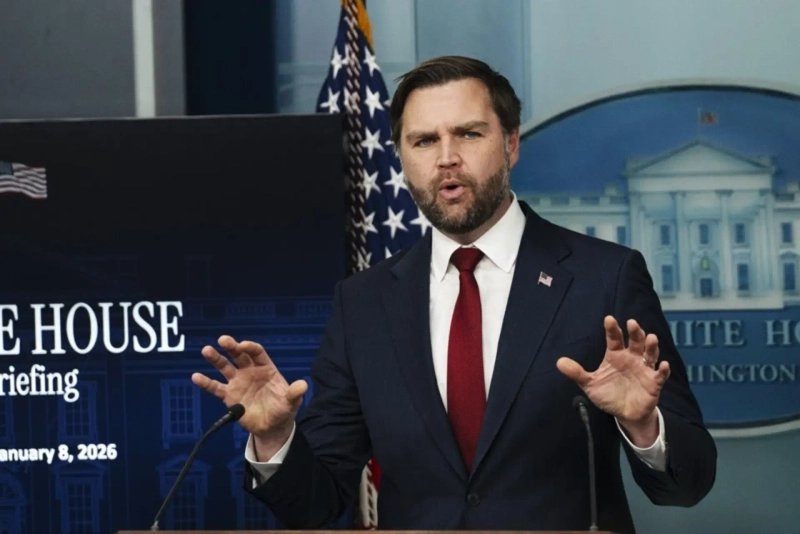
U.S. Vice President JD Vance said the Alaska liquefied natural gas project will move forward regardless of whether South Korea participates as an investor. While the U.S. says financing has been secured, the South Korean government maintains that it can decide on any investment only after reviewing the project’s economics.
Alaska News, a local U.S. broadcaster, reported on October 7 that Vance, in an interview, referred to South Korea’s political situation and said the project would be completed regardless. “Whether it is South Korea’s current government or next government, and whether we have to work with Japan or other countries, we will get this project done,” he said. The remarks underscored Washington’s determination to push ahead with the project and suggested potential cooperation with other countries while talks with South Korea remain unresolved.
Vance argued that Alaska natural gas is more competitive than gas from some authoritarian countries in terms of price, quality and reliability of supply. He acknowledged, however, that details still need to be coordinated with South Korea. He had also said on October 5 that further consultations were needed, marking a contrast with President Donald Trump, who had treated South Korea’s investment as a settled matter.
Trump said on September 30 that South Korea would invest $50 billion in the Alaska LNG project. In Alaska, the investment figure has also been described as $54 billion. That is roughly in line with the total pipeline construction cost estimated by local developers. South Korea’s government, however, has said neither the size of any investment nor participation in the project has been decided.
Seoul’s position is to assess the project’s strategic value separately from its economic viability. Lee Hyoung-il, nominee for deputy prime minister and finance minister, told the National Assembly that he would examine the project’s commercial viability. Industry Minister Kim Jung-kwan likewise said commercial reasonableness would be a condition for participation. The stance suggests that even if the Middle East war increases the need to diversify energy supply chains, the project’s economics must be verified first.
Even within the U.S., the investment structure has yet to be finalized. Senator Dan Sullivan of Alaska said funding had been secured unlike in the past, but discussions on negotiations and the project structure were still ongoing. In the Alaska Legislature, meanwhile, questions were raised over how the $54 billion would be financed and over the ownership structure.
Property taxes and long-term purchase agreements also remain unresolved. Developers say the project would be difficult to advance under the current property tax system, but the state legislature has yet to reach agreement. Sullivan said additional talks were needed on tax issues, long-term purchase contracts and the roles of the federal government, the state of Alaska and investing countries.

YM Lee
20min@bloomingbit.ioCrypto Chatterbox_ tlg@Bloomingbit_YMLEE