PiCK
South Korea Lawmaker Lee Kang-il Says $45.6 Billion Has Flowed Overseas, Urges Faster Won Stablecoin Rules
Summary
- Rep. Lee Kang-il said delays in formalizing South Korea’s digital-asset market are driving capital overseas and urged faster regulatory work on won-backed stablecoins and tokenized assets.
- Lee said that even as trading in dollar stablecoins and yen stablecoins grows and the tokenized-asset market expands, South Korea is still lagging in setting an issuance framework for won-backed stablecoins and in discussing rules for the tokenization of listed stocks.
- Lee said about 63 trillion won has flowed overseas and called for the institutionalization of related financial products including won-backed stablecoins, RWA, and crypto derivatives, while the Financial Services Commission said it is in final-stage consultations on the Digital Asset Basic Act and stablecoin rules.
Forecast Trend Report by Period


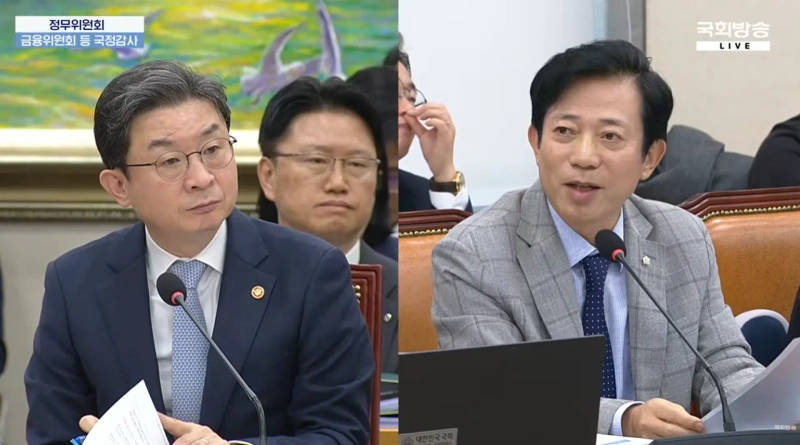
Lee Kang-il, a lawmaker from South Korea’s Democratic Party, urged authorities to accelerate rulemaking for won-backed stablecoins and tokenized assets, saying delays in establishing a domestic digital-asset framework are driving capital overseas.
At an October 8 parliamentary audit of the Financial Services Commission, Lee cited the U.S. GENIUS Act and CLARITY Act, along with the European Union’s Markets in Crypto-Assets regulation, or MiCA. He said major economies are competing to seize the initiative in setting standards for digital-asset markets, while South Korea has yet to present even a basic design.
Lee said the delayed institutionalization of won-backed stablecoins is a particular concern. Domestic trading in dollar stablecoins exceeded 6 trillion won ($4.3 billion) in June alone, and cumulative volume reached 80 trillion won ($57.9 billion) through July this year, he said. He also pointed to data showing that about 54% of global trading in a yen stablecoin listed in South Korea took place in the Korean market.
By contrast, South Korea has yet to decide even the issuing entity and licensing structure for won-backed stablecoins, Lee said. He added that overseas corporations have already issued won-based stablecoins and are pursuing partnerships with local companies in payments and game-settlement services, arguing that the regulatory framework can no longer be delayed.
Lee also highlighted a policy gap in tokenized assets. The global market for tokenized stocks has grown to about 4 trillion won ($2.9 billion), while tokenized Treasuries and money-market funds total about 22 trillion won ($15.9 billion) and on-chain real-world assets amount to about 55 trillion won ($39.8 billion), he said. In South Korea, however, discussions on rules for tokenizing listed shares remain stalled.
Citing his own estimates, Lee said about 63 trillion won ($45.6 billion) had flowed overseas through September this year. With domestic investment demand shifting to overseas digital-asset and tokenization markets, he said South Korea should speed up the institutionalization of won-backed stablecoins and related financial products.
The possibility of a tie-up between crypto exchanges and major platforms also came under scrutiny. Lee mentioned a possible combination of Naver Financial and Upbit, saying such a pairing could lead to excessive concentration of market power.
He also raised concerns about Toss’s business expansion. Efforts to secure an early lead in stablecoin payment networks while expanding payments and lending businesses could disrupt competition in the small-business finance market and the broader fintech industry, he said, urging financial authorities to prepare countermeasures.
Lee asked the Financial Services Commission to submit written positions on the issuance structure for stablecoins, the direction of licensing for won-based exchanges, the licensing system for virtual-asset exchanges, safeguards against market concentration if major platforms combine with exchanges, regulation of fintech operators’ market dominance, whether licenses for won-based exchanges and over-the-counter brokerage exchanges should be separated, and the scope and timing for permitting token securities, real-world assets, crypto derivatives and stablecoin products.
In response, Financial Services Commission Chairman Lee Eok-weon said the details had already been prepared and were in final-stage consultations. He said the Digital Asset Basic Act and related stablecoin rules are now being coordinated among relevant agencies.
He added that authorities would seek ways for South Korea to keep pace with global trends while proceeding safely and on a solid footing.

YM Lee
20min@bloomingbit.ioCrypto Chatterbox_ tlg@Bloomingbit_YMLEE