Crypto Listing Push Was Real, but Seoul Court Finds Fraud in $36,000 Token Investment Case: Choi Young-chong’s Money Crime
Summary
- They sold 1.25 million coins for $36,000 by touting listing on a major South Korean virtual-asset exchange, a listing within 90 days, and a guarantee to return the principal.
- In reality, the token had only passed a preliminary listing review, while documents for the main review had not been submitted, game development costs had not been fully paid, and the project later faced listing review rejection, leaving the promise impossible to fulfill.
- The court found that fraud was established because the defendants solicited investors despite having no basis to guarantee a listing, and the victim did not receive a return of principal until about three years and eight months later.
Forecast Trend Report by Period


“It’ll be listed soon and make you a fortune” — the promise that burned a crypto investor
Promise of a listing on a major exchange within 90 days
Sold 1.25 million coins and pocketed $36,000
$289,000 in unpaid development costs and listing review rejection
It took 3 years and 8 months to get the principal back
Two company officials who sold an investor about $36,000 worth of cryptocurrency by claiming it would be listed on a major domestic virtual-asset exchange within 90 days were given suspended prison terms on fraud charges. They had also promised to return the principal if the token was not listed within the deadline, but the court found the company had not even properly paid the development costs needed for the coin project. The court said fraud was established because they solicited the investor despite knowing there was no basis to guarantee a listing within the promised period, even if they had in fact been pursuing one.
According to the legal community on Oct. 8, Judge Kwon Min-jung of the Seoul Eastern District Court on Sept. 11 sentenced a man in his 50s, identified only as A, and a man in his 40s, identified as B, to six months in prison, suspended for two years, after indicting them on fraud charges. Both later appealed.
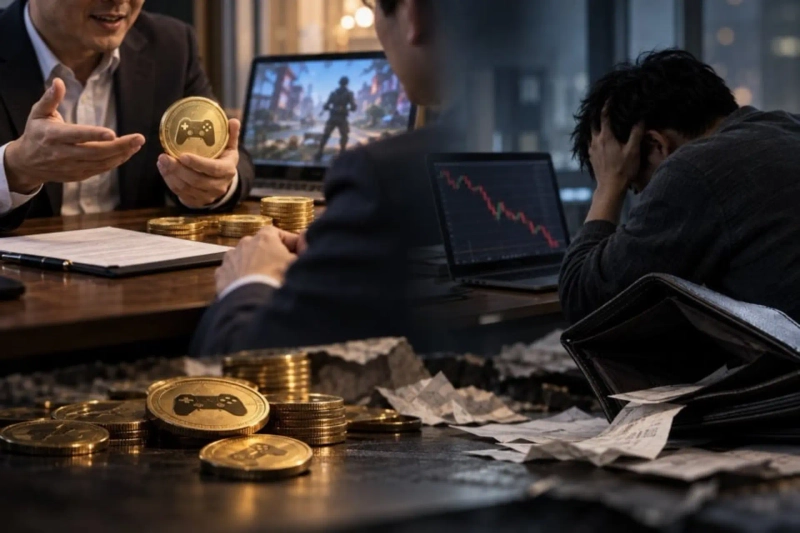
The two were put on trial for taking about $36,000 from an investor in October 2022 while pursuing a play-to-earn, or P2E, coin business that paid virtual assets as game rewards. They were accused of securing the money by guaranteeing both an exchange listing and a return of principal. A was a shareholder in the token issuer and handled domestic exchange-listing work, while B was an in-house director responsible for finance and accounting.
B told the victim, who had been introduced through an acquaintance, that the company’s token would soon be listed on a major domestic exchange and that a sharp rise in price after listing could generate large profits. He also said the company normally dealt only with corporations or large investors, but was offering a small investment opportunity because of the personal introduction.
The two signed a contract with the victim on Oct. 7, 2022, to sell 1.25 million tokens at 40 won apiece. The contract stated that the token would be listed within 90 days on major domestic exchanges including Upbit, Bithumb and Coinone, and that the company would buy back the tokens at the same price if the listing did not happen within the deadline. Believing those terms, the victim wired a total of 50 million won in two transfers on Oct. 7 and Oct. 11.
At the time, however, the listing was far from certain. The token had only passed Coinone’s preliminary listing review on Oct. 5, 2022, two days before the contract was signed, and the company had not even submitted the documents needed for the main review assessing business viability and financial soundness. Coinone ultimately notified the company in December 2022 that the listing review had been rejected. The company did not apply to Bithumb until November, after the contract had been signed, and withdrew the application later that month, citing internal circumstances.
Development of the game meant to support the token’s value was also running into problems. The company had agreed to pay the game developer 1 billion won, but paid only 600 million won. Before the contract with the investor was signed, the developer had already been demanding the unpaid balance since August 2022 and warning that it would terminate the agreement. It ultimately notified the company in November and December 2022 that the contract was being terminated.
The court focused on the fact that B set a 90-day listing deadline without any objective basis despite knowing those circumstances. It also cited a message B sent the victim in January 2023, after efforts to secure a domestic exchange listing had already fallen through, indicating that a listing on one of the major exchanges was still under way.
A argued that he had not directly discussed the investment with the victim and had not properly read the contract, but the court rejected that defense. It found that A directly handled domestic exchange-listing work and knew about the payment dispute with the game developer, meaning he was aware that a listing would be difficult.
“The defendants deceived the victim by claiming the token would be listed even though they at least recognized and accepted the possibility that it would not be listed on a domestic exchange within 90 days,” the court said. It added that the fact they had actually pursued a listing or later bought additional tokens did not negate criminal intent to commit fraud.
The victim did not recover the principal until June this year, about three years and eight months after signing the contract. The court also said the victim would not have entered into the agreement in the first place had he known it would take that long to get the money back.
The court said it took into account that the victim ultimately received a total of 60 million won, exceeding the original principal, and that B had reached a settlement with the victim. It also considered that B had no prior criminal record and that A had no record of similar offenses. Although A had not been forgiven by the victim, the court said his role in the crime was not greater than B’s and suspended the prison terms for both men.
Choi Young-chong, Hankyung.com reporter youngchoi@hankyung.com

Korea Economic Daily
hankyung@bloomingbit.ioThe Korea Economic Daily Global is a digital media where latest news on Korean companies, industries, and financial markets.