Former BOK Governor Lee Warns of Risks in Expansionary Spending Built on Chip Boom
Summary
- Former Governor Lee said he is concerned that the semiconductor cycle could end within a few years, warning about government expansionary fiscal policy premised on a semiconductor boom.
- He said policymakers need to consider whether Samsung Electronics and SK Hynix can sustain their high profitability if U.S.-China tensions ease or China develops its own lithography equipment.
- Former Governor Lee also took a critical view of the current real-estate policy, saying the apartment presale price ceiling and expanded policy lending are creating a property vicious cycle.
Forecast Trend Report by Period


Former Bank of Korea governor appears on YouTube
Concern over expansionary fiscal policy built on expectations of higher tax revenue
Foster regional hubs rather than scatter public institutions
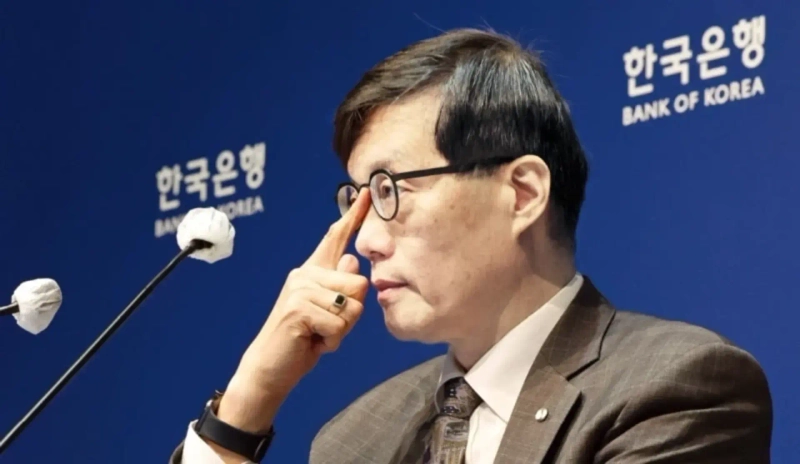
Lee Chang-yong, former governor of the Bank of Korea, said on an economics YouTube channel on Oct. 10 that he is concerned the semiconductor cycle could end within a few years, raising risks for the government if it pursues expansionary fiscal policy.
“The semiconductor cycle is often said to last 10 years, but there is concern that it could end after just a few years,” Lee said.
He said the current strength in the semiconductor sector reflects not only the competitiveness of Samsung Electronics Co. and SK Hynix Inc., but also a slowdown in China, which has been unable to import ASML Holding NV’s lithography equipment from the Netherlands because of U.S.-China tensions.
He added that if U.S.-China relations improve or China develops its own lithography equipment, policymakers will need to consider whether Samsung and SK Hynix can sustain their high profitability.
Lee also said policymakers should guard against “semiconductor optimism” in fiscal management. If long-term spending increases on expectations that tax revenue will keep rising during the chip boom, the fiscal burden could grow once the cycle turns.
With the BOK forecasting 2.9% economic growth next year, he said, there is also a question of whether the government needs to use fiscal spending to push growth even higher. If fiscal stimulus sharply lifts growth this year, next year’s growth rate could fall by a similar amount because of base effects.
He also stressed that the country should not neglect structural problems such as the low birthrate and an aging population because of the chip boom.
“An improvement in the semiconductor cycle will not solve the problems of low birthrates and population aging,” Lee said.
Lee also criticized plans for a second round of relocating public institutions outside Seoul if they are pursued by splitting agencies across regions.
Rather than simply dispersing institutions across several areas, the government should concentrate capacity in specific regions and create a rival to Seoul, he said. Such a strategy, he added, would require political leadership.
Lee also took a critical view of the Lee Jae-myung administration’s real-estate policies, including the apartment presale price ceiling and policy lending.
“Everyone’s focus on Gangnam real estate has also been heavily influenced by the apartment presale price ceiling,” Lee said. “As policy lending expands, people buy property, and that in turn increases policy lending again, creating a vicious cycle.”
Shim Seong-mi, Hankyung.com reporter smshim@hankyung.com

Korea Economic Daily
hankyung@bloomingbit.ioThe Korea Economic Daily Global is a digital media where latest news on Korean companies, industries, and financial markets.