Samsung’s $7.7 Billion Profit Windfall Brings Stark Warning on Korea’s Chip Dependence [Techlog]
Summary
- Samsung Electronics posted 100 trillion won in quarterly operating profit during a semiconductor supercycle, but the report said South Korea should be wary of its growing semiconductor concentration.
- It said South Korea’s exports and stock market — especially indexes centered on Samsung Electronics and SK Hynix — could suffer a major shock if the outlook for AI capital spending and the memory-chip cycle weakens.
- It said intensifying memory-market competition, including CXMT’s push into server DRAM, is becoming another risk factor for South Korea’s semiconductor-centered economy.
Forecast Trend Report by Period


Warning Bells Over South Korea’s Semiconductor Concentration
Exports and Stocks Swing With the Chip Cycle
“Semiconductor Demand Falls if AI Capital Spending Slows”
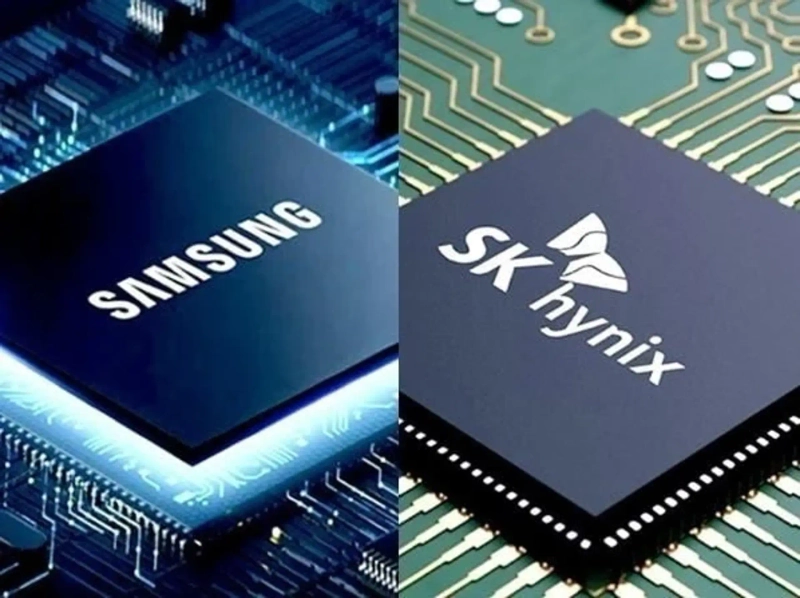
Samsung Electronics reported quarterly operating profit of 10.74 trillion won ($7.7 billion), underscoring a semiconductor boom so strong the company is earning at a trillion-won-a-day pace. But the surge has also revived warnings about South Korea’s growing dependence on chips. Analysts say a cooldown in artificial intelligence investment could hit exports and equities at the same time. The larger the gains from the chip upcycle, the more vulnerable the economy becomes if the industry outlook shifts.
According to industry officials on October 13, the ASEAN+3 Macroeconomic Research Office, or AMRO, recently laid out that view in a financial stability report. With South Korea heavily exposed to semiconductor exports and technology shares, a pullback in AI investment could unsettle both exports and the stock market. Semiconductors accounted for about a quarter of the country’s total exports last year. If global capital spending retreats because AI demand falls short of expectations, the damage could extend beyond export earnings to corporate investment and growth.
The concentration tied to the chip boom is also visible in export and investment data. Korea Development Institute data showed average daily exports last month rose 104.8% from a year earlier, while semiconductor exports jumped 304.9%. The sharp rise in semiconductor and computer exports was driven largely by higher prices. Investment in semiconductor manufacturing equipment in August also climbed 107.7% from a year earlier.
The same pattern has emerged in the domestic stock market. AMRO said South Korean equities have become more sensitive to US AI shares since the end of last year. That means a correction in American AI stocks could be transmitted directly to the Korean market even without a domestic trigger. As of late August, Samsung Electronics and SK Hynix made up more than half of the MSCI Korea Index.
The Bank of Korea said in an earlier monetary and credit policy report that Samsung Electronics and SK Hynix accounted for about 77% of the Kospi’s gains in the January-June period. Their respective shares of the index’s market capitalization were close to 28.2% and 23% at the end of July.
The heavier concentration has also increased the shock when the industry outlook wobbles. The BOK said related shares and the broader domestic index both underwent steep corrections after uncertainty over the memory-chip outlook increased in late June.
Memory makers in the US and Japan also saw their shares swing during that period, but the impact on their broader markets was different. Because those companies account for a relatively small share of local equity indexes, the effect on benchmark gauges was limited. From January through July, South Korea’s daily stock-price volatility, measured by the standard deviation of returns, stood at 4.1% — the highest among the 30 largest equity markets by market capitalization. The average was 1.3%.
The key question is how long AI-led growth and investment returns can last. Reuters reported on October 9 that many investors are worried about how long the trend can continue and what happens to stock prices when it ends. AMRO said risks could emerge if AI monetization takes longer than expected or funding conditions deteriorate. It added that the soundness of regional banking systems and policy buffers should support resilience.
The semiconductor concentration is also widening the gap between South Korea’s large corporations and smaller companies. The Korea Development Institute said the recovery has not spread broadly across households. Samsung Electronics said on October 8 that it posted preliminary third-quarter consolidated revenue of 19.5 trillion won ($14.0 billion) and operating profit of 10.74 trillion won ($7.7 billion). On a quarterly operating-profit basis, it said, that was the highest result in the world.
By contrast, the average manufacturing production index for small and medium-size enterprises fell 0.8% in the January-August period from a year earlier, based on data from the Korean Statistical Information Service, or KOSIS, and industrial activity statistics. Output at large companies rose 2.9%.
Smaller companies have also faded in trade data. As of August, total exports by small and medium-size enterprises rose 20.4% from a year earlier, but their share of South Korea’s overall exports shrank to 10.3% from 14.4%. Exports by large corporations jumped 94.2%, nearly five times the pace for smaller firms. In semiconductors alone, large companies accounted for 92.9% of exports that month.
Separately from AI demand, competition in the memory market is emerging as another variable for South Korea’s chip-centered economy.
China’s CXMT recently said it plans to launch a next-generation server DRAM product, a DDR5 RDIMM using a 4F² structure and hybrid bonding technology, within the year. Samsung Electronics and SK Hynix shares fell 7% to 9% that day in the aftermath. TrendForce said in its second-quarter server DRAM report that CXMT has been increasing its global market share on the back of demand in China.
“South Korea’s stock market is driven mainly by technology-related sectors,” AMRO said. “If capital spending on AI declines, demand for semiconductors, electronics, data-center equipment and related services will also weaken.”
Kim Dae-young, Hankyung.com reporter kdy@hankyung.com

Korea Economic Daily
hankyung@bloomingbit.ioThe Korea Economic Daily Global is a digital media where latest news on Korean companies, industries, and financial markets.