Robert Hall Protégé Ramey Says South Korea Should Prepare for a Downturn Next Year
Summary
- Ramey said South Korea should not expand long-term spending too aggressively and should prepare for a possible downturn after the current boom.
- She voiced concern over the 821 trillion won ($592 billion) super budget, saying South Korea should not follow a path that pushes its debt-to-GDP ratio up to U.S. levels.
- She said temporary vouchers and subsidies tied to high oil prices and other factors have limited stimulus effects, in line with Hall's permanent income hypothesis.
Forecast Trend Report by Period


Zoom In
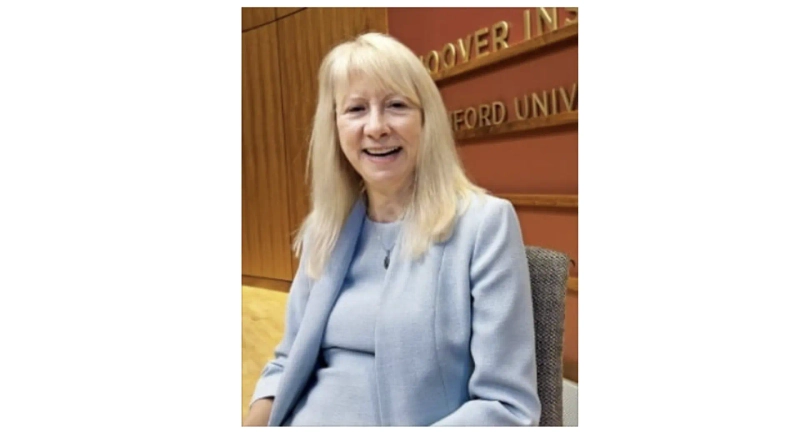
Valerie Ramey, distinguished professor at UC San Diego
First met Hall 44 years ago as his teaching assistant
Chair of the NBER Business Cycle Dating Committee
"Temporary subsidies have little stimulus effect"
"In the first semester, I could understand only about half of what he was saying."
Valerie Ramey, 66, a distinguished professor at the University of California, San Diego, recalled her first encounter 44 years ago with Robert Hall, the Stanford University economist who won this year's Nobel economics prize. Speaking on Stanford's campus on Oct. 12, the day after news of Hall's award, she said with a laugh that it took two more semesters before she fully grasped the depth of his ideas.
Ramey graduated first in her class from the University of Arizona's economics department in 1981 and entered Stanford's graduate program the following year, when she first met Hall. She worked as his research assistant for four years and wrote her doctoral dissertation under his supervision. In 2024, she succeeded Hall as chair of the National Bureau of Economic Research's Business Cycle Dating Committee, which determines whether the U.S. economy is overheating or in recession, establishing herself as a leading macroeconomist in her own right.
Ramey also has close ties to South Korea. She received Yonsei University's Cho Rak-Kyo Economics Award in 2020. At the European Central Bank's monetary policy conference in Frankfurt on Oct. 5, she cited Seoul's Stepping Stone Income program as an example of a negative income tax. She added, however, that the policy's effect would be limited in South Korea, where both the employment rate and population are falling.
She also had sharp words for South Korea's proposed 821 trillion won ($592 billion) super budget for next year. Because booms are followed by downturns and tax revenue can dry up, governments should not expand long-term spending too much, she said. In California, capital gains are taxed like ordinary income, causing tax revenue to swing sharply, and in downturns the state's finances become so strained that it has to lay off school teachers. South Korea, she said, should not follow the same path as the U.S., where the national debt-to-GDP ratio has reached 122%.
On temporary voucher and subsidy programs introduced in response to high oil prices and other factors, Ramey said one-off support measures do little to stimulate the economy. She said that was also consistent with Hall's findings on the permanent income hypothesis.
Kim In-yup, Silicon Valley correspondent, Hankyung.com, inside@hankyung.com

Korea Economic Daily
hankyung@bloomingbit.ioThe Korea Economic Daily Global is a digital media where latest news on Korean companies, industries, and financial markets.