Unprecedented NPS Delay in Korea Stock Rebalancing Draws Fire: ‘Is the National Pension Foreign Investors’ ATM?’
Summary
- The National Pension Service faced growing controversy over claims it broke with principle by delaying rebalancing in domestic equities and raising its target allocation for local stocks, effectively shifting losses onto retail investors.
- After the rebalancing delay, a sharp drop in the Kospi wiped out 124.8 trillion won in domestic equity profit and loss in a month, dragging the portfolio’s return down to -2.99%.
- Critics said the National Pension Service’s rule change allowed foreign investors to lock in gains through net selling at the top, while retail investors were left absorbing the supply through heavy buying near peak levels.
Forecast Trend Report by Period


Who Created This Retail Trap?
Audit Hearing Sparks Dispute Over Investment Independence
Rebalancing Delay Lets Foreign Investors Sell at the Top
Retail Investors Left as Cannon Fodder
Rules Broken Unlike Overseas Pension Funds
$90.4 Billion in Gains Vanishes in a Month
‘This Is the Public’s Retirement Money … Independence Must Be Protected’
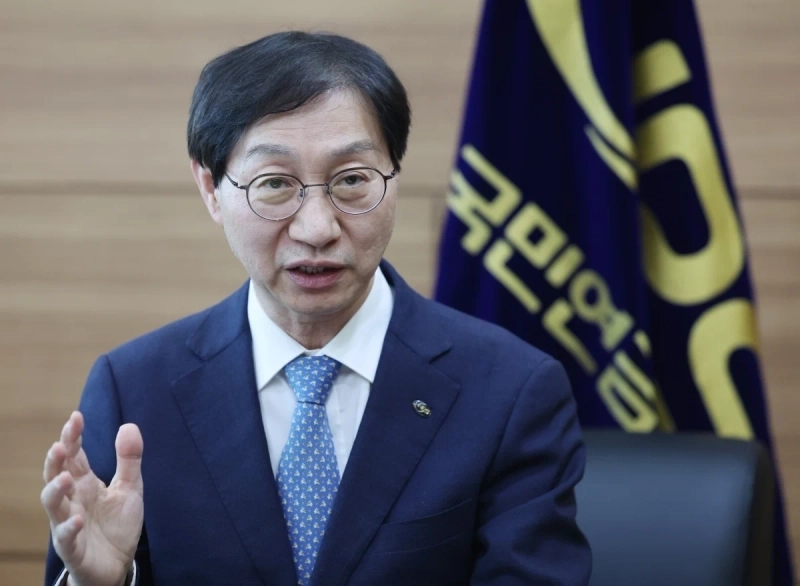
South Korea’s National Assembly Health and Welfare Committee turned its Oct. 14 audit of the National Pension Service into a forum for fierce criticism over the fund’s delay of domestic stock rebalancing and concerns that the independence of its governance had been compromised. In global asset management, rebalancing by public pension funds is a basic principle used to cool overheated markets and spread risk. When stock prices surge past allocation limits, funds typically sell in stages to lock in gains. When markets plunge, they buy at lower levels and act as a stabilizer. Critics say the National Pension Service, which manages 1,700 trillion won, abruptly suspended rebalancing at the start of the year, breaking with that principle. They argue the move left retail investors to shoulder losses during a roller-coaster run in the domestic stock market.
Rules Changed After the Kospi Topped 8,000
The National Pension Service suspended rebalancing on Jan. 26, a day before President Lee Jae-myung’s pledge to push the Kospi above 5,000 was met. After the Kospi rose past 8,000 and the fund’s domestic equity weighting exceeded its cap, the fund management committee in late May raised this year’s target allocation for local stocks to 20.8% from 14.9%, an increase of 5.9 percentage points. It also widened the allowable strategic asset allocation band to plus or minus 6 percentage points from plus or minus 3 percentage points, artificially expanding room to hold as much as 28.8% in domestic stocks. In effect, the fund locked itself out of mechanically selling shares even if the Kospi climbed into the mid- to upper-8,000 range. Critics say the move tied the pension fund’s hands under political pressure not to throw cold water on the government’s capital-market push ahead of June local elections.
Lawmakers from the People Power Party said the government had mobilized the National Pension Service to prop up the stock market. Rep. Cho Bae-sook said the investment standard was changed at the president’s word and ex officio bureaucrats unanimously approved what she called a top-down directive. Rep. Lee Su-jin of the Democratic Party pushed back, saying the fund would have had to sell more than 200 trillion won worth of stocks to meet its previous target and that unloading that volume would have triggered a market collapse. NPS Chairman Kim Sung-joo defended the move, saying there is a “buy and stay” investment principle when markets move sharply. Repeated buying and selling in response to short-term swings would only increase transaction costs and hurt the fund’s long-term returns, he added, calling that a common philosophy among pension funds globally.

Retail Investors Left as Buyers at the Peak
The cost of abandoning those principles was severe. The Kospi touched 9,000 in June before plunging to around 6,600 by the end of July. Data disclosed on Oct. 14 by People Power Party lawmaker Baek Jong-heon showed the National Pension Service’s cumulative profit and loss on domestic stocks fell to 158.7 trillion won at the end of July from 283.5 trillion won at the end of June. The domestic equity portfolio posted a return of minus 2.99% in July, wiping out 124.8 trillion won in mark-to-market gains in a single month. That stood in sharp contrast to other Korean public funds. The Teachers’ Pension and postal savings have not delayed rebalancing because of market conditions at any point over the past decade, while the Government Employees Pension disposed of holdings within 20 trading days under its rules.
Critics say the gains from the NPS rule change went to foreign investors. They were net sellers of 170 trillion won during the rally in May and June, taking profits near the top and leaving the market. Cumulative net selling for the year reached 190 trillion won. The selling was absorbed by retail investors who followed the government’s pro-market stance. Individuals bought 116 trillion won worth of shares in the extreme peak zone between 6,000 and the low-9,000s on the Kospi, while the “Samjeonnix” leveraged exchange-traded fund launched in May added fuel to the frenzy.
The independence of National Pension Service governance also came under scrutiny. Critics say the decision damaged market predictability. They point to a structural weakness in which the health minister chairs the committee and more than half its members are recommended by the government or stakeholder groups, leaving it vulnerable to political influence. That contrasts with major overseas pension funds that have upheld rules and independence. Japan’s Government Pension Investment Fund mechanically sold domestic equities in stages under its 25% allocation rule during a bull market in which the Nikkei climbed from 30,000 to above 70,000, locking in gains and cooling market overheating. Norges Bank Investment Management, which oversees the world’s largest sovereign wealth fund, and APG, Europe’s largest institutional investor, also carry out strict rebalancing based on discipline rather than short-term political pressure or public sentiment.
Baek said the National Pension Service is not a tool for supporting the stock market but the public’s retirement money. Changing core investment standards without principle, while telling lawmakers and the public to wait four years to see the fund management committee minutes, amounted to deception and a declaration that the fund had given up its independence, he said.
Choi Hyung-chang/Choi Seok-cheol, Korea Economic Daily reporters calling@hankyung.com

Korea Economic Daily
hankyung@bloomingbit.ioThe Korea Economic Daily Global is a digital media where latest news on Korean companies, industries, and financial markets.