AI’s Beating Heart Faces Backlash: Why Data Centers Have Become a Target
Summary
- SK Telecom, LG Uplus, and Naver said they are positioning data centers as a new growth engine, but plans to invest anywhere from trillions of won to hundreds of trillions of won have heightened concerns about damage to their financial structure and corporate value.
- The report said data centers consume huge amounts of electricity and water, fueling disputes over higher utility bills and limited job creation, while resident opposition and construction conflicts continue in both the US and South Korea.
- It said that because data centers are key facilities for turning South Korea into an Asian AI hub, companies must simultaneously address profitability, funding, demand generation, and the challenge of persuading local communities.
Forecast Trend Report by Period


Shareholders fret over heavy spending by SK Telecom and others
In the US, residents push back over power and water demands
In South Korea, clashes have already emerged in the Seoul capital region and South Jeolla
They are essential AI infrastructure, but companies still face the task of winning support
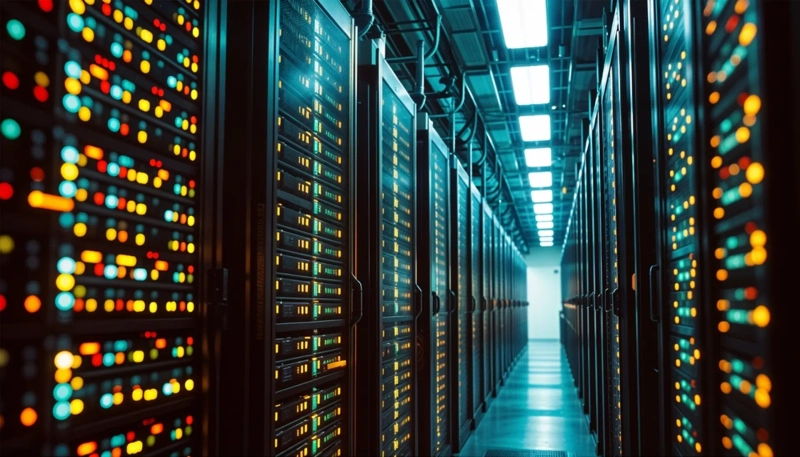
There is little dispute that artificial intelligence is a transformative technology. People use AI to check the news in the morning, assign tasks at work, ask for recipes after getting home and get video recommendations. For many, daily life no longer runs smoothly without it.
Views diverge, however, when it comes to data centers, the core facilities that make the AI industry possible. Shareholders and the market are questioning the scale of investment and whether demand will materialize. Local communities are also pushing back hard. They welcome the benefits AI may bring while resisting the infrastructure that supports it.
A new growth engine, but shareholders are uneasy
“We fully understand the market’s concerns about the size of the investment. We will stick to the principle of building data centers only after securing customers, and we will raise external funding through investment attraction.”
That was SK Telecom’s response during its second-quarter earnings conference call after it faced questions about the issue. The market is taking a similar view of other data-center operators, including LG Uplus and Naver.
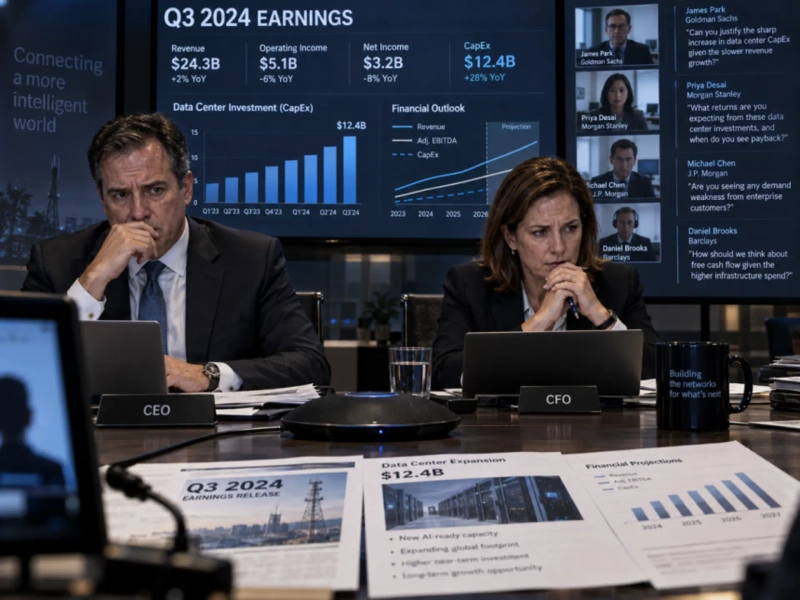
Companies have pitched data centers as a new growth engine and announced investment plans ranging from trillions of won to hundreds of trillions of won. Shareholders, though, worry that such spending could damage balance sheets and erode corporate value.
Those concerns are set to resurface during the third-quarter earnings season. Investors are focused on whether the large-scale spending can generate profits, whether enough demand exists to support it and whether companies can raise the money without strain.
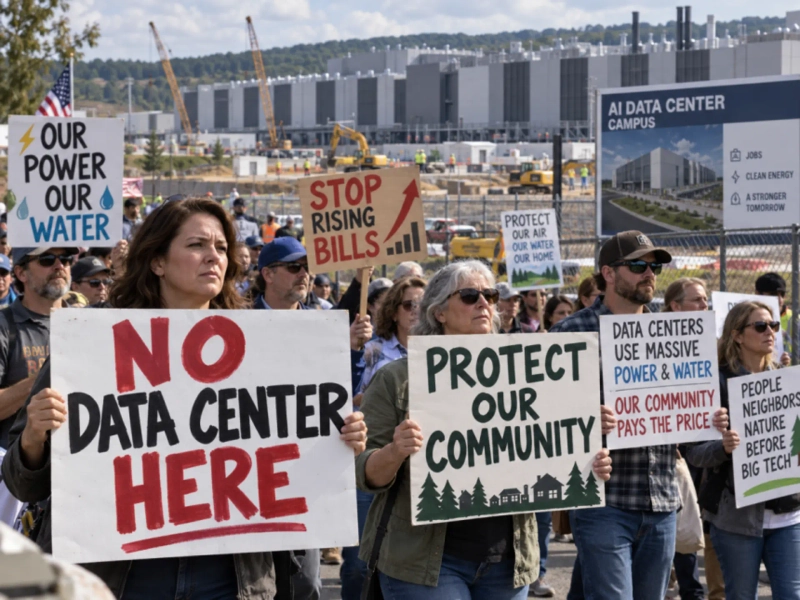
It is not just shareholders. As is widely known, ordinary residents in the US have mounted strong campaigns against data centers. Their argument is that the facilities consume vast amounts of electricity and water, leaving less for households and driving up utility bills.
Jobs are another issue. In the US, there is a broad perception that advances in AI will inevitably reduce employment. In the near term, data centers create construction jobs while they are being built, but they do not generate many jobs once they begin operating.
A recent Brookings Institution study found that data centers typically add only about 100 to 200 jobs.
To win over opponents, NorthPoint Development, which is pursuing an AI data-center project in Hazle Township, Pennsylvania, even proposed giving each household $10,000 in cash. Even so, residents have continued to object.
US residents are resisting too. Will South Korea be any different?
It may be an early question, but it is worth asking whether South Korea will really be different. Opposition from residents living near planned data centers has already emerged. In Gwacheon, Gyeonggi Province, residents submitted a petition demanding that a project be scrapped. In Gimpo, after city hall rejected a construction-start filing following resident opposition, the developer filed an administrative appeal and succeeded in getting the rejection canceled.
The conflict is not limited to the Seoul capital area. A representative case is the Oryong district in Muan, South Jeolla Province, where a 200-megawatt AI data center is planned about 250 to 500 meters from apartment buildings and schools. Tensions have escalated there as a residents’ briefing session was called off because of opposition and the county council adopted a resolution urging authorities to deny a building permit.
South Korea already has a history of turning power issues into political flashpoints. Opposition to transmission towers in Miryang began in 2005 and continued for more than a decade. The fallout helped delay the Bukdangjin-Sintangjeong transmission line for more than 13 years, extending conflict over the power grid.
Now the backlash is expanding from transmission networks that carry electricity to data centers that consume it in huge quantities. There is also talk that environmental and progressive groups in South Korea are closely watching the US anti-data-center movement and domestic construction plans.
Profitability, funding and local opposition must all be overcome
Ken Griffin, chief executive officer of Citadel, said on a Goldman Sachs podcast in July that data centers must be built on US soil, stressing their importance for national security and leadership in AI infrastructure. He framed AI data centers as essential security assets that the US cannot afford to rely on other countries to provide.
He also referred to the anti-data-center movement. “Data-center operators should not simply build facilities and stop there. They should build the power-generation facilities needed to run them and connect themselves to the grid.” His point was that companies should not pass the costs of electricity and water on to ordinary Americans and local communities.
Data centers are critical infrastructure if South Korea is to become an “Asian AI hub.” But as the US case shows, the hurdles are formidable. The question is whether companies entering the data-center business can solve that complex equation by easing shareholder concerns over funding, demand and profitability while also persuading local communities.
Park Han-shin, Hankyung.com reporter phs@hankyung.com

Korea Economic Daily
hankyung@bloomingbit.ioThe Korea Economic Daily Global is a digital media where latest news on Korean companies, industries, and financial markets.