PiCK
From Won Stablecoins to Crypto Taxes, November Assembly Session to Test South Korea’s Regulatory Push
Summary
- The National Assembly said next month will be a watershed as it simultaneously debates the Digital Asset Basic Act, the issuance structure for won stablecoins, and virtual-asset taxation.
- The government and the National Assembly are moving to institutionalize South Korea’s digital-asset market by building tax infrastructure, a market-regulation framework, and detailed rules on issuer eligibility and governance for won stablecoins.
- The ruling and opposition parties are discussing changes to the timing of virtual-asset taxation, along with follow-up issues such as loss carryforward deductions, with a bill already proposed to delay implementation until 2029.
Forecast Trend Report by Period


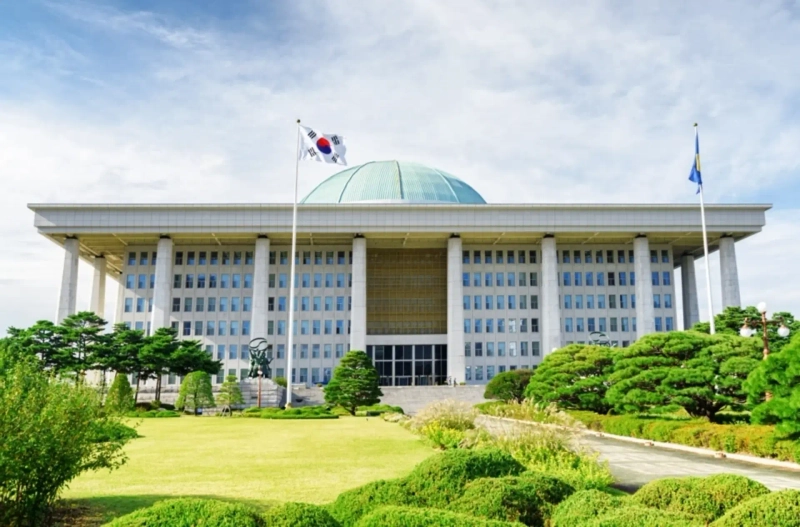
Won-denominated stablecoins and preparations for virtual-asset taxation are emerging as major legislative priorities for South Korea’s National Assembly next month. Lawmakers must set the rules for companies to operate and establish the framework for investors to pay taxes, making debate over a Digital Asset Basic Act and tax policy a turning point for the domestic digital-asset market.
The National Assembly’s Political Affairs Committee plans to begin reviewing the Digital Asset Basic Act at a bill-review subcommittee next month, with the goal of passing it within the year. A tax subcommittee under the committee handling fiscal and economic planning will also discuss the timing of virtual-asset taxation, which is scheduled to take effect in January. One track centers on market regulation and the other on taxes, but both address the broader task of bringing the market into the formal system.
The government is also emphasizing the link between the two issues. Kwon Dae-young, first vice minister of economy and finance, told a meeting of industry officials and experts on Oct. 20 that tax principles can take root in the market only if tax infrastructure and a market-regulation framework are put in place together. The comment suggests authorities see tools to track transactions and secure market trust as essential before taxes are imposed.
For won stablecoins, the central issue is an issuance structure that combines financial stability with private-sector business capacity. One option under discussion would require banks to hold at least 50% plus one share in a consortium, while fintech companies argue that non-bank firms also need room to participate. A key question is how to make use of technological capabilities and distribution networks as authorities define issuance eligibility and governance rules.
Shin Hyun-song, governor of the Bank of Korea, said at a parliamentary audit on Oct. 12 that he is “basically in favor” of private issuance. Financial Services Commission Chairman Lee Eok-won said on Oct. 8 that authorities would move quickly in consultations to prepare how to guide the industry and the broader market. Abroad, KRWQ, a won-pegged token launched in October 2025, is already in circulation, underscoring the need to create an institutional path for domestic projects.
On taxation, the key issue is how fairly and accurately authorities can track domestic and overseas transactions. Limits on securing records of offshore trading and the absence of loss carryforward deductions are among the issues cited for improvement. Under the current timetable, starting next year, authorities would impose a 22% tax, including local taxes, on annual virtual-asset income above 2.5 million won ($1,800).
Lawmakers in both the ruling and opposition parties are continuing to push for an adjustment to the implementation schedule based on the state of preparations. Park Min-gyu of the Democratic Party proposed an amendment to delay taxation until 2029, citing the US timetable for joining the Crypto-Asset Reporting Framework, or CARF, for automatic information exchange. Park Soo-young of the People Power Party said on Oct. 21 that authorities should not “kick away the ladder” for young people trying to build wealth, adding that he would pursue bipartisan talks on a delay. The government has yet to set out a final position.
The Political Affairs Committee is expected to discuss issuers and business requirements for won stablecoins as part of its review of the basic law next month. The tax subcommittee under the fiscal and economic planning committee will examine proposals to adjust the start date for taxation. The detailed timetable for institutionalization will hinge on when the government submits its proposal and the outcome of talks between the two parties.

YM Lee
20min@bloomingbit.ioCrypto Chatterbox_ tlg@Bloomingbit_YMLEE