Solidigm Withdraws U.S. IPO as Bloomberg Analyst Says Dual Listings Shouldn’t Be Banned Outright
Summary
- Wakasugi said dual listings should not face excessively strict restrictions and may at times be needed as a fundraising tool.
- He said raising about $15 billion through a Solidigm IPO could help expand eSSD production capacity and fund R&D, supporting medium- to long-term revenue and profit growth.
- He said high memory prices and the spread of long-term contracts mean companies would not need to wait two years to recover their investment, making the spending justifiable.
Forecast Trend Report by Period


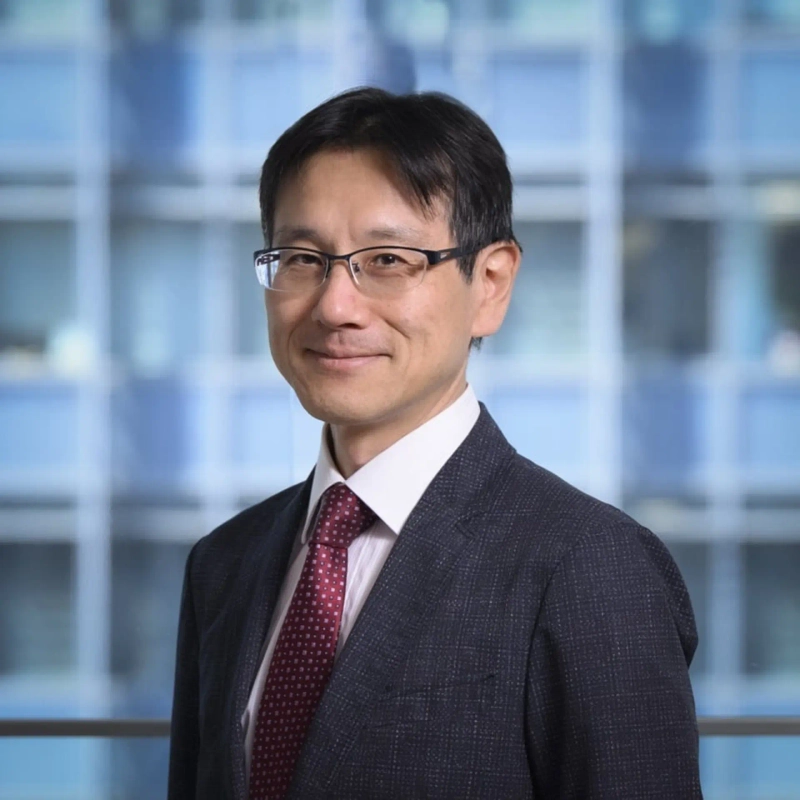
“I don’t agree with overly strict limits on dual listings. There needs to be flexibility.”
Masahiro Wakasugi, a senior industry analyst at Bloomberg Intelligence, said in an interview with the Korea Economic Daily on Oct. 22 that rules governing listings by both a parent and its subsidiary should not be applied too rigidly. He said dual listings may not always benefit existing shareholders, but can at times be necessary.
“You shouldn’t impose excessive restrictions simply to eliminate dual listings as a category,” he added.
Wakasugi is a veteran technology analyst with about three decades of experience at firms including AllianceBernstein, Jefferies and BNP Paribas, after earning a master’s degree in engineering from Waseda University in Japan. At Bloomberg Intelligence, he covers semiconductors and chip equipment and has consistently followed South Korean chipmakers including Samsung Electronics and SK Hynix.
Against Blanket Curbs on Dual Listings
SK Hynix recently decided to postpone the planned U.S. initial public offering of its NAND flash subsidiary Solidigm. While the company had a strong need to raise capital, the decision was widely viewed as an effective withdrawal under pressure from shareholders and the market.
Wakasugi said criticism of dual listings is understandable. Existing shareholders have reasonable grounds for concern, he said, noting that in Japan, parent companies are increasingly moving either to fully divest subsidiaries or absorb them as wholly owned units.
Still, he opposed a blanket restriction on all dual listings. Parent companies may at times need capital, and a subsidiary can serve as an effective fundraising vehicle.
Concerns about damage to shareholder value should be weighed alongside a company’s financing needs and growth potential, he said. Globally, listed parent-subsidiary pairs are not uncommon, including SoftBank and Arm, and Intel and Mobileye.
“It Wouldn’t Have Taken Two Years to Recoup the Investment Even With an IPO”
Wakasugi said there was a rational case for Solidigm’s IPO push. His core argument centered on returns in the memory industry. If the estimated $15 billion in IPO proceeds were used to expand production capacity for enterprise SSDs for AI data centers and fund research and development, that could support medium- to long-term growth in revenue and profit.
SK Hynix could also reduce the burden of directly funding Solidigm and free up capital for investment in high-bandwidth memory, or HBM, and server DRAM. In that case, IPO fundraising could have positive effects for the subsidiary, the parent company and shareholders alike.
As for the planned $15 billion IPO, he called that a typical level of investment for a memory manufacturer. The proceeds could allow SK Hynix or Solidigm to build a factory. The payback period would be fairly short, and the investment could be justified, he said.

He said the memory market could remain in an upcycle not only in 2027 but also in 2028. Memory prices are currently high, so companies would not need to wait two years to recover their investment.
Companies are also signing long-term contracts. As a result, prices may remain at favorable levels.
Wakasugi also pointed to Solidigm’s different origins from a typical spun-off subsidiary. Solidigm is a U.S. company created from the NAND flash business that SK Hynix acquired from Intel.
“I’ve visited Solidigm myself, and I think SK Hynix and Solidigm operate quite independently,” he said. The two companies cooperate with each other, but to some extent they are separate companies.
He also cited Solidigm’s U.S. headquarters and the presence of many employees with Intel ties. In that context, he said, it is understandable that Solidigm might become a more independent company or a listed company.
“Multi-Layered Ownership Is Complex — It Has to Be Proven Through Earnings”
Wakasugi said the direct financial impact on SK Hynix shareholders may have been limited even if Solidigm had gone public. Assuming Solidigm accounts for about 10% of SK Hynix’s net profit, and that 10% of Solidigm shares were sold to outside investors in an IPO, SK Hynix’s earnings per share would decline by only about 1%, he said.
That estimate assumes the NAND flash business generates about 20% of SK Hynix’s total profit, and that half or slightly less of that comes from Solidigm.
Wakasugi acknowledged that SK Group’s complex ownership structure is part of the backdrop to the controversy over a dual listing. If Solidigm had been listed on top of the multiple layers of ownership running from SK Inc. to SK Square to SK Hynix, market concerns about a governance discount could have intensified. “SK Group’s structure looks a bit complex,” he said.
He cited SoftBank and Seven & i Holdings as examples of parent companies that can trade at a discount to the value of their holdings because of complex ownership structures.
Asked whether governance changes are needed, Wakasugi said he does not think SK Hynix needs to do anything in particular. The company needs to prove itself through strong earnings and profit generation.
Hwang Jung-soo, New York correspondent, Korea Economic Daily, hjs@hankyung.com

Korea Economic Daily
hankyung@bloomingbit.ioThe Korea Economic Daily Global is a digital media where latest news on Korean companies, industries, and financial markets.