Summary
- The KOSPI plunged more than 4% early in the session on the fallout from AI investment cost pressures, briefly falling to the 5,300 level.
- Large-cap semiconductor stocks such as Samsung Electronics and SK Hynix fell together, while on the benchmark stock market foreign investors were net sellers and retail and institutional investors absorbed the selling.
- Despite SK Hynix halting Solidigm’s pre-IPO and IPO review, weak sentiment persisted as the sharp drop in US AI and semiconductor shares continued to weigh on the stock.
Forecast Trend Report by Period


Samsung Electronics, SK Hynix Fall Together
Index Hovers Around 5,300 Amid Foreign Selling
Sentiment Cools Even After Solidigm Listing Review Halt
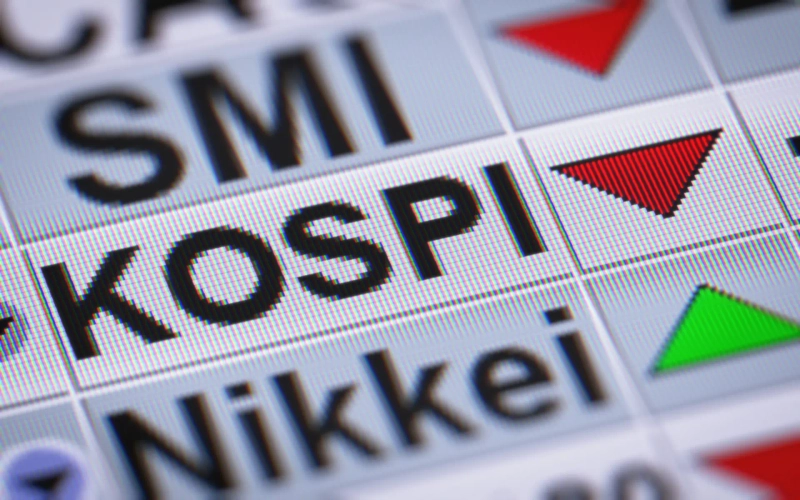
The KOSPI fell more than 4% early on October 23, briefly sliding to the 5,300 level. Concerns over the cost burden of AI investment in the US spilled over into South Korean semiconductor stocks. Samsung Electronics and SK Hynix both declined, dragging the index lower.
As of 9:25 a.m., the KOSPI was down 184.93 points, or 3.34%, at 5,348.84 from the previous session. The index opened at 5,403.17 and fell as low as 5,305.98 during the session, widening its loss to 4.12% before trimming part of the decline. After dropping 3.52% a day earlier, it was headed for a second straight session of sharp losses.
Large-cap chip stocks led the weakness. At that time, Samsung Electronics was trading at 205,500 won, down 9,000 won, or 4.20%, while SK Hynix fell 37,000 won, or 3.03%, to 1.186 million won. On the benchmark stock market, foreign investors were net sellers, while retail and institutional investors absorbed the selling.
On Wall Street overnight, doubts about the profitability of the AI investment race triggered a selloff in technology shares. On October 22, the Nasdaq Composite fell 2.60%, while the Philadelphia Semiconductor Index tumbled 6.7%. Nvidia, Intel and AMD were among the major chip stocks hit by heavy selling.
Meta's earnings heightened the anxiety. Third-quarter revenue rose 26% from a year earlier, but free cash flow swung to a deficit of $2.12 billion. After the company raised the low end of its projected capital expenditures for this year, investors focused less on revenue growth and more on cash burn and the burden of additional funding.
The concern appears to be spreading that if AI infrastructure companies have less capacity to invest, orders for servers and semiconductors could also be affected. In a high-rate environment, securing the funds needed to expand data centers and generating returns on that investment has emerged as a key variable for the broader chip sector.
SK Hynix said on October 23 it would halt its review of pre-IPO fundraising and an initial public offering for Solidigm, but the stock remained under pressure. The company said the decision reflected capital-market conditions and other factors. Even though the move reduced concerns about shareholder-value dilution from a duplicate listing, the sharp drop in US AI and semiconductor shares continued to weigh on sentiment.

Doohyun Hwang
cow5361@bloomingbit.ioKEEP CALM AND HODL🍀