Fed Holds Rates at 3.75%-4.00% but Leaves Room for Another Hike, Stoking Bitcoin Downside Risks
Summary
- The Fed held its benchmark rate at 3.75% to 4.00% while keeping the possibility of an additional hike on the table, raising the prospect of continued downside pressure on Bitcoin (BTC).
- Markets priced in a 78.4% chance of a 0.25 percentage-point increase at the December meeting, meaning Bitcoin is now competing with nearly 4% in risk-free returns.
- U.S. Treasury yields, the dollar, the PCE inflation reading, earnings from major technology companies, liquidity and financial conditions are set to shape the direction of Bitcoin and other risk assets.
Forecast Trend Report by Period


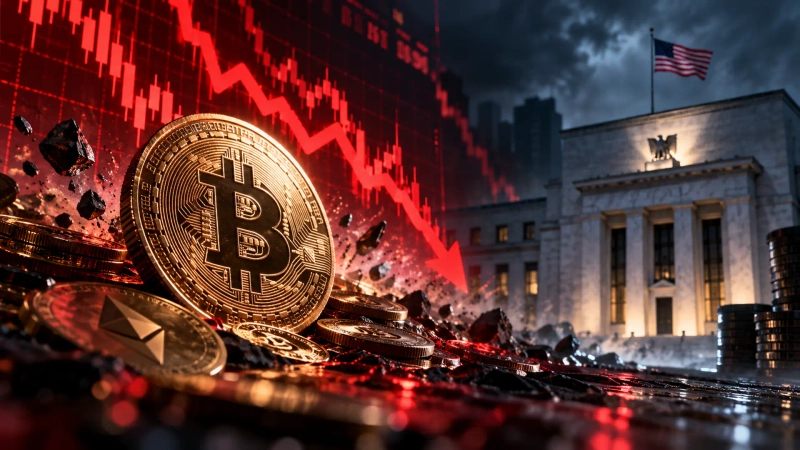
Bitcoin could remain under downward pressure after the Federal Reserve held interest rates steady while leaving open the possibility of another increase. With markets having widely expected the pause, attention has shifted to the future rate path and moves in the dollar and Treasury yields.
Cointelegraph, a cryptocurrency-focused media outlet, reported on October 29 that the Fed kept its benchmark rate at 3.75%-4.00% on October 28. Ten officials supported the decision, while Governor Lisa Cook and Cleveland Fed President Beth Hammack favored a 0.25 percentage-point increase.
Fed Chair Kevin Warsh said Americans have faced inflation above the committee's target for nearly six years and that bringing inflation down remains the central bank's responsibility. He stopped short of committing to another hike, saying it was hard to say now what decision would be made at the next meeting in six weeks.
As of the report, CME FedWatch showed interest-rate futures were pricing in a 78.4% chance of a 0.25 percentage-point increase at the December meeting.
Iggy Iofe, chief investment officer at tokenization platform Theo, said markets had expected the pause but had not fully priced in the hawkish tone. In a high-rate environment, he said, Bitcoin must compete with nearly 4% in risk-free returns.
Louis Huang, an analyst at Bitget, said Bitcoin's short-term moves may depend less on the Fed's decision itself than on U.S. Treasury yields, the dollar and broader investor sentiment.
Fabian Dori, chief investment officer at Sygnum Bank, pointed to this week's personal consumption expenditures price index and earnings from major technology companies as key variables for the direction of risk assets. After that, he said, liquidity and financial conditions will determine the market's path ahead of the December decision.

YM Lee
20min@bloomingbit.ioCrypto Chatterbox_ tlg@Bloomingbit_YMLEE