PiCK
Altcoins Stay Weak Despite Less-Hawkish FOMC as U.S. Midterms and High Oil Prices Cloud Outlook [Kang Min-seung’s Altcoin Now]
Summary
- About 270 of the top 300 cryptocurrencies by market capitalization fell over the past week, extending altcoin weakness across the broader market.
- The Fed’s FOMC was viewed as less hawkish than expected, but interest rates, high oil prices, and regulatory and political uncertainty are still limiting any further rebound in altcoins.
- The report said altcoins remain more volatile than Bitcoin, and that investors need to maintain a cautious stance until Bitcoin reclaims the $82,500 level.
Forecast Trend Report by Period


The Federal Reserve’s October Federal Open Market Committee meeting was viewed as less hawkish than expected, but the altcoin market has struggled to mount a rebound. High oil prices, the inflation pressure they bring, the upcoming U.S. midterm elections and regulatory uncertainty have combined to keep sentiment weak. Over the past week, about 270 of the top 300 cryptocurrencies by market capitalization fell, extending losses across the market.
About 270 of Top 300 Tokens Fall as Altcoin Weakness Spreads
Weakness has dominated the broader altcoin market, with gains limited to a handful of tokens backed by coin-specific catalysts.
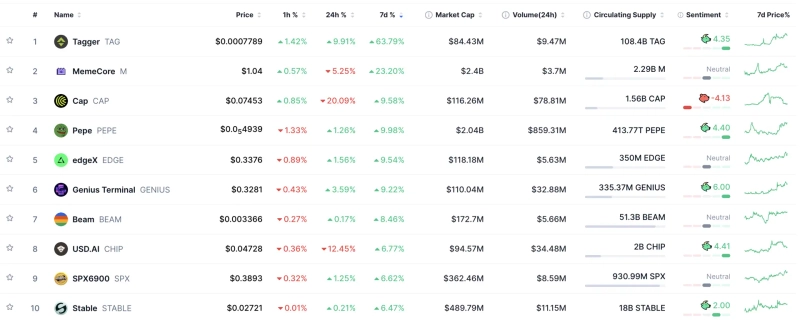
According to CoinMarketCap data on Oct. 29, about 270 of the top 300 cryptocurrencies by market capitalization fell over the past week, while only 30 rose. The simple average weekly return was estimated at about negative 7%, showing that losses spread across the market regardless of size.
Declines were also pronounced among larger altcoins. Worldcoin (WLD) fell 24.1% over the past week. The token came under pressure as a large amount of WLD was moved to exchanges from a wallet believed to be linked to the team, with a token unlock adding to the weakness.
Aerodrome Finance (AERO) dropped 16.2% despite the launch of multichain exchange Aero, after news emerged that BitMEX co-founder Arthur Hayes had sold AERO. LayerZero (ZRO) also lost 13.8%, with analysts attributing the decline to an Oct. 20 unlock equal to about 5.9% of circulating supply.
By contrast, Memecore (M) rose 29.3% on news that it would support bridging between BNB Chain and Base through integration with LayerZero and Stargate. Pepe (PEPE) gained 11.7% after a wallet linked to Justin Sun was estimated to hold 2.82% of total supply, drawing investor attention.
Volatility was even sharper among mid-cap tokens. QuarkAI (Q) plunged 61.1% over the past week, rapidly giving back recent gains. Q had soared more than 260% on Oct. 27 alone before tumbling more than 70% the following day. Some market participants have suggested a large share of the trading volume at the time may have been wash trading. Starknet (STRK) fell 15% after total value locked in its decentralized-finance ecosystem dropped about 74% over several days. Sonic (S) also remained weak after the foundation said it would transfer 13 million S tokens over the counter.
Among smaller-cap tokens, some names posted stand-alone rallies on coin-specific developments. STONK rose 13.8% as the number of holders increased and token buybacks funded by trading fees continued. USD.AI (CHIP) gained 6.4% over the past week after deploying $1 million to buy back about 22.3 million CHIP. Even so, many smaller altcoins weakened alongside the broader risk-off mood despite the absence of clear token-specific negative news.
Searching for Direction After the FOMC as Rates, Regulation and Midterms Loom
The altcoin market remains volatile and has yet to establish a clear direction. Risk appetite is still present, but uncertainty over interest rates, inflation, regulation and politics is limiting any further rebound.
Altcoins have also shown less rebound momentum than Bitcoin. In a recent weekly report, crypto exchange Bitfinex said altcoins have fallen more than twice as much as Bitcoin in the latest pullback. It said that even if a rebound emerges, Bitcoin is likely to rise first and altcoins may follow later. If the market declines again, altcoins could fall about twice as much as Bitcoin. Bitfinex also said the recent correction had flushed out a substantial amount of leverage in altcoins, reducing the risk of further liquidations compared with earlier periods.
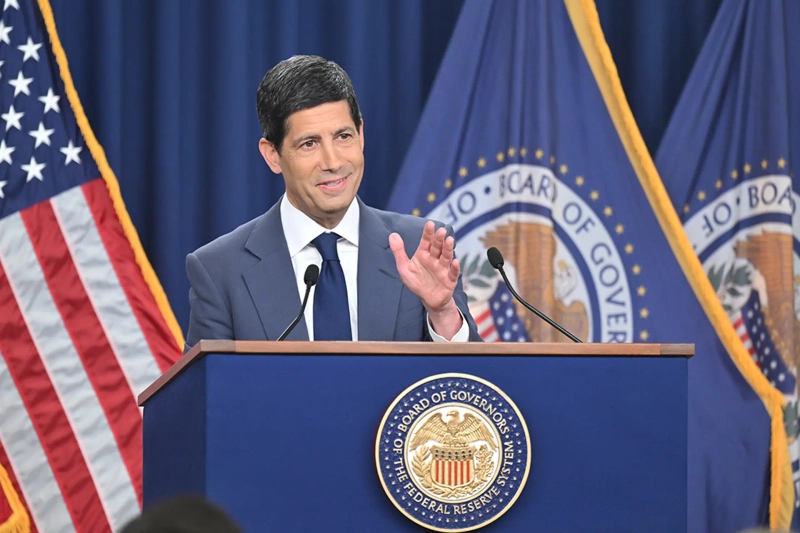
In the external environment, interest rates, high oil prices, and regulatory and political uncertainty remain the main variables. The Fed kept its benchmark rate unchanged but said inflation remains elevated, maintaining its guard against further price pressures. At the same time, major global investment banks judged the latest FOMC to be less hawkish than expected because Fed Chair Kevin Warsh did not deliver a clear signal of additional rate increases.
At the same time, Senate discussion of the CLARITY Act, a U.S. crypto market structure bill, has been delayed, while the U.S. Treasury Department continues to work with authorities including the Securities and Exchange Commission and the Commodity Futures Trading Commission to address regulatory gaps. Some analysts also say volatility in equities ahead of the Nov. 3 U.S. midterm elections could spill over into digital assets.
Some analysts say investors should remain alert to the possibility of another correction. Crypto analyst Benjamin Cowen said that while the Fed left rates unchanged, producer prices recently came in stronger than expected and rising oil prices could push inflation higher again. If the Personal Consumption Expenditures price index due later on Oct. 29 also comes in strong, long-term Treasury yields could rise again and increase downside pressure on crypto markets. He added that even if Bitcoin rebounds, it could still revisit its lows in the fourth quarter. Recent gains alone, he said, are not enough to conclude that downside risks have faded.
Others argue that risk appetite has not fully broken down. Crypto market maker Wintermute said the recent pullback in equities appeared to reflect a rotation out of artificial-intelligence-related stocks into other assets rather than a complete collapse in demand for risk. Still, Bitcoin has been closely tracking the Nasdaq and interest-rate moves, making the market’s short-term direction difficult to call with confidence. Investors need to remain cautious until Bitcoin reclaims the $82,500 level.
Kang Min-seung, Bloomingbit reporter minriver@bloomingbit.io

Minseung Kang
minriver@bloomingbit.ioBlockchain journalist | Writer of Trade Now & Altcoin Now, must-read content for investors.