PiCK
Alphabet Shock Sends Kospi Back to 5,600 as Samsung, SK Hynix Slide
Summary
- Alphabet’s weak earnings and concerns over the profitability of AI investment pushed the Kospi back to the 5,600 level.
- Samsung Electronics and SK Hynix fell nearly 5% and 9%, respectively, while foreign and institutional investors posted combined net selling of 780.2 billion won.
- Concerns that the investment burden on AI companies could slow demand for memory semiconductors are deepening broader investor caution centered on chip stocks.
Forecast Trend Report by Period


Alphabet Earnings Shock Hits Chip Stocks
Samsung Electronics Down 5%, SK Hynix Falls 9%
Foreign, Institutional Investors Net Sell 780.2 Billion Won
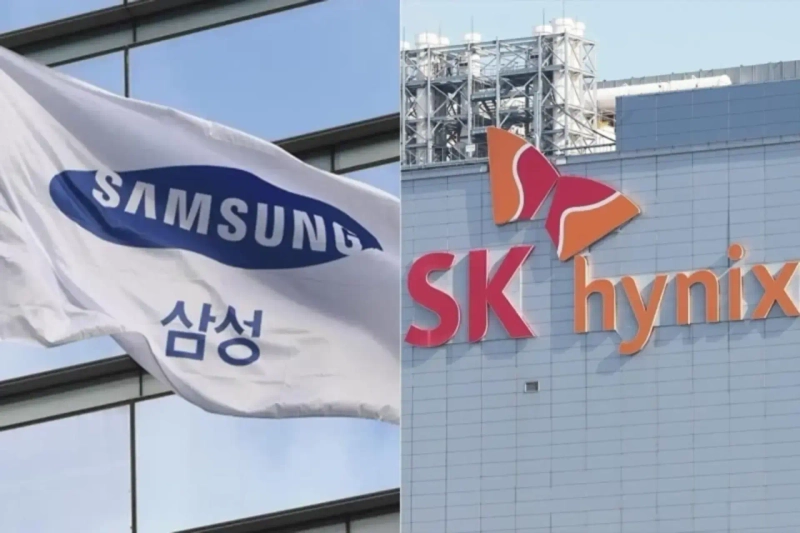
South Korea’s Kospi sank more than 5% intraday on October 30, sliding back to the 5,600 level. Selling in Samsung Electronics and SK Hynix intensified after weak results from Google parent Alphabet fueled concerns over the profitability of artificial intelligence investment. Foreign and institutional investors sold in tandem, overwhelming bargain buying by retail traders.
The Kospi was at 5,642.16, down 295.50 points, or 4.98%, from the previous session. The index opened at 5,760.35, down 3%, and fell as low as 5,629.55 during the session. After rebounding 6.63% on October 28 to recover the 6,000 mark, it slipped back to the 5,600 range two days later.
Losses were steepest among large semiconductor stocks. Samsung Electronics was trading at 219,750 won, down 12,250 won, or 5.28%, from its reference price. SK Hynix fell 136,000 won, or 8.91%, to 1.39 million won, dropping below the 1.4 million-won level. Pressure on the index mounted as the two stocks that had underpinned the domestic market fell together.
On the benchmark market, foreign investors were net sellers of 527.8 billion won, while institutions sold a net 252.4 billion won. Their combined net sales totaled 780.2 billion won. Retail investors bought a net 697.8 billion won, but that was not enough to pull the index out of the red. Program trading also showed net selling of 331.4 billion won.
Selling was not confined to chip shares. Decliners on the Kospi outnumbered gainers 667 to 196, more than a three-to-one margin. Weakness in large-cap stocks was spreading caution across the broader market.
The pressure on South Korean equities followed an overnight drop in U.S. technology shares. The Nasdaq Composite fell 1.38% in New York on October 29. The S&P 500 and Dow Jones Industrial Average also slipped 0.30% and 0.25%, respectively. Alphabet dropped more than 12% after reporting earnings that missed market expectations and stoked concerns that AI spending could weigh on cash flow.
The shock spread to semiconductor stocks. The Philadelphia Semiconductor Index fell 1.42%, while Micron and SanDisk dropped 4.98% and 5.32%, respectively. After the close, Amazon and Intel also fell in after-hours trading on disappointment over their earnings outlooks, adding pressure to South Korea’s market.
The investment burden facing AI companies is closely tied to demand for South Korean memory chips. If Big Tech and data-center operators slow the pace of capital spending, orders for high-bandwidth memory, or HBM, and server memory could also be affected. Even with near-term earnings improving, doubts over whether investment and demand can be sustained are weighing on share prices.
“Recently, volatility in semiconductor shares has been driven not only by corporate earnings, but also by foreign fund flows and shifts in investor sentiment,” Seo Sang-young, an executive director at Mirae Asset Securities, said. Intraday trading by foreigners in both stock-index futures and cash equities is important, he added.
The Kosdaq market was also weaker. The Kosdaq index was at 726.93, down 26.30 points, or 3.49%, from the previous session. Foreign and institutional investors were net sellers of 67.2 billion won and 43.2 billion won, respectively, while retail investors bought a net 119 billion won. Losers totaled 1,418, far outnumbering the 255 gainers.

Doohyun Hwang
cow5361@bloomingbit.ioKEEP CALM AND HODL🍀