US Midterms in Three Days: Could Trump-Led Push on Two Wars and US-Bound Investment Be Upended?
Summary
- If Democrats retake both the House and the Senate, President Trump could lose momentum on priority policies including his tariff policy and a potential war with Iran.
- The share of bets on Democrats’ odds of retaking the Senate has climbed to 68%, increasing uncertainty around South Korea-linked policies including the Alaska LNG project and shipbuilding revival (MASGA).
- Trump’s approval rating falling to the low 30% range, along with stronger congressional control over the budget and appointments, could constrain weapons support for Ukraine and Taiwan as well as spending on a war with Iran.
Forecast Trend Report by Period


Democrats Favored to Capture Congress, Raising Risk of an Early Trump Lame-Duck Phase
Trump Approval Rating Falls to Low 30% Range
Republican Strongholds Such as Texas and Kansas Show Signs of Cracking
An Election Defeat Could Undercut Tariffs, an Iran War and Other Priorities
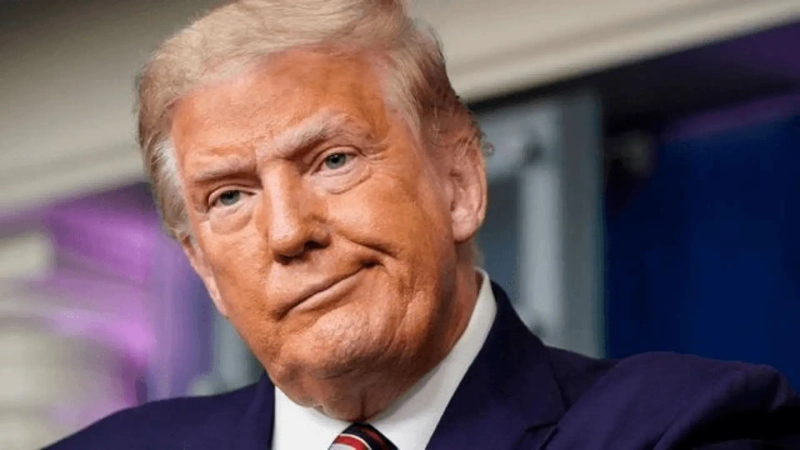
The US midterm elections, which will help determine President Donald Trump’s hold on Washington, are three days away. Democrats are favored to retake the House, and a growing number of forecasts suggest they could also seize the Senate. If that happens, Trump would enter a lame-duck phase. It would also threaten momentum behind policies he has driven so far, including changes in relations with allies, major war efforts and tariff measures.
Major election forecasters including Cook Political Report said on October 29 that control of the Senate will be decided by seven toss-up races still within the margin of error: Alaska, Ohio, Iowa, Michigan, Texas, Kansas and Maine. Most of those seats are now held by Republicans. If Democrats win just three of the seven, they would flip the chamber to a 51-49 majority.
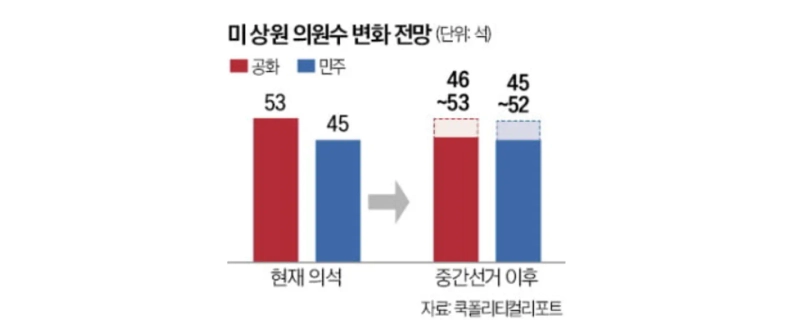
Polling has moved further in Democrats’ favor as Election Day nears. On betting platforms including Kalshi and Polymarket, the share of wagers on Democrats retaking the Senate has risen to 68%.
Even if Trump loses the midterms, he is not expected to change course on policies such as tariffs or a war with Iran. But if Republican lawmakers, who have largely acted as a rubber stamp until now, begin speaking out more forcefully, the administration would struggle to move at the same speed as before.
Trump’s approval rating, already down to the low 30% range, is also giving Republican lawmakers reason to put distance between themselves and the president. ABC reported that Trump’s net approval rating is the lowest for any president heading into a midterm election since World War II.
Congress’s strongest tools for checking the executive branch are the budget and appointments. Trump used the budget reconciliation process in his first year to secure funding for key priorities through what he called the One Big Beautiful Bill Act, or OBBBA. That option would become far harder to use. It may also become more difficult for him to write plans such as the Golden Dome or a Golden Fleet into legislation including the National Defense Authorization Act, or NDAA.
Weapons support for Ukraine, arms sales to Taiwan and spending tied to a war with Iran would also come under closer congressional scrutiny. Policies linked to South Korea, including the Alaska liquefied natural gas project and a shipbuilding revival initiative known as MASGA, could face greater uncertainty as well. Administration personnel choices may also be affected. Democrats are already discussing the impeachment of Defense Secretary Pete Hegseth.
Democrats also hold a clear advantage in gubernatorial races. Cook Political Report said the party could win a majority of governorships, at least 26, for the first time since 2010. Governors do not shape federal policy as directly as Congress does. Even so, that would be a painful setback for Republicans, who had planned more aggressive gerrymandering ahead of the next presidential election in two years.
Governors and state legislatures also have significant influence over changes to rules for mail-in and early voting, disputes over election results and enforcement of immigration crackdowns. That means even if decisions are made at the federal level, implementation in the states may not proceed smoothly.
If Republicans prevail against expectations, the Democratic leadership, already under fire, would suffer an even bigger blow.
Lee Sang-eun, Washington correspondent, Hankyung.com selee@hankyung.com

Korea Economic Daily
hankyung@bloomingbit.ioThe Korea Economic Daily Global is a digital media where latest news on Korean companies, industries, and financial markets.