‘Kospi to 6,000 and Beyond’: Investors Bet $231 Million on Leveraged ETFs
Summary
- After the Kospi broke above 6,000, a combined 323.1 billion won ($231 million) flowed into KODEX Kosdaq150 Leverage and KODEX Leverage, signaling bigger bets on further gains in the index.
- Amid rising stock-market volatility, money also poured into defensive and cash-like products such as KODEX Money Market Active and TIGER Dividend Covered Call Active, showing that aggressive and defensive capital moved at the same time.
- Korean retail investors concentrated their buying in U.S. tech stocks and Nasdaq leveraged products such as SpaceX, QLD, and TQQQ, sending net purchases of U.S. stocks surging to $5.42 billion.
Forecast Trend Report by Period


Money pours into products targeting double returns as Kospi and Kosdaq climb
Korean retail investors pile into U.S. tech stocks; net buying of U.S. shares tops $5.42 billion
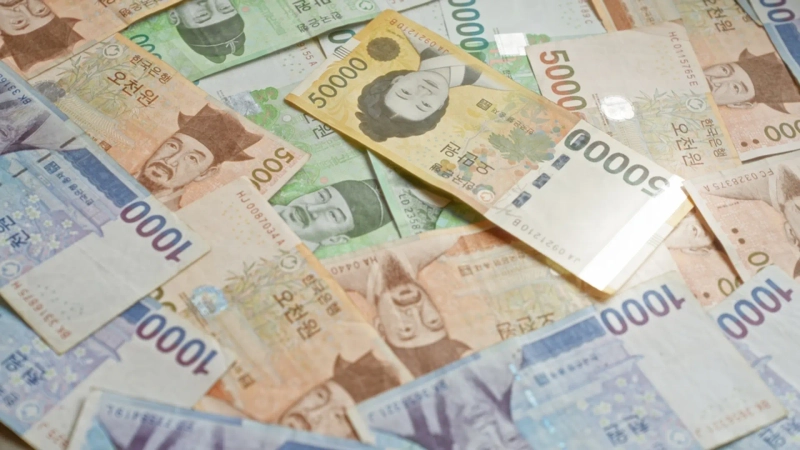
After the Kospi broke above 6,000, more than 323.1 billion won ($231 million) flowed into leveraged exchange-traded funds designed to deliver twice the gain of a rising index. As South Korea’s stock market swung sharply, Korean retail investors also concentrated purchases in U.S. technology shares and Nasdaq-linked leveraged products.
According to data from Koscom’s ETF Check and the Korea Securities Depository, 174.4 billion won ($125 million) flowed into the KODEX Kosdaq150 Leverage ETF between Oct. 23 and Oct. 29. That was the third-largest inflow among all ETFs.
Another 148.7 billion won ($107 million) went into KODEX Leverage, which tracks twice the daily return of the Kospi 200 Index. Combined inflows into the two products totaled 323.1 billion won ($231 million).
The Kospi rose for two straight sessions on Oct. 27 and Oct. 28 to close at 6,012.44, prompting investors expecting further gains to move into leveraged products. Such ETFs magnify returns when the underlying index rises, but losses can also be roughly doubled when the index falls.
Risk-taking was not the only theme. As volatility intensified enough to trigger sidecar curbs three times over the past week, money also flowed into defensive and cash-like products.
KODEX Money Market Active, which invests in short-term financial instruments, drew 732.7 billion won ($526 million), the largest inflow among all funds. TIGER Dividend Covered Call Active, which combines dividends with option-selling strategies, attracted 239.3 billion won ($172 million). Money betting on further gains and money preparing for volatility moved at the same time.
Korean retail investors’ preferred trade in the U.S. market was technology stocks. Their biggest net purchase over the past week was SpaceX, at $221.83 million.
Buying centered on SpaceX after the company posted its first quarterly profit since listing and as the possibility of a merger with Tesla was discussed. Expectations that SpaceX could also benefit from the upcoming Nasdaq listing of artificial intelligence company Anthropic also appear to have supported demand.
Bloomberg reported on Oct. 29, citing people familiar with the matter, that one-third of SpaceX’s third-quarter revenue came from a single customer, Anthropic.
Korean investors were also net buyers of $83.36 million in Alphabet, making it the third-most purchased U.S. stock, and bought $74.68 million of Micron. They did not stop at individual tech names and also added leveraged ETFs tied to gains in the Nasdaq.
QLD, which seeks to deliver twice the daily return of the Nasdaq 100, ranked second in net buying with $86.41 million. TQQQ, which targets three times the same index’s daily return, ranked fourth with net purchases of $80.44 million.
Overall flows into U.S. stocks also surged. From Oct. 1 through Oct. 29, Korean investors were net buyers of $5.42268 billion of U.S. shares. That was 5.4 times the previous month’s total and the largest amount in 11 months, the most since November 2025.
With volatility rising in the domestic market and a stronger won lowering the won-denominated cost of U.S. stocks, investors turned back to the U.S. market.
Cash on the sidelines changed little. Investor deposits edged up to 88.7233 trillion won on Oct. 29 from 88.6842 trillion won on Oct. 22. Over the same period, margin-loan balances fell to 29.0886 trillion won from 30.3633 trillion won.
Lee Song-ryeol, Hankyung.com reporter yisr0203@hankyung.com

Korea Economic Daily
hankyung@bloomingbit.ioThe Korea Economic Daily Global is a digital media where latest news on Korean companies, industries, and financial markets.