South Korean Tesla Holders Face Tax Shock on $23.11 Billion Stake Without Selling if SpaceX Merges
Summary
- When overseas companies merge, the exchange of overseas stocks is treated as a transfer under South Korean tax law, triggering a 22% capital-gains tax.
- Concerns are growing that the entire $23.1 billion Tesla investment balance could become taxable depending on the structure of a SpaceX merger.
- A petition for reform has been filed because the tax burden rises for long-term holders, and investors may still have to pay a fixed tax bill even if the share price later falls.
Forecast Trend Report by Period


South Korean investors holding $23.11 billion of Tesla could face capital-gains tax if SpaceX merger goes through
Overseas stock investors fear tax hit
Share swap is treated as a sale in South Korea
Rocket Lab gains were taxed at 22% last year
Long-term holders could pay as much as nine times more tax
Petition calls for tax deferral on overseas-stock mergers
This article was published on Hankyung Premium 9, the paid investment platform of the Korea Economic Daily. More stock investment articles are available with a subscription to Hankyung Premium 9 (www.hankyung.com/premium9).
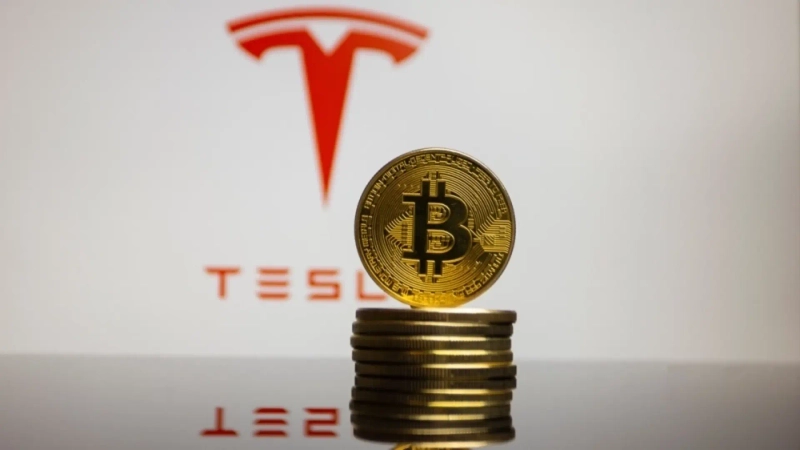
When Elon Musk, chief executive officer of Tesla and SpaceX, posted on X on Oct. 16 about a merger between the two companies, Wall Street immediately began weighing the deal's pros and cons.
South Korean retail investors are preoccupied with a different risk. Under South Korean tax law, when shares in a foreign company are exchanged for stock in a new company through a merger, the transaction is treated as a transfer, triggering a 22% capital-gains tax on the profit. That has raised concern that what Rocket Lab shareholders experienced last year could be repeated with Tesla.
◇ "Tax bill without selling a single share"
A petition filed on Oct. 22 on the National Assembly's public petition platform calling for a tax-deferral system for capital-gains taxes arising from overseas stock reorganizations had drawn more than 25,000 signatures as of Nov. 3. If it reaches 50,000 by Nov. 21, it will be reviewed by the National Assembly's Strategy and Finance Committee.
Investors are worried about a repeat of the Rocket Lab case last year. In May 2025, Rocket Lab switched to a holding-company structure, and each existing share was automatically exchanged for one new share. There was no tax in the US, but South Korea treated it differently. Some local brokerages processed the conversion as if investors had sold the old shares at the closing price on the conversion date and bought the new shares. Tax authorities also viewed the transaction as a transfer. Rocket Lab shareholders paid the tax in May this year.
The basis for that interpretation is South Korea's Income Tax Act. The law defines not only sales but also exchanges as transfers. Even if investors receive no cash at all, they are deemed to have sold the old shares and bought new ones, and a 22% tax is levied on the gain. For mergers between domestic corporations or conversions into holding companies, taxation is deferred until the newly received shares are sold under the country's tax incentive law. Foreign corporations are not covered by that exception.
◇ The longer the holding period, the bigger the tax bill
Investor attention is greater because Tesla is on an entirely different scale from Rocket Lab. Data from the Korea Securities Depository show South Korean investors held $23.11 billion of Tesla stock as of Oct. 30. That was the largest position among US stocks and nearly matched the combined total of second-ranked Nvidia and third-ranked Alphabet Class A.
Under the merger structure Wall Street considers most plausible, the entire $23.11 billion holding could become taxable. The leading scenario is for the larger SpaceX to acquire Tesla. SpaceX is valued at about $2 trillion, roughly $500 billion more than Tesla. In that case, Tesla shareholders would give up Tesla shares and receive SpaceX stock. South Korean tax law would treat that moment as a sale of Tesla shares. The amount received would depend on the exchange ratio and any premium. Barclays assumes about 3.1 SpaceX shares for each Tesla share and a premium of about 20%. Bank of America estimates 20% to 30%, while RBC and JPMorgan project 20% to 35%.
Using Barclays' most conservative estimate, the calculation works like this. Suppose an investor bought about $7,250 worth of Tesla at $108 a share in early January 2023. Based on Tesla's closing price of $373.71 on Oct. 20, when the company formally said it was reviewing a merger, that position would be worth more than about $21,750. If that value is set at about $21,750 and a 20% merger premium is added, the investor would receive SpaceX shares worth about $26,100.
The tax code would treat that as a sale at about $26,100. The gain would be about $18,850. After subtracting the basic deduction of about $1,810, the taxable gain would be about $17,030. At a 22% rate, the tax bill would come to about $3,750.
The investor would not receive any cash, but the tax would still have to be paid in cash by May of the year after the merger.
The burden rises for longer-term holders. The earlier they bought, the lower their cost basis and the larger the gain. Assuming the same initial investment of about $7,250, a January 2023 buyer would owe about $3,750 in tax. An investor who bought at the April 2024 low of $142 would owe about $2,970. A buyer at this July's low of $298 would owe about $400. That means a three-year holder could pay more than nine times as much as an investor who bought this summer. Someone with no intention of selling may have to sell shares just to cover the tax.
There is another drawback. The tax is fixed at the time of the exchange, so if the share price falls afterward, investors could end up paying tax on gains they never actually pocketed. Even if SpaceX shares initially worth about $26,100 were cut in half to about $13,050, the tax would still remain about $3,750. Losses on overseas stocks cannot be carried forward to the next year, leaving no way to recover that tax.
"A lot will depend on the final merger structure, but under the current law there is little basis for treating it differently from Rocket Lab," a financial-investment industry official said. "Unless the system changes, investors have little choice but to prepare for it."
Park Ju-yeon, Korea Economic Daily reporter grumpy_cat@hankyung.com

Korea Economic Daily
hankyung@bloomingbit.ioThe Korea Economic Daily Global is a digital media where latest news on Korean companies, industries, and financial markets.