PiCK
Democratic Party Leader Kim Min-seok Proposes Delay to Virtual-Asset Income Tax
Summary
- Kim Min-seok, leader of the Democratic Party of Korea, said he had formally proposed to the government a delay to virtual-asset income taxation that had been scheduled to take effect next year.
- The Democratic Party said it would be preferable to first enact the Digital Asset Basic Act, establish an institutional framework, and give companies and investors time to adjust.
- If accepted, the latest proposal would mark a fourth postponement. A revision to the Income Tax Act would be required, but there appears to be little obstacle to passage because both ruling and opposition parties support a delay.
Forecast Trend Report by Period


Tax Principles, Industry Conditions Cited
Firms, Investors Need Time to Adjust
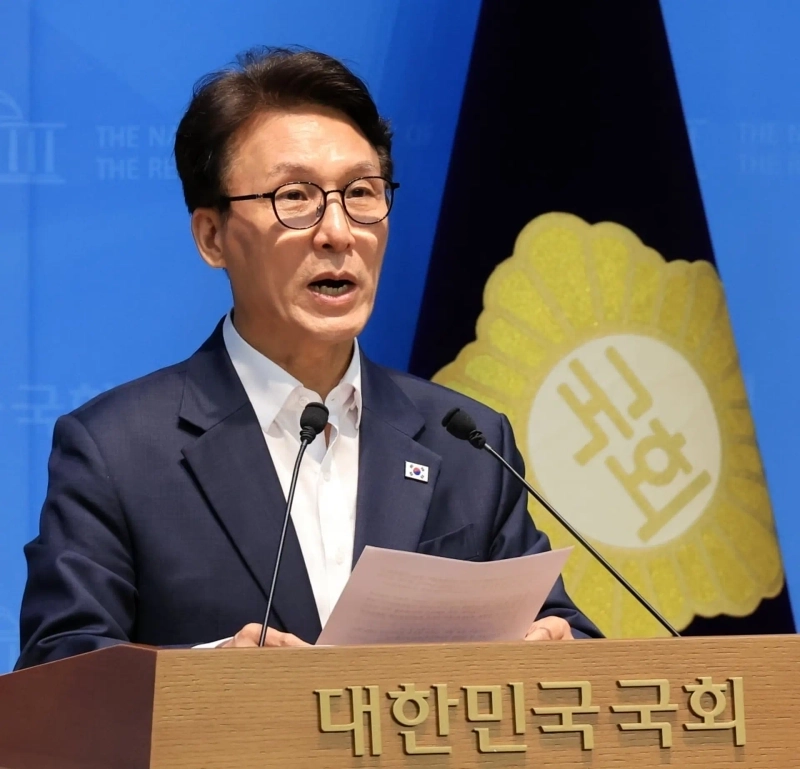
Kim Min-seok, leader of the Democratic Party of Korea, formally proposed that the government delay taxation on virtual-asset income that had been scheduled to take effect next year. The proposal came a day after Democratic Party lawmakers on the National Assembly’s planning and finance committee urged the party leadership to seek a deferral. The party’s position is that taxation should begin only after the Digital Asset Basic Act is enacted to establish an institutional framework.
At a Supreme Council meeting at the National Assembly on Nov. 4, Kim said the party had reached its conclusion after deliberations centered on the National Assembly committee, consultations between the ruling and opposition parties, and discussions with virtual-asset businesses. He formally proposed to the government that virtual-asset income taxation be deferred.
Kim said the party agreed it would be preferable to first enact the Digital Asset Basic Act to put the overall framework in place and give companies and investors time to adapt, after comprehensively considering tax principles, conditions in the domestic industry and fairness among users. He added that the deferral period would be clearly defined, while preparations for taxation would continue in parallel, including the use of overseas transaction data, system verification and taxpayer guidance.
Taxation of virtual assets was introduced through a 2020 revision to the Income Tax Act, but implementation has been postponed three times. The Democratic Party had pushed in 2024 to proceed with taxation while raising the basic deduction to 50 million won ($36,200) from 2.5 million won ($1,810), but later agreed to the government’s proposal for a two-year delay. If accepted, the latest proposal would mark a fourth postponement. Delaying implementation would require another revision to the Income Tax Act, but there appears to be little obstacle to passage because the People Power Party also supports a deferral. Oh Gi-hyoung, the ruling party’s senior member on the committee, said earlier that any related bill would need to pass by late November if lawmakers decide to delay the tax.
Ha Ji-eun, Hankyung.com reporter hazzys@hankyung.com

Korea Economic Daily
hankyung@bloomingbit.ioThe Korea Economic Daily Global is a digital media where latest news on Korean companies, industries, and financial markets.