Democrats Target War Funding, Raising Pressure for Shift in Trump's Foreign Policy
Summary
- The report said the international situation has entered a new phase as Democrats seek to adjust war budgets and support policies for Ukraine and Israel.
- It said Democrats now hold a pressure point that could block a major escalation by attaching conditions to additional Iran war funding or limiting appropriations.
- The report said concerns are rising that if Democrats take control of Congress, they may push an additional Ukraine aid bill while President Trump's foreign policy could shift toward stronger pressure on U.S. allies.
Forecast Trend Report by Period


How the Global Situation May Shift
Focus on the Impact of the Iran and Ukraine Wars
Democrats Seek to Curb the Iran War Through the Budget
Ukraine Aid Bill Appears Poised to Advance
Fears Grow of Trump 'Surprise Moves' as Pressure Mounts
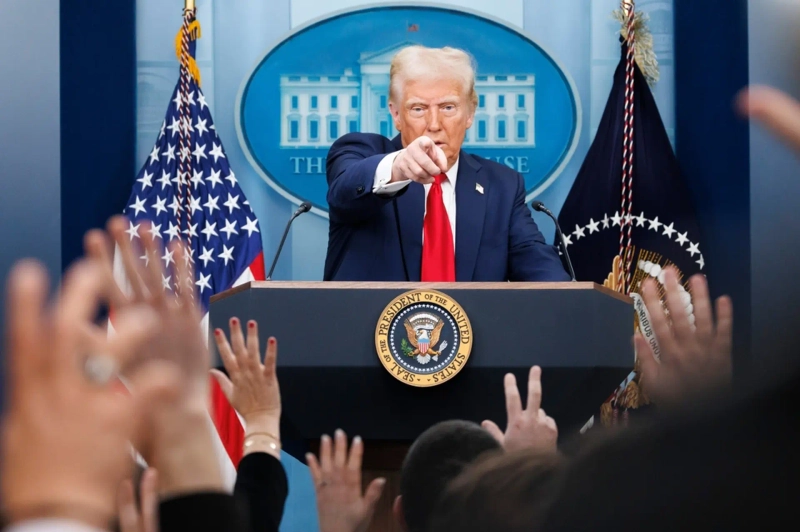
The international landscape is entering a new phase as Democrats are projected to retake both the House and Senate in the U.S. midterm elections. Congressional checks on war spending are set to strengthen, while support policies for Ukraine and Israel face pressure to be adjusted. Some fear President Donald Trump could take bolder action overseas to offset the political setback.
Trump Says Iran Was a Factor in the Election Loss
Reuters and other media outlets reported on Nov. 4 that U.S. voters used the midterm elections to put the brakes on Trump's war and tariff policies. In a Fox News interview the same day, Trump said that "part of it, I think, was because of Iran" when asked why Republicans lost. He also stressed that he would use his veto power if Democrats sent him foreign-policy legislation he could not accept, signaling he has no intention of revising his existing diplomatic course.
The main tools Democrats would gain are control over the budget and oversight authority. Through standing committees in both chambers, they can question war costs, operational goals and the legality of weapons transfers, and summon administration officials to testify at hearings. In the Senate, they can also check confirmations of key foreign-policy and national-security officials.
Still, Democrats cannot override a presidential veto on their own. Doing so would require a two-thirds majority in each chamber. The executive branch also retains broad discretion in diplomatic negotiations and military operations.
The Iran War Is the First Test
On Iran, Democrats could apply pressure by attaching conditions to additional war funding or limiting appropriations. Michael O'Hanlon, director of foreign policy research at the Brookings Institution, said withholding funds could prevent a large-scale expansion of the war.
The election result has also complicated the conditions for U.S.-Iran negotiations. Iran may conclude that Trump's domestic political base has weakened and delay making concessions. At the same time, the Trump administration, now free of immediate election pressure, could intensify attacks on Iran in a bid to produce clearer battlefield results.
Timing is another variable. The new Congress begins its term on Jan. 3 next year. Barbara Slavin, a distinguished fellow at the Stimson Center, said Trump could be tempted to use the period before the new Congress is seated to launch new military action against Iran.
There is also more room for change in support for Ukraine. Deutsche Welle, Germany's public broadcaster, reported that Democrats could put an additional Ukraine aid bill on the agenda if they control both chambers. Even if Trump vetoes it, Democrats could try to persuade some Republicans and secure the votes needed to override him.
China and Japan Weigh the Implications
China appears focused on calculating how the election outcome will affect U.S.-China relations. The prevailing view there is that Washington's policy of checking Beijing will not change significantly even if Trump's political standing weakens. Chen Dongxiao, president of the Shanghai Institutes for International Studies, said the midterms could alter the balance of power in Congress but would not necessarily deliver a major shock to U.S.-China ties. Congressional checks may make it harder for Trump to advance his domestic agenda, but the president would still retain substantial discretion in foreign policy.
Japan is also watching the impact on diplomacy, security and the economy. The concern is that Trump, blocked at home, could step up pressure on allies in search of foreign-policy wins. A senior official at Japan's Prime Minister's Office said that if Congress does not move, Trump could end up expending his energy in other areas such as diplomacy and security.
Kim Ju-wan, reporter / Beijing: Kim Eun-jung, correspondent / Tokyo: Choi Man-su, correspondent kjwan@hankyung.com

Korea Economic Daily
hankyung@bloomingbit.ioThe Korea Economic Daily Global is a digital media where latest news on Korean companies, industries, and financial markets.