‘Blue Tsunami’ Hits Samsung and SK Hynix as Democrats’ Sweep Fuels Chip-Demand Fears
Summary
- Democratic control of both the House and Senate fueled concerns over data center regulation and slower construction, leaving Samsung Electronics and SK Hynix slightly lower at the close.
- Brokerages said delays in starting data center construction caused by regulation should be distinguished from actual cancellations of server and memory orders, and that expectations for a memory shortage and earnings improvement remain intact.
- Analysts said a higher HBM production mix could deepen shortages in conventional memory supply, and that a rebound in semiconductor stocks will depend on the strength of regulation and Big Tech AI investment plans.
Forecast Trend Report by Period


Samsung Electronics, SK Hynix Rise Early on Nov. 4 but End Slightly Lower
Data Center Regulation Stokes Fears of Delayed Investment
Brokerages Say Earnings Outlook Remains Supported by Memory Shortage
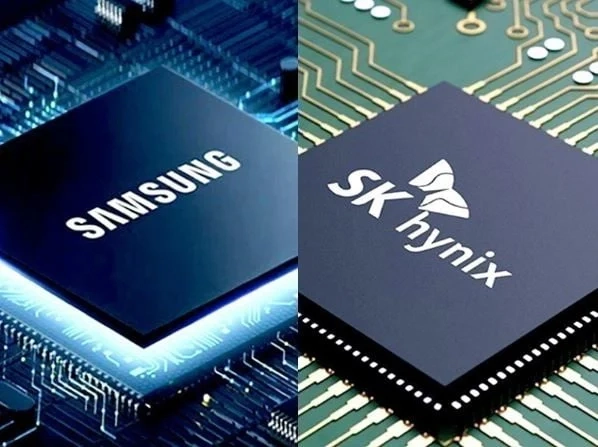
Samsung Electronics and SK Hynix surrendered early gains to end slightly lower on Nov. 4 after a “blue tsunami” swept the U.S. midterm elections. Brokerages attributed the move to concern that Democratic control of both chambers of Congress could tighten data center regulation and put a brake on semiconductor demand, weighing on investor sentiment.
Samsung, SK Hynix Erase Intraday Gains and Close Lower
According to the Korea Exchange, Samsung Electronics fell 1,500 won, or 0.68%, to close at 218,000 won, while SK Hynix lost 2,000 won, or 0.14%, to 1.396 million won on Nov. 4. Both stocks had climbed sharply early in the session — Samsung by as much as 3% and SK Hynix by 5% — before giving up all of those gains. The Kospi ended up 35.01 points, or 0.62%, at 5,683.80.
Early buying was driven by optimism over earnings from U.S. semiconductor and AI server companies. The Philadelphia Semiconductor Index rose 2.63% overnight, and AMD later projected about $17 billion in fourth-quarter revenue, topping market expectations. Super Micro Computer also raised its full-year revenue outlook, reinforcing confidence in demand for AI servers.
Sentiment shifted as vote counting in the midterm elections progressed. Major U.S. broadcasters projected that Democrats would secure majorities in both the House and Senate, sharpening concern over regulation tied to data center permitting and power-grid cost burdens. Lee Kyung-min of Daishin Securities said growing expectations of a Democratic victory fueled worries about tighter AI data center rules and slower construction, undermining risk appetite.
Data Center Regulation Concerns Put Focus on Pace of Spending, Not Size
The regulatory debate stems from local opposition to the heavy electricity and water use of data centers, as well as rising power bills. If developers are required to shoulder the cost of expanding the power grid or face stricter permitting requirements, construction costs could increase and project schedules could be delayed.
Seo Sang-young of Mirae Asset Securities said Democratic control of Congress could intensify policy discussions over making developers, rather than ordinary consumers, bear grid-expansion costs related to data centers.
Delays in data center construction could also affect demand for semiconductors used in servers. If completion schedules slip, orders for high-bandwidth memory, or HBM, could be pushed back. Higher power procurement costs could also reduce purchases of servers and memory.
Still, the election result does not mean regulations will be implemented immediately. Seo said legislation and enforcement would still require agreement between both chambers, the president’s signature and follow-up action by state-level power regulators. An immediate mandate forcing developers to absorb those costs has not been finalized. In his view, the impact is more likely to fall on cost structures and investment schedules for new projects than on overall AI investment.
‘Distinguish Construction Delays From Order Cancellations’ as Memory Shortage Seen Persisting
Some analysts said the market reaction was excessive because a Democratic advantage had already been the base-case scenario. Lee Jae-won of Yuanta Securities said a Democratic sweep of both chambers had been priced in before the election, with odds above 60%, making it difficult to see the result as a fresh negative.
Even if data center groundbreakings are delayed, he said, it is too early to conclude that memory demand will weaken.
Lee added that delays in project starts caused by tighter regulation should be distinguished from outright cancellations of server and memory orders. Given expanding long-term supply contracts and limited memory production capacity, he said there is not enough evidence to conclude that delays in some projects alone would drag down average selling prices for memory.
Brokerages maintained expectations for earnings improvement driven by a memory shortage. On Nov. 4, KB Securities forecast combined fourth-quarter operating profit for Samsung Electronics and SK Hynix at 23.2 trillion won. It said rising HBM output would further tighten supply of conventional memory.
Kim Dong-won of KB Securities said memory inventories at Samsung Electronics and SK Hynix currently stand at less than 10 days. A higher HBM production mix next year, he added, could trigger a supply cliff in conventional memory and deepen shortages further.
Analysts said the next rebound will depend on the eventual strength of regulation and whether Big Tech alters its AI spending plans. Seo said semiconductor shares, which have fallen sharply in recent sessions, could bounce back if the final regulatory package proves limited and Big Tech’s AI investment plans show no major change.
Lee added that recovery hopes for large-cap semiconductor stocks would remain intact if, after election uncertainty fades, long-term yields and credit risk stabilize and foreign investors turn into net buyers.
Kim Yeon-ji, Hankyung.com reporter kongzi@hankyung.com

Korea Economic Daily
hankyung@bloomingbit.ioThe Korea Economic Daily Global is a digital media where latest news on Korean companies, industries, and financial markets.