Summary
- International gold prices reclaimed the $4,000-an-ounce level, helped by dollar weakness after the U.S. midterm elections.
- Prices of precious metals including gold, silver, platinum and palladium rose together as Democratic control of both chambers widened uncertainty over policy direction and the economic outlook.
- Markets said the Fed's chances of another rate hike (83%) and the U.S. nonfarm payrolls report due on November 6 could act as headwinds for gold prices.
Forecast Trend Report by Period


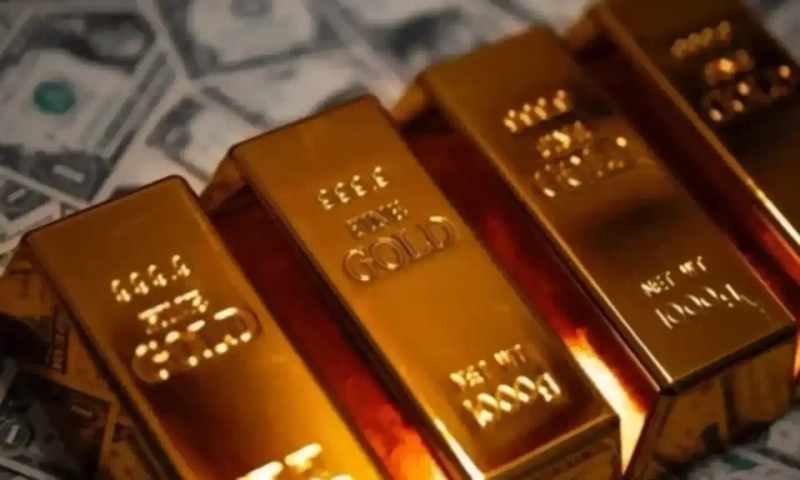
Gold reclaimed the $4,000-an-ounce level on the back of a weaker dollar after the U.S. midterm elections. Precious metals rose across the board as Democratic control of both chambers of Congress added to uncertainty over U.S. policy and the economic outlook.
Reuters reported on November 4 that spot gold traded at $4,059.95 an ounce as of 2:04 p.m. Eastern time, up 3.4% from the previous session. It was on course for its biggest daily gain since mid-August. December gold futures settled 3.4% higher at $4,073 an ounce.
Spot gold had fallen to $3,869.85 on October 30, its lowest since October 2025, before rebounding as the dollar slipped to its weakest level in more than a month. Because gold is priced in dollars, a weaker U.S. currency reduces the cost for buyers using other currencies.
The rally spread to other precious metals. Spot silver rose 4.9% to $52.23 an ounce, platinum climbed 5.6% to $1,496.40, and palladium surged 7.5% to $1,004.
Markets also focused on what a political split, with Democrats controlling Congress and Republicans holding the White House, could mean for the economy and monetary policy. Jim Wyckoff, a market analyst at American Gold Exchange, said legislative gridlock could weigh on the economy, potentially giving the Federal Reserve more room to adopt a looser policy stance.
Still, the near-term rate outlook remains tilted toward another increase. CME FedWatch showed markets pricing in about an 83% chance of a December benchmark rate hike at the time of the report. Higher rates can pressure gold by increasing the opportunity cost of holding a non-yielding asset.
Investors are also watching the U.S. nonfarm payrolls report due on November 6. Daniel Ghali, head of metals research at Deutsche Bank, said a strong jobs reading could reinforce expectations for further rate hikes. He added, however, that the labor market is not the main factor shaping the current inflation outlook, limiting the chance that payroll data alone would materially lift expectations for the terminal rate.

YM Lee
20min@bloomingbit.ioCrypto Chatterbox_ tlg@Bloomingbit_YMLEE