Kospi Seen Rebounding as U.S. Midterm Uncertainty Eases, With AI Regulation a Risk
Summary
- After the U.S. midterm elections, the Kospi has historically posted positive returns, fueling expectations for a rebound as election uncertainty fades.
- Still, a Democratic sweep of both chambers has heightened the possibility of tighter AI infrastructure investment and data center regulation, which could weigh on South Korea’s semiconductor-led stock market.
- Some analysts pushed back, saying it would be difficult to halt AI investment altogether and that it is too early to conclude that memory demand or memory average selling prices (ASP) will decline.
Forecast Trend Report by Period


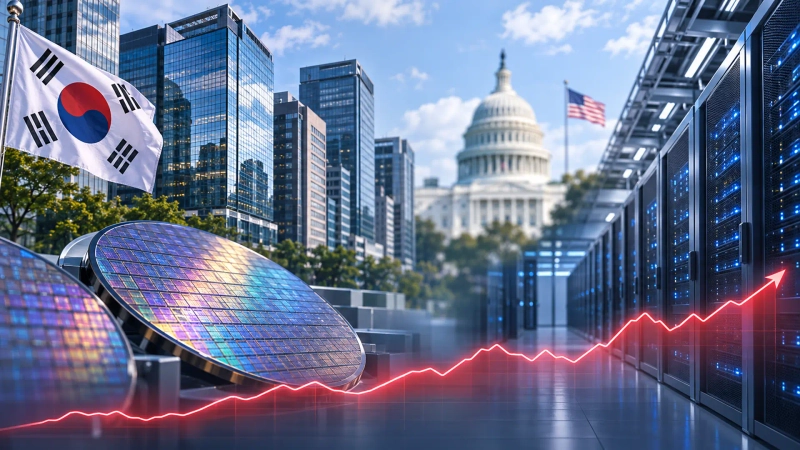
Expectations are building for a rebound in South Korea’s Kospi after the U.S. midterm elections removed a layer of political uncertainty. Still, a Democratic sweep of both chambers of Congress could lead to tighter regulation of AI data centers, potentially weighing on South Korea’s semiconductor-heavy stock market.
According to the Korea Exchange, the Kospi rose an average 2.1% one month after the six U.S. midterm elections held between 2002 and 2022. The average gain reached 6.7% after six months and 12.8% after one year. Korea Investment & Securities also found that November returns were positive in all seven U.S. midterm election years since 1998, with an average gain of 5.72%.
U.S. stocks also rose after the election result. On Nov. 4, the Dow Jones Industrial Average climbed 3.03%, while the S&P 500 advanced 1.58% and the Nasdaq Composite gained 1.44%. The move reflected expectations that a Democratic-controlled Congress would check large-scale fiscal spending and abrupt policy shifts by the Trump administration.
Lee Kyung-min, an analyst at Daishin Securities, said South Korea’s stock market remains deeply undervalued, with its 12-month forward price-to-earnings ratio at just 4.2 times. In his view, the fading of election uncertainty could serve as a catalyst for a market re-rating. Kang Jin-hyuk, an analyst at Shinhan Investment & Securities, said market conditions such as the macroeconomy and corporate earnings, rather than the election outcome itself, will be the main factors shaping stocks after the vote.
A key variable for South Korean equities is investment in AI infrastructure. Democratic victories in major races in Texas and Georgia, where data centers are heavily concentrated, have heightened concern over tighter regulation and restrictions on construction. With Samsung Electronics and SK Hynix accounting for a large share of the Kospi, the benchmark is highly sensitive to the pace of data-center investment and changes in memory demand.
According to Ballotpedia, 28 of 41 data center-related ballot measures in this midterm election involved construction restrictions. In six earlier related votes, all restriction proposals were approved.
Even so, some argue it is premature to link delays in a handful of projects to a broader pullback in AI investment or falling memory prices. Lee Jae-won, an analyst at Yuanta Securities, said AI investment cannot be halted altogether given the president’s veto power and the strategic importance of the U.S.-China contest for AI leadership. He added that delays in some projects alone do not provide sufficient grounds to conclude that memory average selling prices, or ASP, will fall, citing expanded long-term supply contracts and limited memory production capacity.

YM Lee
20min@bloomingbit.ioCrypto Chatterbox_ tlg@Bloomingbit_YMLEE