Trump Pushes Tech to Say SI Instead of AI, Leaving Big Tech Scrambling
Summary
- Trump is pressuring companies to rename artificial intelligence from AI to SI, or super intelligence, and signed an executive order to change the terminology, the report said.
- Some companies, including Elon Musk’s, have changed business unit and platform names to SI, but most have chosen to preserve the AI brand and its technical definition.
- Of 206 S&P 500 companies, 188 used AI more than 90% of the time in earnings releases and securities filings, showing that adoption of SI remains limited.
Forecast Trend Report by Period


Executive order changes AI terminology in government documents
188 of 206 U.S. companies stick with AI
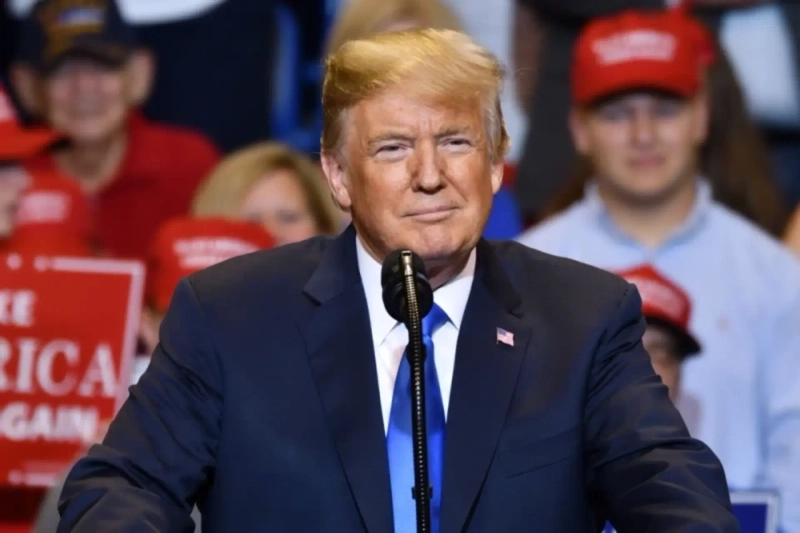
U.S. President Donald Trump is pressuring companies to stop calling artificial intelligence AI and instead use SI, short for super intelligence, leaving technology firms scrambling. Some have gone as far as changing product names to align with the White House, while others are trying to preserve brands and technical definitions built over years.
The Wall Street Journal reported on November 4 that Trump argued at the U.N. General Assembly in late September that the term AI makes the technology sound fake and should be replaced with super intelligence. Days later, he signed an executive order changing AI terminology in government documents. Last month, he also warned that people who refuse to use SI would be treated as enemies of the White House.
Executives have even started correcting themselves mid-sentence. Microsoft President Brad Smith, speaking on a podcast last month about technology safety rules, referred to “AI safety — or rather, SI safety.” Microsoft said it uses several terms to describe the technology.
Nvidia CEO Jensen Huang mentioned “the future of super intelligence” in a post on X a day after signing a White House technology safety pledge. But at a conference in Berlin weeks later, he reverted to the old terminology, saying every company in Europe would become an AI company.
Elon Musk moved quickly to embrace the change. He announced that SpaceX would rename its AI division “SpaceXSI.” Tesla also said in a securities filing that SI refers to its existing AI technologies and activities. Salesforce CEO Marc Benioff said the company would rename its AIForce platform SIForce. OpenAI CEO Sam Altman, by contrast, said the company would keep its name because “brands do not change easily.”
Corporate documents still overwhelmingly favor AI. Among S&P 500 companies that used related terms in earnings releases, securities filings and press releases from September 29 to November 2, 188 of 206 used AI more than 90% of the time. Eleven companies used both terms, while seven used SI more than 90% of the time. Even in the most recent week, only five of 119 companies that referred to the technology used super intelligence.
Super intelligence already has a distinct technical meaning. It refers to hypothetical AI with cognitive abilities that exceed those of the most capable humans. Trump is trying to use the term as a label for the whole field. That leaves companies trying to satisfy the president while still describing the technology accurately and protecting their brands.
Brendan Steinhauser, chief executive of the nonprofit Alliance for Safe AI, said companies are trying to avoid appearing to oppose the White House while keeping the existing terminology. The group also said it would not change its name. Mixed usage continues even around the White House. First lady Melania Trump’s Facebook account recently used AI in a post introducing a student computing competition.
Oh Se-seong, Hankyung.com reporter sesung@hankyung.com

Korea Economic Daily
hankyung@bloomingbit.ioThe Korea Economic Daily Global is a digital media where latest news on Korean companies, industries, and financial markets.