US Lawmakers Push 3 China Chip Curbs, Raising Pressure on Samsung, SK Hynix Plants
Summary
- The US Congress is pushing to strengthen export controls on China by including the AI Overwatch Act, Chip Security Act and MATCH Act in the National Defense Authorization Act.
- If the MATCH Act expands controls on semiconductor equipment exports to China to cover equipment from allied countries, Samsung Electronics and SK Hynix could face a heavier burden in bringing equipment into and maintaining it at their China plants.
- Weaker Chinese investment in AI semiconductors and data centers could weigh on memory demand, while limits on Chinese rivals’ expansion of advanced memory production could benefit South Korean companies.
Forecast Trend Report by Period


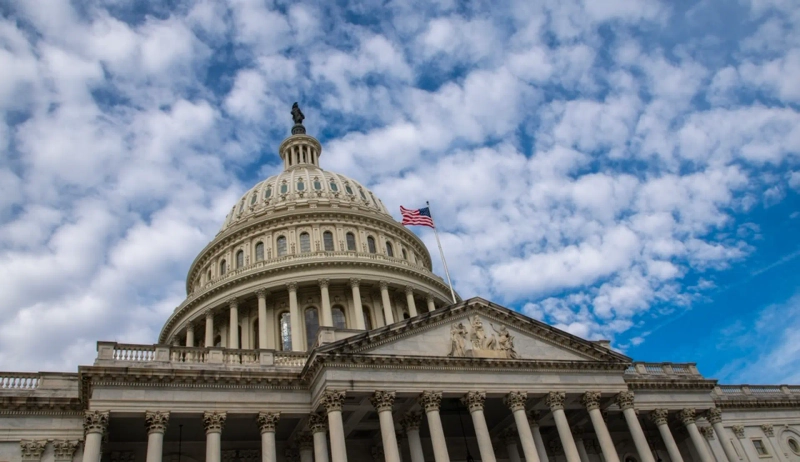
The US Congress is moving to tighten export controls aimed at blocking China’s access to advanced semiconductors. The measures would extend beyond US-made AI chips to manufacturing equipment from allied countries, a step that could affect operations at Samsung Electronics Co. and SK Hynix Inc. plants in China.
The Wall Street Journal reported on November 11 that key Republican and Democratic lawmakers are seeking to fold the AI Overwatch Act, the Chip Security Act and the MATCH Act into the National Defense Authorization Act, or NDAA. Calls to close loopholes in semiconductor export controls have grown after allegations surfaced linking Nvidia Corp. Chief Executive Officer Jensen Huang to Chinese intelligence agencies.
The AI Overwatch Act would strengthen congressional oversight of exports of advanced AI semiconductors to countries of concern such as China. The measure would require the administration to notify Congress in advance of export-license decisions and allow lawmakers to block them. The Chip Security Act is focused on adding location-tracking functions to advanced semiconductors slated for export, with the aim of preventing rerouting through third countries and smuggling.
The bill with the biggest implications for South Korean companies is the MATCH Act. If allied countries fail within 150 days to show progress in aligning with US controls on semiconductor equipment exports to China, the measure would allow Washington to impose export restrictions on equipment from those countries if it uses US technology, software or components. The goal is to expand rules that previously applied only to US companies to allied suppliers as well, tightening the equipment supply chain serving China.
For Samsung Electronics and SK Hynix, that could raise the burden of bringing equipment into their China plants and maintaining it. Depending on how broadly the rules define covered equipment and facilities, the companies could also face limits on capacity expansion or process conversions. If Chinese AI companies struggle to secure semiconductors and scale back data-center investment, memory demand could also come under pressure.
At the same time, limits on the expansion of advanced memory production by Chinese rivals could strengthen the competitive position of South Korean companies. Still, tighter Chinese access to AI chips alone does not guarantee stronger memory demand for Samsung Electronics and SK Hynix. The actual impact will depend on the scope of the restrictions, any exemptions and the direction of AI investment outside China.
Passage of the bills is not assured. Legislative talks have been delayed by disagreements over the Iran war and defense spending tied to the NDAA. Final negotiations will determine whether the three bills are included and how strict the rules will be.

YM Lee
20min@bloomingbit.ioCrypto Chatterbox_ tlg@Bloomingbit_YMLEE