Calls Intensify in Congress for Tougher U.S. Semiconductor Export Controls
Summary
- Calls are growing in the U.S. Congress to strengthen semiconductor export controls.
- Three bills related to semiconductor export controls have been introduced: the AI Oversight Act, the Semiconductor Security Act, and the Match Act.
- Elizabeth Warren and some Republicans strongly support restrictions on exports of advanced semiconductors to China.
Forecast Trend Report by Period


Warren: Chips Bound for China Must Be Blocked at the Source
Republicans Also Say the Case Against Regulation Has Weakened
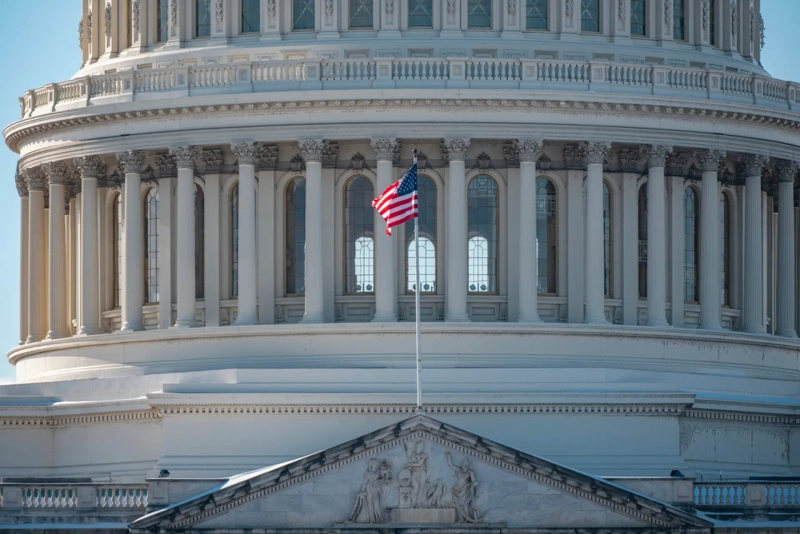
Calls are growing in Washington to tighten U.S. controls on semiconductor exports after the scandal involving Nvidia Chief Executive Officer Jensen Huang. The issue is increasingly seen as a potential new flashpoint in U.S.-China tensions.
According to people familiar with Washington policy discussions, the Trump administration as of November 11 has taken a somewhat more flexible approach to semiconductor export controls than former President Joe Biden's administration.
In particular, the administration initially banned Nvidia's exports to China, then allowed them under an unusual arrangement requiring the government to collect what the article described as a transit fee equal to 25% of revenue. The strategy treated semiconductor export controls less as a national security matter than as a bargaining chip in trade negotiations.
But opposition to that approach has been building in Congress since the Huang scandal. Three bills related to semiconductor export controls have been introduced in Congress: the AI Oversight Act, the Semiconductor Security Act and the Match Act, which would unify control standards.
The AI Oversight Act would temporarily ban sales of cutting-edge chips, including Blackwell models, to China and other countries. The Semiconductor Security Act would require safeguards to verify that exported chips are not being illegally diverted to China, Russia and other destinations.
The Match Act would allow the U.S. to impose unilateral controls if allied countries fail within 150 days to align their standards on semiconductor manufacturing equipment with those of the U.S.
Sen. Elizabeth Warren, a Democrat from California who co-sponsored the AI Oversight Act, has taken a hard line, arguing that exports of the most advanced semiconductors to China should be banned outright. House Democratic Leader Hakeem Jeffries also voiced strong support for restrictions on semiconductor exports to China.
A similar current is emerging among Republicans. Rep. Brian Mast of Florida, chairman of the House Foreign Affairs Committee, said the latest scandal had weakened lobbying against export controls by "100%."
Lee Sang-eun, Washington correspondent, Korea Economic Daily selee@hankyung.com

Korea Economic Daily
hankyung@bloomingbit.ioThe Korea Economic Daily Global is a digital media where latest news on Korean companies, industries, and financial markets.