

KB Securities Says China AI Investment Can Support Memory Demand, Favors Samsung, SK Hynix
Summary
- KB Securities said China’s domestic AI infrastructure investment could support global memory demand despite concerns over US AI regulation.
- Analyst Lee Chang-min said China accounts for about 29% of global memory demand, prompting KB Securities to name Samsung Electronics and SK Hynix as its top picks despite regulatory uncertainty.
- Lee said uncertainty surrounding memory stocks should ease after the new US Congress takes office and the intensity and scope of AI regulation become clearer.
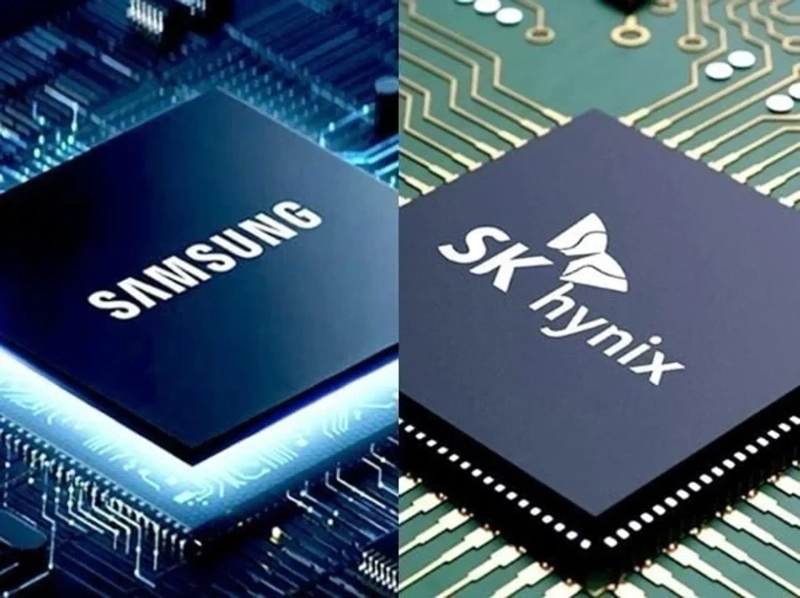
Memory-chip stocks have come under pressure on concerns over US regulation of artificial intelligence, but China’s spending on its own infrastructure could cushion any drop in demand, KB Securities said. The brokerage expects volatility tied to regulatory uncertainty to persist through year-end and named Samsung Electronics Co. and SK Hynix Inc. as its top picks.
In a Nov. 19 report, KB Securities analyst Lee Chang-min estimated that China accounts for about 29% of global memory demand. Even if US AI infrastructure investment slows, China’s independent expansion of spending could continue to underpin memory demand, he wrote.
China faces limits on securing advanced AI accelerators and high-bandwidth memory, or HBM, because of US export controls. In response, it is increasing the use of homegrown accelerators such as Huawei Ascend while also pursuing model compression and optimization and expanding system scale. As access to advanced overseas computing resources becomes more restricted, China’s need to build its own infrastructure will grow, generating memory demand in the process, Lee wrote.
Lee also pointed to restrictions on access to DeepSeek’s services as an example of AI demand that has yet to be met. After reports on Nov. 16 said DeepSeek had limited usage because of a shortage of computing resources, he said the bottleneck in US AI infrastructure is power, while China’s constraint is semiconductor procurement.
Lee assessed the likelihood of the US introducing regulations severe enough to curb AI investment itself as low. Stronger curbs would not only have a major impact on economic growth but also risk leaving the US behind China in AI competition, he wrote. Even under Democrats, regulation would likely stop at tougher conditions such as making data-center operators bear electricity costs.
Recent declines in memory stocks reflect anxiety over the difficulty of reading policy direction rather than concern over finalized regulations, according to Lee. He expects that uncertainty to ease after the new US Congress convenes on Jan. 3 and the intensity and scope of AI regulation become clearer.

YM Lee
20min@bloomingbit.ioCrypto Chatterbox_ tlg@Bloomingbit_YMLEE