SK Securities Sees 2027 Kospi at 4,500-8,800, Says Semiconductors to Lead Despite High Rates
Summary
- SK Securities said a semiconductor-focused investment strategy remains valid as it projected the Kospi to trade in a 4,500-8,800 range next year.
- It said the semiconductor sector’s 12-month forward PBR has fallen back to its 2010-2024 average, making current levels inexpensive relative to earnings power.
- SK Securities recommended maintaining exposure to semiconductors while also adding defensive sectors such as consumer staples to prepare for a possible adjustment in AI investment.
Forecast Trend Report by Period


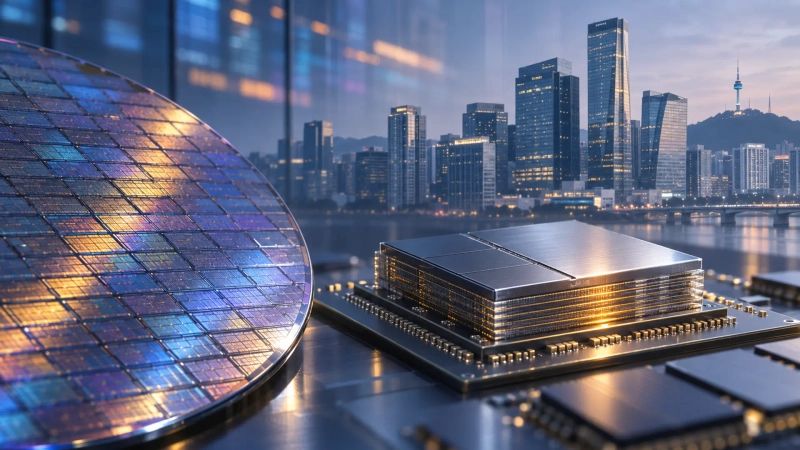
SK Securities said a semiconductor-focused investment strategy should remain effective in South Korea’s stock market next year, arguing that AI-related investment and corporate earnings will continue to concentrate in chipmakers even as high interest rates constrain a recovery in other sectors.
In its 2027 annual stock and macro outlook report released on November 19, the brokerage projected the Kospi to trade in a range of 4,500 to 8,800 next year. It recommended maintaining semiconductor exposure while also adding defensive sectors such as consumer staples to guard against a possible correction in AI investment.
SK Securities cited lower share-price levels relative to earnings as a key attraction for semiconductors. The sector’s 12-month forward price-to-book ratio, or PBR, has fallen back to its 2010-2024 average, leading the brokerage to conclude that current valuations are not particularly burdensome given the industry’s earnings power. “Funding constraints, infrastructure shortages and political issues remain, but current levels are inexpensive given semiconductor companies’ earnings resilience,” SK Securities wrote.
The brokerage also said it would be difficult for another sector to replace semiconductors as the market leader. Concerns about fiscal soundness make it hard for the government to pursue aggressive stimulus, while high interest rates could suppress investment and profit recovery in industries with less direct ties to AI. It added that earnings outlook improvements for non-semiconductor sectors remain limited.
A wider rollout of AI applications is the condition for further upside. SK Securities said memory chips could be re-rated if AI agents and other tools spread in earnest, increasing computing demand. In a separate bullish scenario based on stronger AI-driven productivity gains and higher sector valuations, the brokerage said the Kospi could reach 10,959. It described that figure as a conditional estimate, distinct from its base forecast range.
Still, SK Securities identified the financing process required to expand AI investment as a risk factor. Investment could slow if funding burdens rise for major U.S. technology companies and credit spreads widen. Credit spreads are the gap in yields between corporate bonds and government bonds, and a wider spread indicates higher borrowing costs for companies.
The brokerage therefore said investors should stay concentrated in semiconductors while diversifying downside risk. “Investors need to pay attention to the consumer staples sector, which recently showed a negative daily correlation with the Kospi during sharp declines in the South Korean stock market in July and October,” it said.

YM Lee
20min@bloomingbit.ioCrypto Chatterbox_ tlg@Bloomingbit_YMLEE