PiCK
Prospects of More US Rate Hikes Stoke Recession Warnings, Put AI Investment to a Funding Test
Summary
- Stronger expectations for additional US interest-rate hikes are heightening warnings over a recession and a pullback in AI investment.
- A yield-curve inversion and wider credit spreads could raise AI infrastructure investment costs and send a shock through the stock market.
- Unless AI monetization expectations and liquidity provision recover, investors should strengthen risk management in the stock market to prepare for wider credit spreads and higher investment costs.
Forecast Trend Report by Period


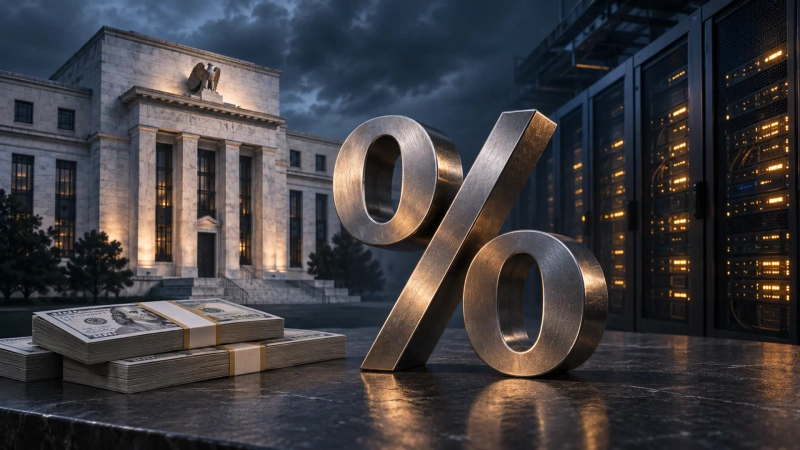
Prospects for additional US interest-rate increases are fueling warnings over a recession and a pullback in AI investment. As tighter policy raises companies' funding costs, any weakening in confidence around AI monetization could also hit equities.
Market attention is shifting beyond whether rates will rise again to how long tight policy will last and how heavily it will weigh on corporate investment and growth. With the possibility of another yield-curve inversion next year, investors are increasingly watching both the risk of an economic slowdown and financing conditions.
In the interest-rate futures market, expectations for further tightening have strengthened. As of Nov. 17, the CME FedWatch tool showed markets fully pricing in a rate increase at the Federal Open Market Committee's December meeting. The probability that the policy rate will be at least 4.50% by September next year rose to 73.6%, up 8.7 percentage points from a month earlier. That implies at least three quarter-point increases from the current 3.75% to 4.00% range.
The fact that tightening expectations have strengthened despite lower crude prices is adding to the concern. Earlier increases in energy costs appear to have spread to other goods and services, reinforcing the view that inflation pressure may not ease quickly even if oil falls.
An inversion between short- and long-term yields is typically interpreted as a warning sign for recession. When short-term yields, which are more sensitive to monetary policy, rise above long-term yields, which reflect growth expectations, companies can face higher financing costs and less room to invest. Kang Hyun-ki, an analyst at DB Financial Investment, wrote that AI infrastructure investment costs could rise if the inversion is followed by a wider credit spread, or the gap between corporate and government bond yields.
There have been periods when a yield-curve inversion did not lead to a recession. Starting in July 2022, the yield on the two-year US Treasury stayed above the 10-year yield for an extended stretch, but no recession followed and credit spreads actually narrowed. Kang attributed that resilience to expectations for AI monetization and ample liquidity, which absorbed the shock.
Whether those conditions will be in place again remains uncertain. Expectations for higher rates are limiting hopes for stronger liquidity, while falling prices for AI services are clouding the monetization outlook. SiliconData's large language model token spending index fell below $1 per 1 million tokens last month. A token is a unit used by AI models to process data.
Kang wrote that the impact of another yield-curve inversion could be limited if expectations for AI monetization recover or if the US government expands liquidity provision. Otherwise, investors should strengthen stock-market risk management in preparation for wider credit spreads and higher investment costs.

YM Lee
20min@bloomingbit.ioCrypto Chatterbox_ tlg@Bloomingbit_YMLEE