CFTC’s Selig Says On-Chain Derivatives Platforms Need Exchange Registration or Partnership for US Retail
Summary
- A US CFTC commissioner said on-chain platforms seeking to offer derivatives to US retail investors must either register directly as an exchange or partner with an existing registered exchange.
- Selig said legal derivatives must be supervised by a market regulator and are not a matter that falls under state jurisdiction.
- He said single-stock perpetual futures should not be classified as security-based swaps solely because they lack an expiration date, and that their structure is similar to other futures contracts.
Forecast Trend Report by Period


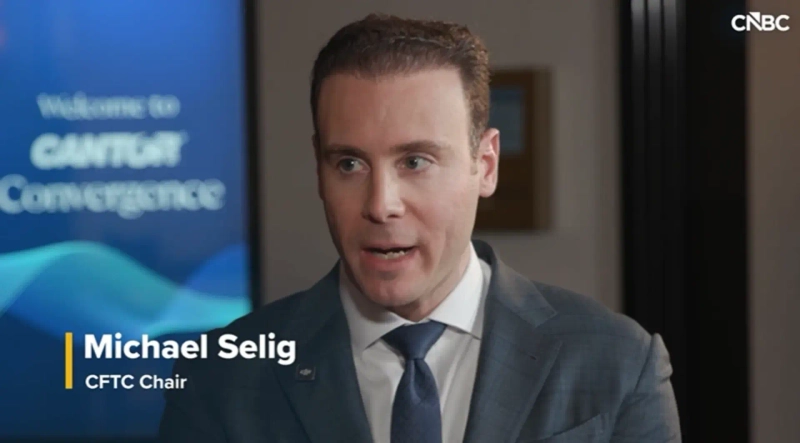
Michael Selig, a commissioner at the US Commodity Futures Trading Commission, said on-chain platforms seeking to offer derivatives to US retail investors must either register as an exchange themselves or partner with an existing registered exchange.
The Block reported on Nov. 19 that Selig made the remarks at the Capitol Crypto Forum, a joint event hosted by The Hill and The Block, when asked how decentralized platforms such as Hyperliquid could enter the US market. “They need to partner with a registered exchange or secure their own exchange,” he said, adding that they could still make full use of the advantages of digital assets and blockchain in the process.
He also said the Justice Department would join the CFTC in responding to state lawsuits against federally registered platforms. The CFTC and the US government sued Utah together last month, and on Nov. 13 filed separate suits against Arkansas and Louisiana. Legal derivatives should be overseen by a market regulator, he said, and are not a matter for state governments.
Selig also said casinos and state-licensed gambling facilities should be distinguished from products overseen by the CFTC. Event contracts in prediction markets are reviewed to determine whether they qualify as derivatives and whether they are vulnerable to price manipulation. He added that proposed Rule 40.11 sets out the public-policy factors regulators consider when reviewing such contracts.
He also said single-stock perpetual futures should not be treated as security-based swaps simply because they have no expiration date. Instead of expiring, those products use funding payments to exchange cash flows each day, a structure he said is very similar to the variation margin used in other futures contracts. He added that the products are designed as futures, not as swaps or security-based swaps.

Doohyun Hwang
cow5361@bloomingbit.ioKEEP CALM AND HODL🍀