PiCK
$119.8 Billion Left Korea Last Year, Kaia Chair Says, Warning K-Blockchain Risks Foreign Dependence
Summary
- Suh Sang-min said dependence on foreign mainnets is draining national wealth, digital sovereignty, and economic value overseas.
- Speakers said reliance on foreign mainnets could increase vulnerabilities in financial infrastructure, making it necessary to strengthen domestic blockchain mainnet capabilities and shared infrastructure.
- Participants said South Korea should foster an open K-blockchain ecosystem through a jointly funded corporation with majority domestic ownership and the government’s institutional support.
Forecast Trend Report by Period


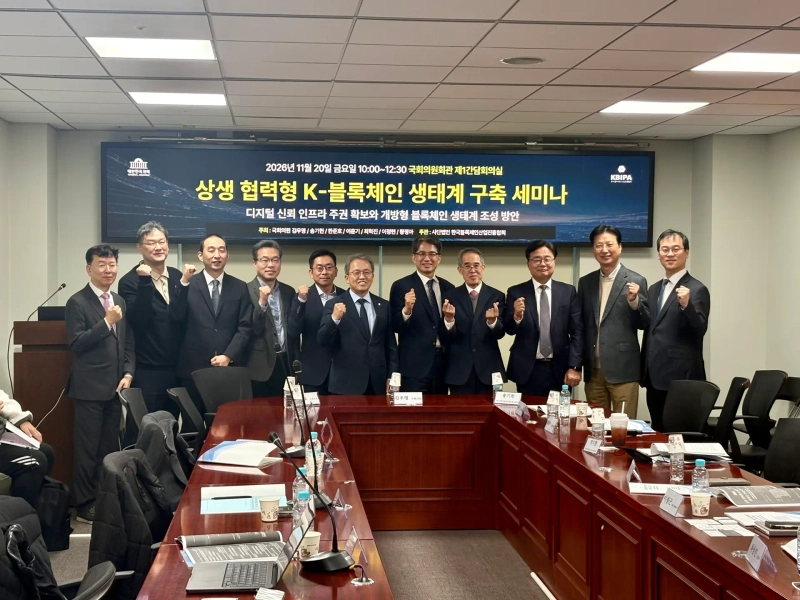
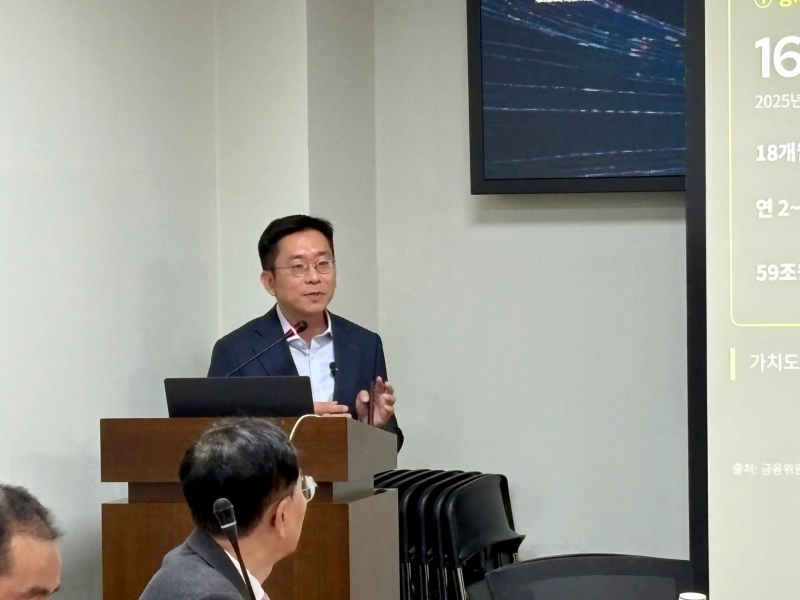
Suh Sang-min, chairman of the Kaia DLT Foundation, said at a seminar at the National Assembly in Seoul's Yeouido on November 20 that excessive reliance on overseas mainnets has become a matter of national wealth and digital sovereignty. Economic value is flowing abroad, while control over core national infrastructure also rests overseas, he said. Suh delivered a presentation titled “Designing K-Blockchain: Open Shared Infrastructure, Not Closed Localization” at the seminar on building a mutually beneficial K-blockchain ecosystem.
Suh estimated that economic value flowing overseas from South Korea’s domestic digital-asset industry last year totaled about 165.35 trillion won, or $119.8 billion. He said annual outflows linked to the use of dollar stablecoins issued by foreign companies alone could amount to 200 billion won to 300 billion won, or about $145 million to $217 million.
Dependence on foreign mainnets could undermine sovereignty over financial and trust infrastructure, Suh said. Overseas foundations can decide blockchain fees and rule changes, and disruptions on those networks could impair domestic services.
Proposal Calls for Jointly Funded Corporation
Concerns were also raised that domestic companies’ reliance on foreign mainnets could become entrenched. Han Jung-suk, a professor at Seoul National University’s business school, said in a presentation on “Infrastructure Dependence in Korea’s Blockchain Industry and Digital Trust Sovereignty” that even if competition is fierce at the outset, barriers to entry can emerge once a user base is established, weakening competition. Even when a better alternative appears, existing networks can be hard to replace if users cannot move together.
Han also outlined the risks of dependence on foreign mainnets. Vulnerabilities in shared infrastructure can spread across the broader financial system, he said. Disruptions in operating, access and settlement systems shared by multiple services could simultaneously restrict transactions and collateral transfers. He added that support should be concentrated on shared infrastructure with broad spillover effects, including strengthening domestic blockchain capabilities tied to real demand such as won-based settlement and collateral management.
Speakers also proposed establishing a jointly funded corporation to foster domestic blockchain mainnets. Suh said South Korea needs a joint-investment entity in which domestic shareholders hold a majority stake to support K-blockchain development. Setting up the corporation and coordinating investment could take time, but such a structure would help secure neutrality and accountable management.
Large companies and financial and public institutions could participate as anchor users, while the government and the National Assembly could serve as market builders, he said. Small and midsize companies and startups could join as innovation partners. A mainnet will gain real use and grow only when the interests of the corporation’s stakeholders are aligned with the blockchain’s growth, he added.
Song Ki-heon Says Blockchain Is Tied to National Competitiveness
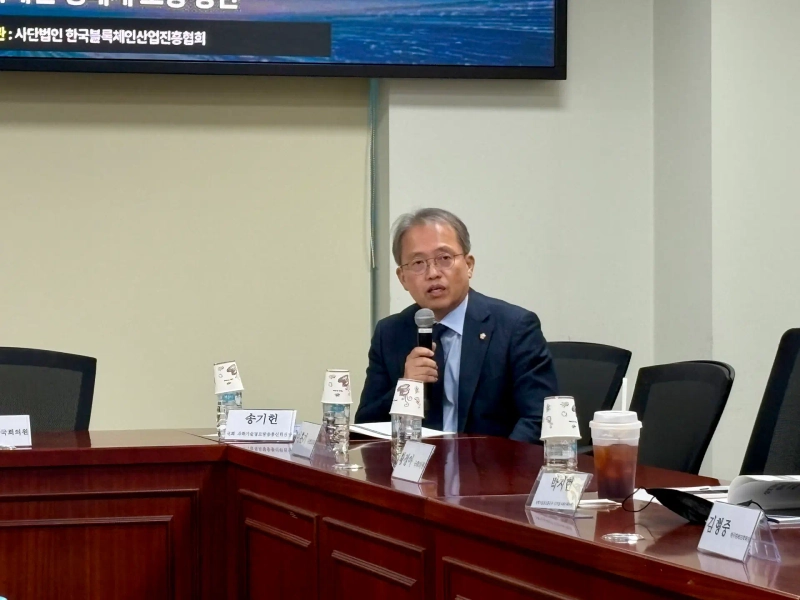
The ruling Democratic Party also voiced support for those concerns. Song Ki-heon, a Democratic Party lawmaker who chairs the National Assembly’s Science, ICT, Broadcasting and Communications Committee, said at the seminar that who designs and operates the foundations of blockchain technology is directly tied not only to industrial autonomy but also to national competitiveness.
To secure leadership in the digital industry, South Korea must reduce excessive dependence on overseas platforms and lay the groundwork for domestic technologies and companies to grow, Song said. That is why institutional support is needed for an open ecosystem that is not dependent on any one company, cooperation among diverse participants and global interoperability.
Democratic Party lawmaker Kim Woo-young said in opening remarks that if South Korea lacks the capacity to design and operate core foundational technologies on its own, it will ultimately face the limits of merely placing services, like a tenant, on infrastructure built by others. Blockchain is also deeply tied to the remit of multiple ministries, he said. The Ministry of Science and ICT and the Financial Services Commission, along with other ministries, need to work closely under a single policy roadmap to properly foster the industry.
The government said it would refine the design of its blockchain support policies. Park Ji-hyun, a director in the Digital Society Planning Division at the Ministry of Science and ICT, said during a panel discussion that because blockchain is a foundational technology, it could be used in a variety of ways in the public sector if regulations are eased. The ministry will work to address necessary and difficult issues while gathering feedback from the field, she said.
Park added that it was disappointing that support budgets had not increased sharply, as they have for artificial intelligence, and that deregulation had been delayed in some areas. She said the ministry would work with related agencies, including the Financial Services Commission, to find ways to help domestic blockchain companies grow further.

JOON HYOUNG LEE
gilson@bloomingbit.ioCrypto Journalist based in Seoul