South Korea Seeks 20% Cap on Crypto Exchange Major Shareholders, Drawing Property-Rights Backlash
Summary
- The Financial Services Commission said it is pushing a plan to cap the combined stake of major shareholders of cryptocurrency exchanges and their related parties at 20% in principle.
- The industry said the measure could infringe on existing shareholders’ property rights and increase the influence of minority shareholders as governance shifts.
- In particular, exchanges including GOPAX and Bithumb could see other shareholders gain a larger voting share if the largest shareholder faces voting-rights restrictions, while limits on overseas companies’ exercise of management control could lead to international investment disputes.
Forecast Trend Report by Period


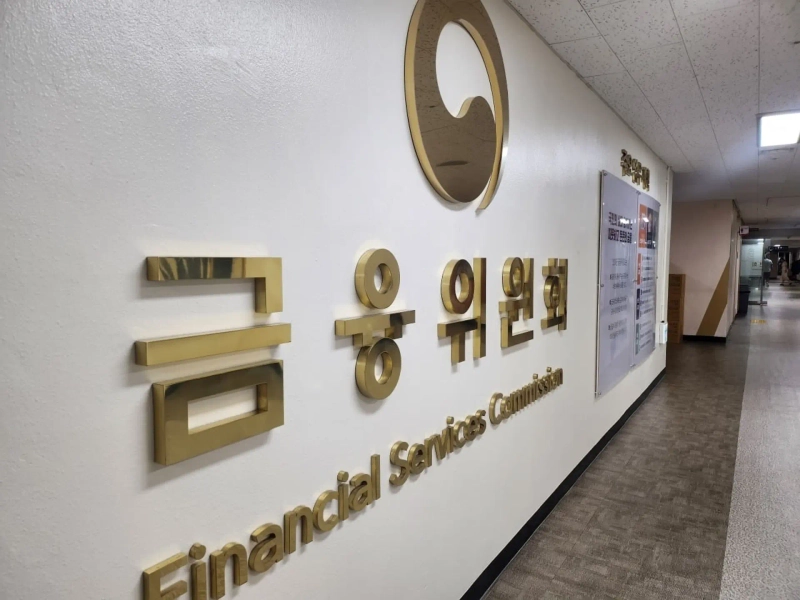
South Korea’s Financial Services Commission is pushing a plan to cap combined holdings by major shareholders of cryptocurrency exchanges and their related parties at 20% in principle. The industry says the move could infringe on existing shareholders’ property rights, while the rule’s effectiveness could vary depending on each exchange’s ownership structure.
Under the proposed Digital Asset Innovation and User Protection Act released by the FSC on November 24, the combined stake of a crypto exchange’s largest shareholder and related parties would in principle be capped at 20%. Financial companies that receive FSC approval would be allowed to hold as much as 34% under an enforcement decree.
The FSC says the measure is needed because the number of domestic crypto exchange accounts has surpassed 10 million, making it necessary to disperse ownership and strengthen the public nature and neutrality of exchange operations. The ownership limit was modeled on stockholding restrictions for alternative trading systems, or ATSs.
After a grace period, voting-rights restrictions could be imposed on holdings above the cap, and corrective orders could be issued for violations. The proposal does not include a separate provision mandating forced share sales.
The industry argues that applying ownership caps retroactively to existing exchanges that grew with private capital could fuel controversy over property rights. The National Assembly Research Service has previously said that forcing the disposal of legally acquired shares without sufficient public-interest grounds could raise constitutional concerns.
Questions are also being raised about whether dispersed ownership would actually improve transparency in exchange operations. There are concerns as well that if financial authorities gain greater influence over changes to business rules, the pace of new token listings or the adoption of new trading methods could slow.
The rule’s impact could also differ significantly depending on each exchange’s ownership structure. At Dunamu and DigitalX, for example, where a single shareholder holds an overwhelmingly dominant stake, restricting voting rights on part of that holding may not materially alter control.
By contrast, exchanges such as GOPAX and Bithumb, where other shareholders already hold meaningful stakes alongside the controlling shareholder, could see minority investors gain relatively more influence if the top shareholder’s voting rights are curtailed.
At GOPAX, Binance owns 67.45% of Streami, the exchange operator, meaning a 34% voting-rights cap would sharply narrow the gap with other shareholders. At Bithumb, restrictions on the voting rights of Bithumb Holdings, the largest shareholder, could also increase the relative weight of other shareholders’ votes.
Some in the industry are also raising the possibility of international investment disputes if overseas companies that have already acquired South Korean exchanges are later restricted from exercising management control.

Minseung Kang
minriver@bloomingbit.ioBlockchain journalist | Writer of Trade Now & Altcoin Now, must-read content for investors.