China Memory Orders Drop; Eugene Says Samsung, SK Hynix Rebound Depends on North America Absorbing Demand
Summary
- Chinese memory chip orders declined, but how quickly North American customers absorb that drop will be a key variable for the shares of Samsung Electronics and SK Hynix, the report said.
- As US export controls on China and other regulations expand, supply restrictions to China are unlikely to lead directly to weaker global demand because North American cloud companies still face a shortage of computing resources, it said.
- The scale of China's demand slowdown and the pace of North American absorption remain uncertain, but if that pickup in North American buying becomes visible, semiconductor stocks could rebound, the report said.
Forecast Trend Report by Period


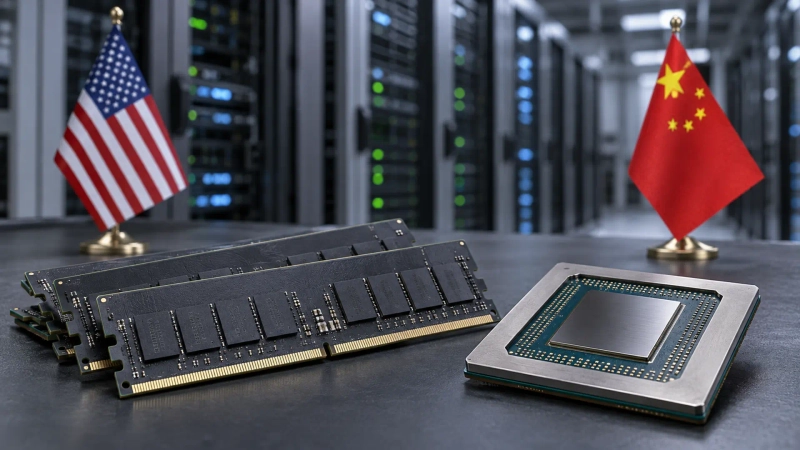
How quickly North American customers absorb the drop in Chinese memory-chip orders is emerging as a key variable for the shares of Samsung Electronics Co. and SK Hynix Inc. US export controls on China are widening, and while North American demand remains strong, the pace of volume reallocation remains uncertain.
Son In-jun, an analyst at Eugene Investment & Securities, said on November 26 that some Greater China hyperscalers have cut memory orders, creating a clear divergence from North American customers. Supply-chain bottlenecks are also delaying server buildouts, pushing back memory orders as well.
He cited disruptions in procuring graphics processing units and high-bandwidth memory as reasons for weaker Chinese demand. Lower returns on data-center investment than in North America, limited capacity for investment, expanding server DRAM supply from China-based ChangXin Memory Technologies, or CXMT, and weak Android smartphone sales were also among the factors.
The scope of US restrictions is expanding from direct semiconductor exports to the use of overseas computing resources. Son said the Bureau of Industry and Security at the US Commerce Department has announced rules restricting remote access to advanced semiconductors through overseas data centers. The Remote Access Security Act, or RASA, which would codify those measures, has passed the House and is pending in the Senate.
The AI Overwatch Act, the Semiconductor Security Act and the MATCH Act are also variables. The bills would tighten controls on export licenses, chip smuggling, and the supply and maintenance of semiconductor manufacturing equipment. Whether they are included in the final version of the fiscal 2027 National Defense Authorization Act is set to be decided in December negotiations.
Still, Son said limits on shipments to China are unlikely to translate directly into weaker global demand. North American cloud companies are still facing shortages of computing resources. Even if supply to China is restricted, North American customers could absorb a substantial share of those volumes, he said.
He also pointed to near-term uncertainty, saying the scale of China's demand slowdown and the speed at which North American customers absorb the redirected volumes remain difficult to gauge. If that absorption becomes visible, concerns over a demand gap could ease and shares of semiconductor companies including Samsung Electronics and SK Hynix could rebound, he added.

YM Lee
20min@bloomingbit.ioCrypto Chatterbox_ tlg@Bloomingbit_YMLEE