US Uses Korea’s Mega Projects and National Growth Fund to Bolster Tariff Case
Summary
- The US said it had tentatively proposed a base tariff of as much as 15% for South Korea and warned that it could raise the tariff to 25% if the agreement is not implemented.
- The report said South Korea’s three mega projects, semiconductor cluster investment, National Growth Fund, and official export credit were cited as grounds for overcapacity.
- The Ministry of Trade, Industry and Energy said the move appears to reflect an increase in South Korea’s trade surplus with the US, but added that Washington had reaffirmed its intention to honor the 15% tariff promised in return for $350 billion in South Korean investment in the US.
Forecast Trend Report by Period


15% Tariff Cap Kept in Place
Tariff Could Rise to 25% if Deal Isn’t Implemented
USTR Releases 194-Page Report
"Overcapacity Fueled by Government Support and Intervention"
Industrial Policy, Including Mandatory SME Lending, Criticized
Some See It as Legal Groundwork for US Tariff Litigation
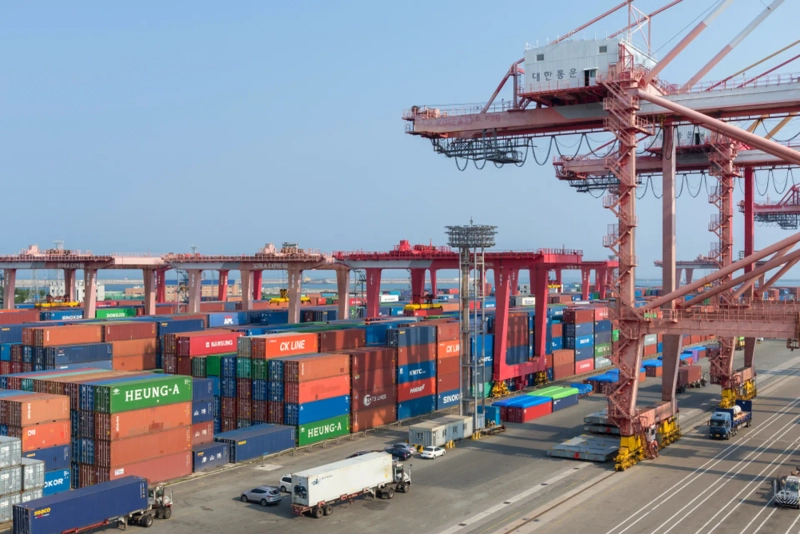
The Office of the US Trade Representative released a report based on its Section 301 investigation into “overcapacity tariffs,” blaming a broad swath of South Korea’s industrial, financial and labor policies for excess production. The move sets up a fresh clash between the two countries’ trade authorities.
On Nov. 25, the US tentatively proposed a base tariff rate of as much as 15% for South Korea. It also warned that the tariff could rise to 25% if Seoul fails to implement a trade agreement. The report has fueled analysis that Washington is both reinforcing the legal basis for restoring reciprocal tariffs after a February ruling found the International Emergency Economic Powers Act unconstitutional and building another source of trade pressure on South Korea.
US Also Targets Southwestern Semiconductor Plans
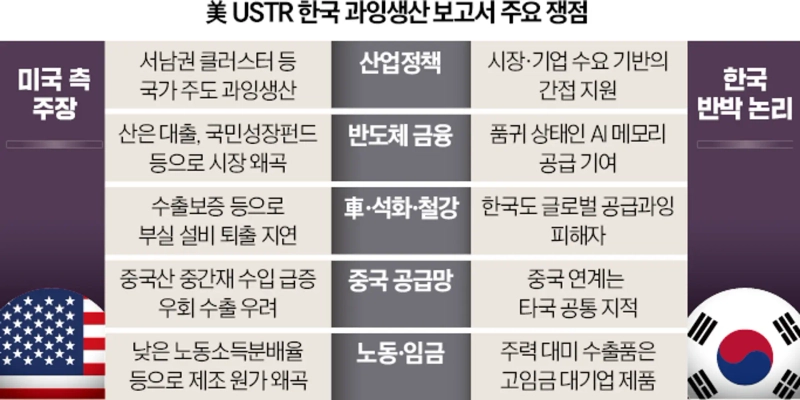
Jamieson Greer, the US trade representative, was asked in a media interview immediately after the report’s release what justified the tariffs. He replied that South Korea had announced multiple government-support and infrastructure plans this summer. “This is not a response to demand but government intervention, and it increases supply without overseas consumption,” he said. He pointed specifically to South Korea’s “three mega projects” — semiconductors, physical AI and AI data centers — as emblematic examples of overcapacity.
The 194-page report on South Korean overcapacity cited the country’s current-account surplus last year of $123.1 billion, equivalent to 6.6% of gross domestic product, as evidence of excess production. It also pointed to South Korea’s trade surpluses with the US in automobiles, at $38.9 billion, and information and communications technology, at $16.7 billion. The report argued that investment as a share of GDP from 2021 through 2025, at 31.4%, far exceeded the US level of 21.6%, contributing to overcapacity.
Support for advanced industries such as semiconductors also came under scrutiny. The report cited memory-capacity expansions by Samsung Electronics Co. and SK Hynix Inc., along with an investment plan announced in July for a semiconductor cluster in Gwangju and South Jeolla Province. It also criticized the Lee Jae-myung administration’s state agenda for setting targets for artificial intelligence and semiconductors without corresponding goals for consumption or wages. The report took issue with a Korea Development Bank loan to Samsung Electronics of about $579 million, a National Growth Fund worth about $108.7 billion, and $44 billion in official export credit.
It also said an April tariff-response package, export guarantees and delays in petrochemical restructuring were preventing inefficient facilities from leaving the market. Mandatory lending to small and medium-size enterprises was described as keeping marginal companies alive. The report further argued that manufacturing’s labor share, at 22.8% — about half the US level — and restrictions on the movement of foreign workers were distorting costs.
Preparing for Litigation Over Trump Tariffs
The overcapacity reports the USTR released for 14 economies, including South Korea, are being interpreted as part of a strategy to address legal risks in the US. Unlike a forced-labor report published in June that grouped 60 countries together, this one followed consultations after the agency collected about 1,070 written submissions from individual economies over eight months. Publication was held back for Norway and Mexico, both of which run trade deficits with the US.
The first roughly 50 pages of the Korea report read almost like a legal brief, drawing on the purpose of the 1988 Omnibus Trade and Competitiveness Act, economics papers and World Trade Organization documents. A Ministry of Trade, Industry and Energy official said at a Nov. 26 briefing that the report appears largely aimed at preparing for litigation over overcapacity tariffs after US courts ruled the IEEPA unconstitutional. The official added that Washington had broadly listed Korean industrial policies to secure procedural legitimacy.
One particularly sensitive point is that the upper limit on tariffs South Korea could face if it fails to implement the agreement is 25%, higher than the 20% ceiling applied to Japan and the European Union. A trade ministry official said that, given Taiwan — which is enjoying a semiconductor boom — was also assigned a 25% cap, the move appears to reflect South Korea’s growing trade surplus with the US. The official added that, in prior communications with the USTR, Washington had reaffirmed its intention to honor the 15% tariff promised in return for South Korea’s planned $350 billion investment in the US when the two sides make a final decision on a bilateral tariff agreement.
Before any final overcapacity tariff is set, written comments are due by Jan. 5 next year and a congressional hearing is scheduled for February. The government plans to argue that South Korea’s industrial policies are unrelated to overcapacity because they provide indirect support based on market and corporate demand. It also plans to coordinate its response with domestic industries and highlight that Korean investment in the US contributes to local production, with the aim of locking in a final tariff ceiling of 15%.
Kim Dae-hoon, Hankyung.com reporter daepun@hankyung.com

Korea Economic Daily
hankyung@bloomingbit.ioThe Korea Economic Daily Global is a digital media where latest news on Korean companies, industries, and financial markets.