PiCK
Bitcoin Heads for Worst November Since 2018, With Some Seeing Drop to $40,000 Range
Summary
- U.S. spot Bitcoin ETFs posted their largest monthly net outflow since launching in January 2024.
- Experts said Bitcoin could fall further to $53,200 if it breaks below its June low and $60,000.
- Galaxy Digital and Bloomberg said forced selling could spread as mining costs surge and miners' profitability deteriorates, potentially pushing Bitcoin down to about $48,500.
Forecast Trend Report by Period



U.S. spot Bitcoin exchange-traded funds are on track for their worst month since launching in January 2024. Some firms have also withdrawn earlier calls that the crypto bear market had ended.
According to on-chain analytics firm SoSoValue, spot Bitcoin ETFs posted net outflows of $5.39 billion from Nov. 1 through Nov. 25, based on data released Nov. 26. That was the largest monthly outflow since the products debuted in January 2024. The funds have also recorded net outflows for five straight weeks.
Bitcoin's price has shown similar weakness. Data from CoinGlass showed the token has fallen about 20.5% this month. That marks its steepest November decline since 2018, when it dropped 36.4%. It is also the biggest monthly decline so far this year. If the slide continues through the end of November, the loss could exceed June's 20.4% drop.
That has strengthened the view that Bitcoin has yet to hit bottom. Galaxy Digital recently withdrew the assessment it made last month that the bear market had ended.
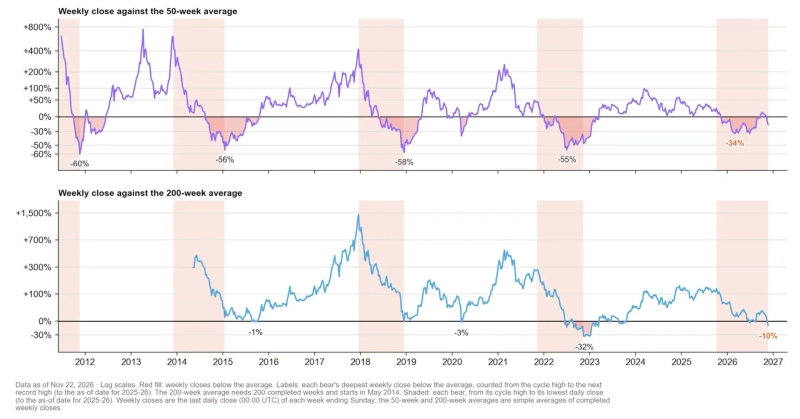
Alex Thorn, head of research at Galaxy Digital, wrote that the firm had concluded last month that Bitcoin's bear market ended in June. Since then, however, Bitcoin has fallen below its 50-week moving average and dropped beneath its June low. He added that there had been no previous case in which Bitcoin reclaimed its 50-week moving average and then made this kind of move, prompting the firm to withdraw its earlier outlook.
Mining Profitability Deteriorates, Raising Risk of Forced Selling
Experts say downside pressure remains strong. One of the main factors is tighter policy in major economies including the U.S.
A CryptoQuant contributor at XWin Research Japan said persistent U.S. inflation, weakness in artificial intelligence-related stocks and subdued investor sentiment were weighing on Bitcoin.
Glassnode said Bitcoin was underperforming stocks and that buying by U.S. investors remained absent. It added that trend-following investors would likely expect further declines. If Bitcoin breaks decisively below $60,000 and posts a close below its June low of $58,500, the decline could extend to its realized price of $53,200.
Selling pressure from Bitcoin miners is also a burden on the market. JPMorgan recently estimated the average cost of mining one Bitcoin at about $86,000. That is nearly 40% above the current price of about $61,500.
Bloomberg reported that worsening profitability in the mining industry could add to downside pressure across the broader crypto market. Some large publicly traded miners have already reduced their Bitcoin holdings, but if losses persist, forced selling to raise cash could spread again.
Some analysts also see Bitcoin sliding into the $40,000 range if the downturn continues. Thorn said that if Bitcoin posts a daily close below $58,525, it would mark a break below a low reached 413 days after the start of the bear market, or later. Applying the additional declines that followed similar breaks in the past, he said Bitcoin could fall to about $48,500 in the mildest case and to about $28,200 based on the median decline.

JOON HYOUNG LEE
gilson@bloomingbit.ioCrypto Journalist based in Seoul