South Korea’s $7.2 Billion Market Rescue Fund ‘Won’t Be Enough’ as Calls Grow for Short-Selling Ban
Summary
- The government’s stock-market stabilization fund and special monitoring of illegal short selling have failed to ease growing complaints from retail investors, who say additional market-support measures such as a temporary ban on short selling are needed.
- Authorities have taken a cautious stance, saying a blanket ban on short selling could hurt market liquidity, foreign fund flows and South Korea’s bid to join the MSCI developed-markets index, but online stock communities are seeing repeated calls from retail investors for a ban.
- Kiwoom Securities and a brokerage executive in Seoul’s Yeouido financial district said policymakers need to consider steps such as a temporary ban on short selling as a short-term response, given severely weakened investor sentiment and the risk of panic selling.
Forecast Trend Report by Period


Retail investors’ demands for a short-selling ban explode
‘What good is MSCI if small investors are wiped out?’
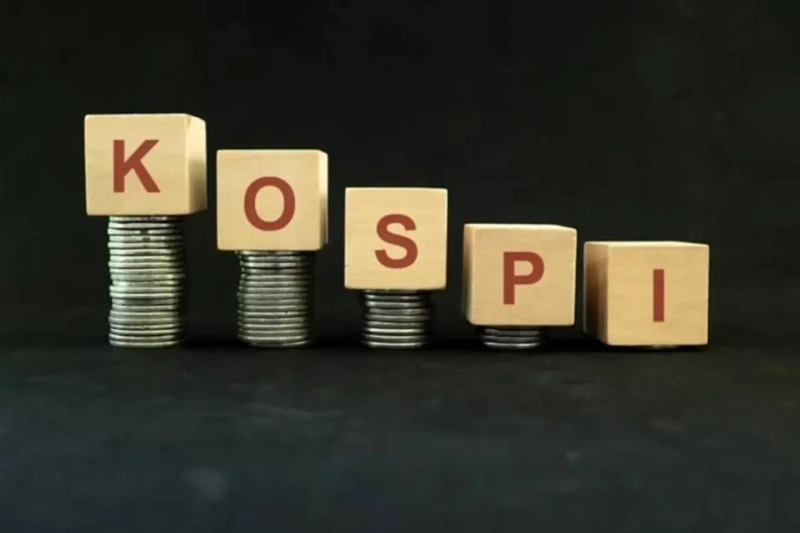
The South Korean government has moved to indirect support measures, including activating a stock-market stabilization fund and stepping up oversight of illegal short selling. But dissatisfaction is spreading among retail investors, who say those steps are not enough to halt falling share prices. While South Korea’s long-term goal of joining the MSCI developed-markets index remains important, some market participants say authorities should consider additional stabilizing steps such as a temporary ban on short selling as market anxiety spreads.
According to the financial industry on Nov. 28, Lee Hyoung-il, acting deputy prime minister and finance minister, held a joint meeting of relevant agencies the previous day at the government complex in Seoul’s Jongno district to review market conditions. Participants examined trends in domestic and overseas financial and foreign-exchange markets as well as the property market, and reviewed the implementation of market-stabilization measures. Those attending included Financial Supervisory Service Governor Lee Chan-jin, presidential senior secretary for economic growth Moon Shin-hak, Bank of Korea Governor Shin Hyun-song, Financial Services Commission Chairman Lee Eok-won and First Vice Land Minister Kim Yi-tak.
At the meeting, officials reviewed the phased implementation of market-stabilization steps announced on Nov. 22, including preparations to deploy the stock-market stabilization fund, relaxed limits on the size of listed companies’ share buyback orders and a special crackdown on illegal short selling. In particular, the Financial Supervisory Service and the Korea Exchange said they would operate a three-month intensive monitoring period and respond strictly to violations tied to short selling.
Still, the package did not include direct trading restrictions such as a temporary short-selling ban, prompting louder calls from investors for further action. South Korea has previously imposed temporary short-selling bans during periods of heightened market stress, including the 2008 global financial crisis, the 2011 European sovereign-debt crisis and the 2020 Covid-19 pandemic. In November 2023, authorities also imposed a full ban, citing efforts to eradicate naked short selling and improve the system.
Officials at the meeting said the joint task force on illegal short selling, which began operating on Nov. 24, would closely monitor daily market trends and unusual developments and deal sternly with suspected violations. They added that authorities would maintain readiness to take additional steps depending on market conditions.
Short selling is an investment strategy in which traders borrow shares and sell them first, then buy them back at lower prices to return them and profit from the difference. Those calling for a ban argue that when stock prices are plunging, concentrated short selling can intensify downward pressure and increase losses for retail investors. Individual traders, who are often at a disadvantage to foreign and institutional investors in both information and capital, suspect short selling operates as an unfair trading tool that accelerates declines.
Authorities, however, have been cautious. They worry that a blanket ban on short selling could weaken price discovery, reduce market liquidity and hurt foreign fund flows as well as South Korea’s efforts to join the MSCI developed-markets index. The government has also taken the view that a full ban could be seen as limiting foreign investors’ access to the market and rolling back the openness of the capital market.
Even so, online stock communities are filling with calls from retail investors for additional measures, including a temporary short-selling ban. One investor wrote that there was little point in joining the MSCI developed-markets index if ordinary people were being wiped out, adding that such a policy would only benefit foreign investors in the end.
Another investor complained that a 10 trillion won stock-market stabilization fund would accomplish little, saying the benchmark index could fall further and that the current approach effectively leaves only foreign investors free to short the market. Other posts argued that nothing would work without a short-selling ban and that South Korea needed measures on Taiwan’s scale.
Taiwan’s Financial Supervisory Commission recently tightened regulations to respond to a sharp stock-market decline, including banning short selling below the previous session’s closing price. The measure exempted hedging transactions by securities firms and futures companies. It marked the first time since 2015 that Taiwan’s financial authorities had adopted such steps. The regulator also raised the minimum short-selling margin ratio for listed and over-the-counter securities to 150% from 130%.
Kiwoom Securities said Taiwan, like South Korea, is highly dependent on semiconductors and is intensifying market-stabilization measures, including support funds and short-selling curbs. The brokerage said South Korea needs to weigh the costs and benefits of a short-selling ban because inclusion in the MSCI developed-markets index is a key policy objective. Still, it said some form of short-term policy response may be needed given the current risk that severely depressed investor sentiment could trigger panic selling.
A senior executive at a securities firm in Seoul’s Yeouido financial district said authorities should consider a temporary short-selling ban during periods of extreme market shock. Such a move would carry costs, but delaying action solely because of the long-term goal of MSCI inclusion would be inappropriate when retail investor trust is breaking down and market anxiety is spreading uncontrollably.
Kang Kyung-ju, Hankyung.com reporter memory@hankyung.com

Korea Economic Daily
hankyung@bloomingbit.ioThe Korea Economic Daily Global is a digital media where latest news on Korean companies, industries, and financial markets.