Mid- to Long-Term Bonds Are the Key for Next Year as Fixed Income Regains Favor [Bite-Size Brief]
Summary
- He emphasized that next year’s key bond-investment themes will be mid- to long-term bonds, high interest income, and avoiding credit risk.
- He said that amid a surge in corporate bond supply from AI-related companies, a strategy of cherry-picking high-quality bonds is more favorable than simply tracking an index.
- He said investors in overseas bonds should closely examine currency-hedging costs, whether to choose hedged or unhedged exposure, and the tax treatment of monthly payouts as well as the possibility of principal loss.
Forecast Trend Report by Period


Jeong Ji-seo, head of Global Management Team 1 at Woori Asset Management
Maximizing Interest Income in an Era of High Rates While Separating Winners From Losers
Buy Bonds Like You Shop at an Outlet, Not a Department Store
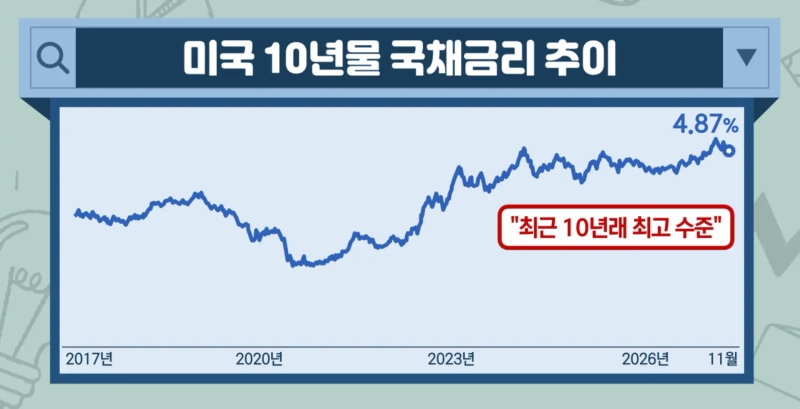
Bonds are drawing renewed attention as volatility rises in domestic and global equity markets, giving investors a chance to earn relatively stable interest income. The yield on the 10-year U.S. Treasury is nearing 5%, effectively the highest level since the 2000s.
Jeong Ji-seo, head of Global Management Team 1 at Woori Asset Management, said gains from rising bond prices as yields fall still matter, but current yield levels alone are enough to deliver satisfactory returns. The starting point, she added, is fundamentally different from periods when bonds offered only 2% to 3% in interest income.
● Next Year’s Focus: Mid- to Long-Term Bonds and Avoiding Credit Risk
The main macro factor that shook the bond market this year was crude oil. Tensions in the Strait of Hormuz drove oil prices higher and stoked inflation, prompting the Federal Reserve to raise rates by 25 basis points in September after inflation came in above expectations. Yields appeared to pause briefly as oil retreated on news of U.S.-Iran talks. That respite was short-lived as negotiations stalled and concerns over attacks on Saudi energy facilities added fresh pressure to both oil prices and yields.
Even so, the consensus view is that additional rate increases next year will not deal a major shock to the bond market. Futures tied to the two-year U.S. Treasury yield, a gauge of expectations for the policy rate, are already at 4.8% to 5%, reflecting the possibility of three to four additional rate increases through the first half of next year. U.S. banks also see the upper end of yields in the mid- to upper-4% range, making scenarios far above 5% appear unlikely.
Jeong said the priority now is not to bet on the direction of rates, but to capture elevated interest income while investing in products that can avoid risks that may emerge if higher rates persist. On the risk of price declines from further rate increases, she said interest income on 10-year bonds is currently around 5%, meaning that even if yields rise about 1 percentage point and prices on five- to six-year bonds fall, the coupon income already secured would be enough to offset the loss.
Maturity strategy should also be aligned with the rate cycle. Short-term bonds or floating-rate notes tend to work better during rate-hiking periods. When rates are held at high levels, mid- to long-term bonds with maturities of five to seven years are generally more attractive. Ultra-long bonds tend to outperform in easing cycles. Woori Asset Management’s Bontobel Global High Plus Bond fund is maintaining duration at about five years and focusing on accumulating interest income through mid- to long-term bonds, based on the view that rates have already reached an appropriate upper bound of 5% and are more likely to remain on hold.
● Cherry-Picking Gains Favor as AI-Related Corporate Bond Supply Surges
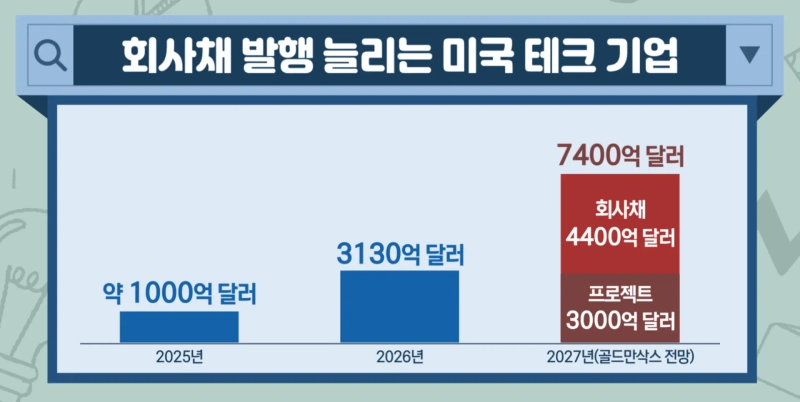
Direct bond investing remains difficult for retail investors in practical terms. The main alternatives are passive bond ETFs that track broad indexes and active public bond funds that select individual securities. In the U.S. this year, AI-related companies have raised massive sums through corporate bond issuance, sharply increasing supply. That has helped support the lower bound for yields.
Jeong said prolonged high rates raise the risk that some of those companies could run into credit problems, including an inability to make interest payments. That means a shakeout may be starting in the corporate bond market. In an environment of indiscriminate issuance, products that cherry-pick high-quality bonds may have an advantage over those that simply track an index. Bontobel Global High Plus Bond is focused on identifying undervalued bonds whose underlying business fundamentals remain intact but whose prices have fallen sharply because of broad market sentiment and overselling.
A representative example was the 2023 Credit Suisse crisis. The market shock led to indiscriminate selling in bonds issued by other Swiss banks, with some securities trading at prices down 30%. Even though profits and debt-servicing capacity remained solid, prices fell excessively. The fund bought those bonds at depressed levels and sold them about two years later after prices returned to normal, generating strong returns.
The fund has also taken advantage of price and spread gaps across issuance markets. One German parts maker issued both dollar- and euro-denominated bonds. As markets were rattled by concerns over U.S. tariffs, the dollar bonds fell 10% more than the euro bonds. Judging that the company’s fundamentals had not changed, the fund bought the dollar bonds instead of the euro bonds. Within four months, the price gap had narrowed by half, making a significant contribution to performance.
Jeong said the key is spotting the price difference between buying the same bond at a department store and buying it at an outlet. A low price alone does not make a bond undervalued. The core strategy is to identify bonds that are inexpensive while still offering an appropriate spread and solid fundamentals.
● Asset-Allocation Appeal and How to Choose Currency Hedging
Bonds are safer assets than stocks. They suit investors seeking higher returns than bank deposits but lower volatility than equities. For investors uncomfortable with the sharp market swings seen this year, bonds can serve as a solid portfolio buffer.
When investing in overseas bond funds, the choice between currency-hedged and unhedged products should be based on an investor’s overall portfolio rather than a view on exchange rates. Investors who already have large allocations to U.S. stocks or dollar deposits may prefer hedged products to avoid excessive currency exposure. Those with heavier holdings in domestic stocks or deposits may choose unhedged products as a way to diversify into dollars. Investors should keep in mind, however, that hedged products typically carry annual currency-hedging costs of about 1%.
Jeong cited three indicators investors should watch closely when investing in bonds: U.S. two-year Treasury futures, which help gauge market expectations for the policy rate; the yield on the 10-year U.S. Treasury, which serves as the risk-free rate and benchmark yield; and high-yield and corporate bond spreads, which indicate whether market risk is widening or easing.
● Bond Funds Can Also Lose Principal; Investors Should Scrutinize Monthly Payouts and Taxes
Jeong also underscored the risks of bond fund investing. Bonds are often mistaken for principal-guaranteed products because they are considered safe, but they are not deposits. Rising rates or wider spreads can push bond prices lower and leave investors with negative returns. For unhedged overseas bond funds, exchange-rate swings must also be taken into account.
On popular monthly dividend products, she said net asset value can fall by as much as the amount distributed each month because the payouts come out of fund assets. Investors should check carefully whether those distributions are being paid from their original principal or from actual interest income generated by the bond fund.
Taxes are another issue investors should not overlook. Monthly dividend products are taxed whenever interest income is paid, and investors with annual financial income above $14,400 may become subject to South Korea’s comprehensive financial income tax. Unless an investor specifically needs monthly cash flow, a reinvestment class that automatically puts distributions back into the fund may be a better alternative, reducing the tax burden while preserving the benefits of compounding.
Jeon Hyo-seong, Hankyung TV reporter zeon@hankyungtv.com

Korea Economic Daily
hankyung@bloomingbit.ioThe Korea Economic Daily Global is a digital media where latest news on Korean companies, industries, and financial markets.