PiCK
South Korea’s $7.7 Billion Stock-Market Stabilization Fund Plan to Take Shape Next Week Ahead of Nov. 30 Emergency Meeting
Summary
- The government and financial authorities said they are reviewing plans to activate a 10 trillion-won stock-market stabilization fund, including the timing and size of capital deployment.
- The report said the fund is designed to respond to a sharp market selloff by buying ETFs tracking the Kospi and Kosdaq indexes and raising money through capital calls.
- Citibank Korea said 1 trillion won to 2 trillion won could be deployed first as early as December, and that the fund’s signaling effect in easing stock-market volatility could grow the faster the money is deployed.
Forecast Trend Report by Period


Investment management panel to discuss timing and size of capital deployment on Nov. 29
FSC to review additional funding capacity with five major financial groups and KDB
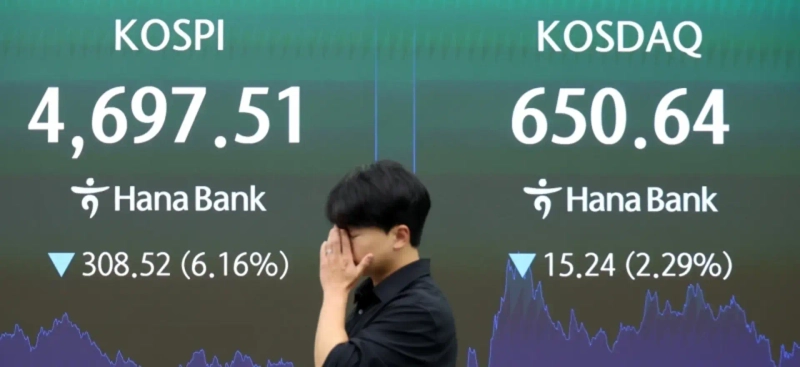
A plan to activate South Korea’s stock-market stabilization fund, valued at 10.76 trillion won ($7.7 billion), is set to take shape next week. The Financial Services Commission will summon major financial holding companies and Korea Development Bank on Nov. 30 to review preparations for deploying the fund and their capacity for additional contributions. The move is aimed at securing buying firepower in case another wave of selling hits local equities after a pullback in US artificial intelligence and semiconductor shares spilled over into South Korea’s market.
According to the financial industry on Nov. 28, the fund’s investment management committee will meet on Nov. 29 to discuss operational plans, including the timing and scale of capital deployment. The following day, an emergency market-stability review meeting chaired by Financial Services Commission Chairman Kim Byoung-hwan is set to include the heads of KB, Shinhan, Hana, Woori and NH NongHyup financial groups, as well as Korea Development Bank. KDB is checking with participating institutions on when they can pay in their existing commitments and whether additional contributions are possible. The actual timing and scale of any purchases will be decided after officials assess market conditions.
The government began preparing to activate the fund as volatility in South Korea’s stock market widened sharply, with concerns over returns on AI investment and funding coinciding with tighter US controls on semiconductor exports. After foreign investors net sold about 1.9 trillion won ($1.36 billion) of shares on the Kospi on Nov. 25, the benchmark index closed down 6.16% at 4,697.51. Two days later, on Nov. 27, it rebounded 4.34% to 4,915.68. Financial authorities believe that if share prices fall too quickly, forced selling from margin accounts could amplify the decline.
The stock-market stabilization fund is a mechanism under which financial companies and related institutions jointly provide money to buy shares during sharp market selloffs. The committed amount arranged during the 2020 coronavirus crisis was 10.76 trillion won ($7.7 billion). If deployment becomes necessary, the money will be raised through a capital call asking participating institutions to pay in their pledged amounts. If the fund is activated this time, one option under discussion is to buy exchange-traded funds tracking major indexes such as the Kospi and Kosdaq.
If funds are deployed, it would mark the first such intervention since the 2008 global financial crisis, after an 18-year gap. Citibank Korea said 1 trillion won to 2 trillion won ($717 million to $1.43 billion) of existing commitments could be deployed first as early as December because arranging additional pledged contributions will take time. “If the stock-market stabilization fund is reactivated, its signaling effect could ease market volatility to some extent,” Kim Jin-wook, an economist at Citibank Korea, said. He added that the larger the committed amount and the faster the deployment, the stronger that signaling effect could be.

Doohyun Hwang
cow5361@bloomingbit.ioKEEP CALM AND HODL🍀