

Summary
- The Bank of Japan indicated the possibility of starting the 2025 rate hike at 0.5% and further increases in the second half.
- It was reported that yen weakness and price increase risks are key factors in the rate hike decision.
- Political uncertainties and exchange rate fluctuations were pointed out as major obstacles to rate hikes.
If Raised to 0.5% in January, Additional Hikes After July
Even with Two Increases, Over 3% Point Difference with US
"Yen Weakness Pressure Will Continue"
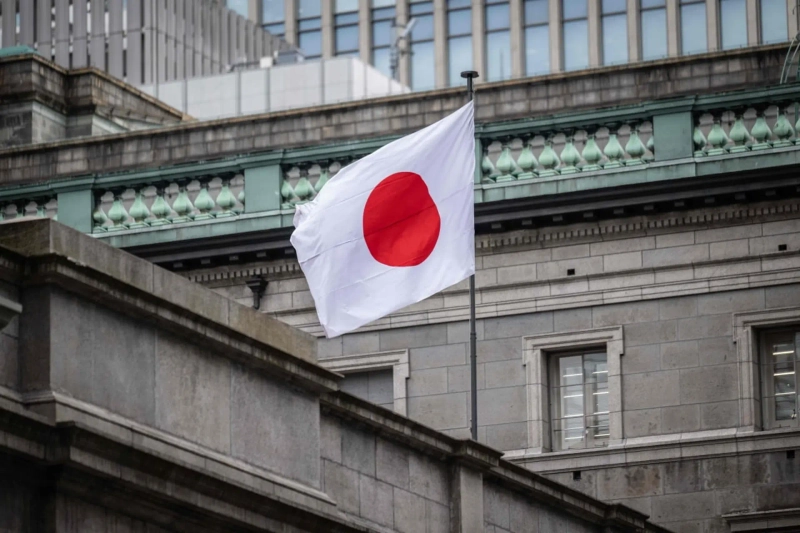
2025 is expected to be a year when the Bank of Japan raises its benchmark interest rate to levels not seen in Japan for the past 30 years. The term of Kazuo Ueda, who took office in 2023, will also reach its midpoint. While the US has begun cutting rates, political and economic uncertainties are growing with Donald Trump's re-election as president. On the 31st, the Nihon Keizai Shimbun summarized the Japanese economy for the coming year in three points.
① When Will Rates Rise
Governor Ueda has consistently stated, "If economic and price conditions continue to improve, it will be necessary to raise rates and adjust the degree of monetary easing accordingly." The points for the next rate hike decision include Japan's spring labor-management negotiations and the economic policy uncertainties of the Trump administration. Although the results of the spring labor negotiations will be out in March, a Bank of Japan official noted, "We can gauge the atmosphere from year-end and New Year management statements and the branch managers' meeting on January 9."
On January 20, President Trump will take office. As the main members of the administration solidify and the inauguration approaches, policy directions are expected to become more concrete. Although the Bank of Japan held off on additional rate hikes at the December monetary policy meeting, a Bank of Japan official expressed the opinion that "a January rate hike is quite possible." This is because the uncertainties that the Bank of Japan is concerned about are likely to gradually resolve.
Within the Bank of Japan, there is an opinion that the pace of rate hikes will be "about once every six months." If rates are raised to 0.5% annually in January 2025, additional rate hikes are expected after July. Both households and businesses in Japan are still not accustomed to a 'world with interest rates.' The last time Japan's rates exceeded 0.5% annually was in 1995, 30 years ago. Even among Bank of Japan executives, there are not many who know 'rates exceeding 0.5% annually.' After raising to 0.5% annually, a scenario of carefully examining the impact on households and businesses and further raising to 0.75% annually after autumn is possible.
② Will Yen Weakness and Price Increases Continue
Initially, the market saw a high possibility of a December rate hike. The Bank of Japan's decision to 'maintain the status quo' gave it a dovish appearance. As a result, the yen's weakness accelerated in the foreign exchange market. On the 26th, the yen briefly rose to the 158 yen per dollar range, marking the lowest level for the yen in about five months.
Japan's Consumer Price Index (CPI), excluding fresh food, exceeded the target of 2% year-on-year for 2 years and 8 months until last November. The Bank of Japan is focusing on the rise in service prices, which have a high labor cost component. The service price increase rate maintained a solid level, recording 1.5% consecutively in October and November.
Governor Ueda pointed out, "In some cases, the impact of exchange rates on prices may be greater than before." Exchange rate policy is under the jurisdiction of the Ministry of Finance. However, in interpreting monetary policy, exchange rates, which affect prices and consumption, are attracting market attention. Since the July meeting, where additional rate hikes were decided, citing the risk of price increases due to yen depreciation, voices within the Bank of Japan have frequently started to pay attention to exchange rate movements.
The US Federal Reserve recently projected two rate cuts in 2025. Even if the Bank of Japan raises rates twice, the US-Japan rate difference at the end of 2025 will be over 3 percentage points. A Bank of Japan official stated, "The pressure for yen weakness will continue," adding, "We have no choice but to take a fighting stance (that rate hikes can occur at any time)."
③ Obstacles to Rate Hikes
President Trump's policies. For example, it is still unknown to what extent tariffs will be imposed on which countries and whether existing statements will be implemented. As the new administration begins to move, it is expected to become more concrete over time.
President Trump's tariff policies and aggressive fiscal measures act as inflationary pressures in the US. If US rates soar and yen weakness and dollar strength progress, the rise in import prices will also increase inflationary pressures in Japan. In this case, the Bank of Japan will raise rates according to the price situation.
Japan's political situation is also a focus. Former Prime Minister Fumio Kishida expressed understanding of the Bank of Japan's financial normalization. The lifting of the negative rate in March and the additional rate hike in July by the Bank of Japan did not face significant opposition from the political sphere. Prime Minister Shigeru Ishiba also shows respect for the Bank of Japan, but the Liberal Democratic Party and Komeito coalition is a minority government. Depending on future political developments, the direction of monetary policy may also be politically discussed.
On the 26th, the Bank of Japan, for the first time, estimated and announced the impact of future rate hikes on its profits. In the strictest scenario of raising rates by 0.75 percentage points annually to 2%, a deficit of up to 2 trillion yen is expected around 2027-2028. Since most of the Bank of Japan's profits are paid into the national treasury, the Bank of Japan's finances are also a field of high interest for the political sphere.
Tokyo Correspondent: Kim Il-kyu black0419@hankyung.com

Korea Economic Daily
hankyung@bloomingbit.ioThe Korea Economic Daily Global is a digital media where latest news on Korean companies, industries, and financial markets.