

PiCK
Policies That Only Benefit 'Foreign Coins' with Retail Investors' Money [Issue+]
Summary
- President Trump's pro-crypto policy is fostering the growth of domestic coin companies in the U.S., activating the American cryptocurrency market.
- In contrast, South Korea's negative stance is causing domestic cryptocurrency companies to face reverse discrimination, leading to an outflow of capital and talent overseas.
- Domestic exchanges rarely list Kimchi Coins, raising concerns that they are serving as liquidity channels for coins created by foreigners.
Trump's 'Pro-Crypto' Policy Stance
U.S. Supports Growth of 'Domestic Coin Companies'
South Korea Discriminates Against 'Domestic Coin Companies' Due to Regulatory Scrutiny
Some Domestic Exchanges Have '0 Listings' of Kimchi Coins
Korean Companies and Individuals Conduct Business Overseas in Silence
Regulatory Reform is Urgently Needed to Prevent Talent and Capital Outflow
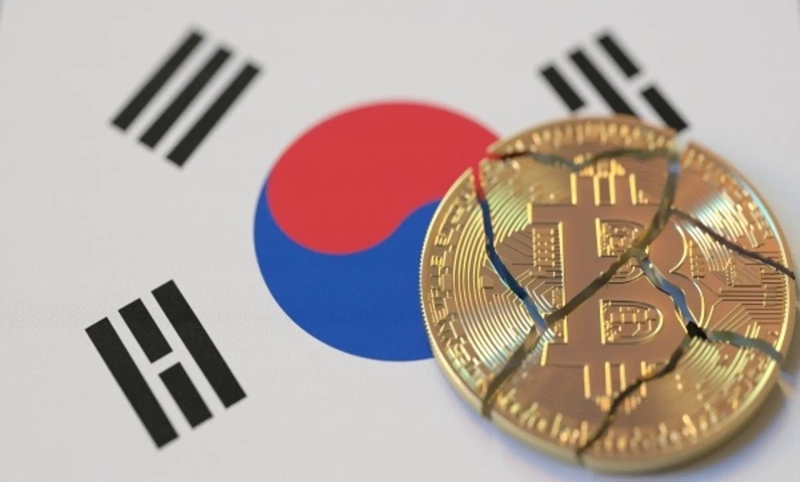
In the Korean market, which boasts the highest cryptocurrency trading volume in the world, a distorted trend continues where trading support is primarily provided for coins created by foreigners. The main reason is that domestic exchanges are avoiding listing so-called Kimchi Coins (coins associated with domestic companies or Koreans) due to regulatory scrutiny.
As a result, most domestic companies are establishing corporations overseas, paying taxes abroad, and continuing their cryptocurrency business on foreign exchanges. Ironically, the negative stance of the authorities on the cryptocurrency market is accelerating the outflow of domestic capital and fattening the wallets of foreign coin entrepreneurs.
This is contrary to the U.S., where President Donald Trump is leading the charge to support domestic cryptocurrency companies, and if this policy stance continues, there are concerns that the domestic cryptocurrency industry may quickly lose its competitiveness.
U.S. "Making America the Crypto Capital" vs. South Korea "Can't Even Open Corporate Bank Accounts"
In the U.S., which is leading the cryptocurrency market, there is a trend of supporting U.S.-based cryptocurrency companies following President Trump's inauguration under the 'America First' policy.
For instance, at President Trump's inauguration dinner, Ripple's CEO Brad Garlinghouse and Chief Legal Officer Stuart Alderoty were invited to have direct conversations with Vice President-elect James David Vance.
President Trump and Melania Trump launched their official meme coins, 'Official Trump' and 'Melania Coin,' on the U.S.-issued cryptocurrency 'Solana,' and major U.S. exchanges like Coinbase and Kraken listed them immediately upon release.
Additionally, in the U.S., cryptocurrency-based ETFs launched by the world's largest asset manager, Black Rock, are actively traded, and corporate investments are permitted. Nasdaq-listed Strategy and NYSE-listed KULR Technology Group are using idle cash to purchase Bitcoin.
In contrast, in South Korea, companies dealing with cryptocurrencies are often treated as 'criminals' and are frequently denied the opening of bank accounts. Corporate issuance or investment in cryptocurrencies is also impossible. As a result, industry insiders are conducting their cryptocurrency business overseas. Thanks to individual interest, the trading volume of Korean individual investors in cryptocurrencies is at the top globally, but due to the policy stance of the authorities, Kimchi Coins are being discriminated against, and most of the liquidity benefits are going to foreign coins.
Kang Jun-hyun, a member of the Democratic Party, explained, "President Trump is expressing his will to make the cryptocurrency industry a key growth engine of the national economy under the banner of making America the 'crypto capital.' He is actively pursuing pro-crypto policies, such as stockpiling Bitcoin as a strategic reserve asset and establishing a cryptocurrency advisory committee under the presidential office."
Kang pointed out, "In contrast, in South Korea, it has become difficult to conduct cryptocurrency-related business, leading companies to mainly establish corporations overseas, creating employment and added value abroad. Furthermore, financial companies and corporations cannot enter the cryptocurrency market, leading to growth centered on individual investors, which has drawn various criticisms."
Lee Jun-seok, a member of the Reform New Party, criticized, "At one time, South Korea was a key country in the cryptocurrency industry, but some media and politicians dismissed the potential of the cryptocurrency industry as speculation, causing South Korea to lose its status as a key country. The mainstream regulation focuses on suppressing risk factors rather than supporting innovative industries, which is a big problem."
He added, "Due to government regulations, reverse discrimination against domestic cryptocurrency companies has occurred, lowering the competitiveness of the industry itself. Furthermore, domestic projects (cryptocurrency-related companies and personnel) are being driven overseas, and as the global cryptocurrency industry has become part of national competitiveness, we can no longer leave the 'reverse discrimination' situation unattended."
Kim Jae-seop, a member of the People Power Party, emphasized, "South Korea also needs in-depth discussions to align with the U.S. in policy speed and to establish a systematic cryptocurrency system that meets global standards."
Korean Exchanges Become Liquidity Channels for Foreign Coins…'Kimchi Coin' Discrimination Due to Regulatory Scrutiny
Andrei Grachev, founder of the overseas cryptocurrency market maker (MM) DWF Labs, sparked controversy among domestic investors last year by leaving a message on his X (formerly Twitter) saying "Kimchi hehehe." This was a mockery implying that the Korean market absorbs all the dumping volumes of foreign investors.
Arthur Hayes, founder of BitMEX, also openly expressed this perception. When the price of ENA, which he held, stopped rising, he mentioned on his X, "The price of ENA is plummeting, but it's okay. Koreans haven't entered the market yet. When are the Kimchi (Koreans) coming?"
To foreign cryptocurrency company officials, the Korean market is perceived as an 'easy liquidity vending machine.' In contrast, to Korean cryptocurrency company officials, the Korean market is perceived as an 'insurmountable wall.' This is because domestic exchanges are particularly passive in dealing with Kimchi Coins (coins associated with domestic companies or Koreans) due to the regulatory stance.
For example, in the past three months, only 10% of the total listed cryptocurrencies on major domestic cryptocurrency exchange A were Kimchi Coins, and another major domestic cryptocurrency exchange B did not list any Kimchi Coins during the same period. This is why there are concerns that the domestic market is failing to fulfill its original function of capital raising for domestic companies and is being reduced to a 'liquidity channel' for coins created by foreigners.
Lee Jun-seok, a member of the Reform New Party, pointed out regarding this issue, "The defensive operation of companies that should be active across the industry, such as cryptocurrency exchanges, is due to the limited business environment caused by regulatory uncertainty."
He noted that in a situation where regulatory uncertainty is high for cryptocurrencies associated with Koreans or Korean companies, domestic exchanges have come to prefer listing coins of foreign entrepreneurs or foreign companies, where regulatory uncertainty is relatively low.
Lee emphasized, "President Trump is likely to prioritize national interests in all fields, including cryptocurrencies, based on America First. We also need to support Korean projects to be prioritized for listing on domestic exchanges with predictable policies and build global competitiveness based on this."
Min Byung-deok, a member of the Democratic Party, stated, "The biggest problem with domestic regulation is that it did not understand the rapidly changing industry trends and failed to establish a vision for long-term policy. Blockchain technology and digital assets have no borders. We need to develop the ability to create projects that work in the global market by discovering excellent projects."
Reporters Lee Young-min, Lee Jun-hyung, and Lee Soo-hyun from Bloomingbit 20min@bloomingbit.io

Bloomingbit Newsroom
news@bloomingbit.ioFor news reports, news@bloomingbit.io