

PiCK
"Korean Investors Repeatedly Fall Victim to 'Dishwashing Coins'... 'Korean-style Regulation' Needed"
Summary
- Rep. Min Byung-duk emphasized the need for a Korean-style regulatory framework and stated that establishing laws and systems for investor protection is essential.
- Domestic exchanges emphasized that changes in listing structure and cooperation between exchanges are necessary to enhance global competitiveness.
- Kim Min-seung, Head of Korbit Research Center, argued for financial institution market entry and market maker system implementation, stating these are essential for strengthening market stability.
Seminar on Global Competitiveness of Domestic Digital Asset Exchanges
Hosted by Democratic Party Representative Min Byung-duk
Two-stage Legislation and Institutional Entry Needed
To Strengthen Exchange Global Competitiveness
Korea's Complex Regulations Also Criticized
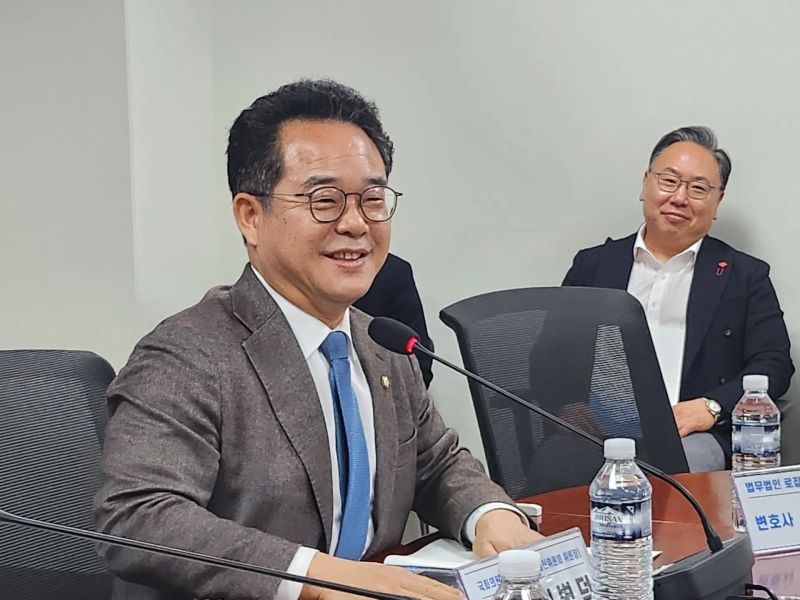
"It is the role of the National Assembly to establish laws and systems so that the digital asset market can establish itself as a sound financial system without losing trust. We must establish a 'Korean-style regulatory framework' that strengthens the responsibilities of exchanges for enhanced transparency, systematically builds supervisory agencies' monitoring systems, and establishes investor protection systems."
Democratic Party Representative Min Byung-duk made these remarks during his opening address at the 'Seminar on Global Competitiveness of Domestic Digital Asset Exchanges' held at the National Assembly Members' Office Building in Yeouido, Seoul on the 12th.
Rep. Min said, "We have neglected a structure where investor protection is vulnerable due to opaque market operations and institutional inadequacies. As seen in the Sui and Avail incidents, some projects were listed on exchanges without proper verification, and investors repeatedly fell victim to 'dishwashing coins' without prior information," urging the establishment of institutional measures to prevent such incidents.
"Structure of Making Money Just Through Listings Must Change"... Emphasis on Industry Cooperation and Structural Changes
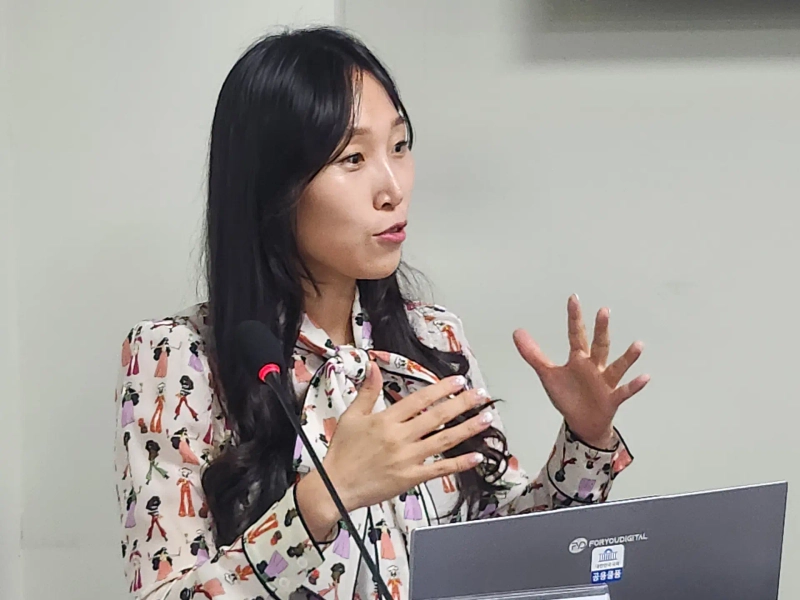
In the following session, it was pointed out that strengthening cooperation between exchanges and structural changes are essential to increase the global competitiveness of domestic exchanges.
Park Hye-jin, CEO of Buyhard, criticized, "After the Terra-Luna and FTX incidents, the global market realized the importance of cooperation and transparent communication, but Korea is still insufficient," adding, "In particular, DAXA, the domestic exchange association, is causing market confusion due to lack of joint response and standard setting, contrary to its founding purpose."
Park further emphasized, "The Korean government should introduce legal mechanisms to enforce cooperation between exchanges and risk management, referring to overseas cases such as Europe's MiCA regulations and Japan's integrated delisting standards."
Lee Jung-yeop, Chairman of the Blockchain Law Society and representative attorney at Law Firm Lojipsa, pointed out the structural problem of exchanges making money through listings. He said, "Domestic virtual asset exchanges make money simply through listings without innovation, similar to pre-selling apartments," and suggested, "There is a need to strengthen related regulations, such as regulating through trusts."
"Second-stage Virtual Asset Legislation Essential... Must Allow Institutional Entry"
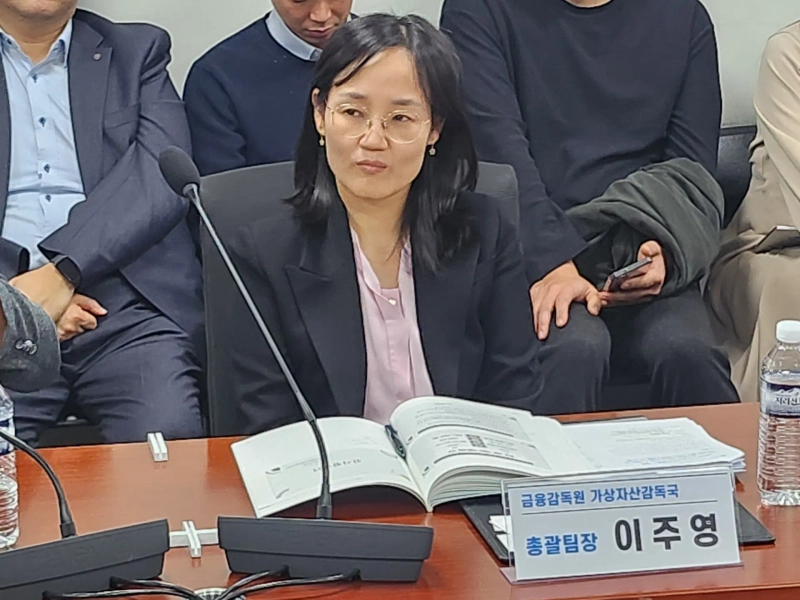
In the discussion held in the latter part of the seminar, voices emerged calling for second-stage virtual asset legislation and financial institution market entry to enhance the global competitiveness of domestic virtual asset exchanges and markets.
Lee Joo-young, Head of the Virtual Asset Supervision Team at the Financial Supervisory Service's Virtual Asset Supervision Bureau, stated, "Since self-regulation by exchanges has limitations, we plan to establish additional user protection measures through second-stage legislation," adding, "We are exploring specific ways to enhance the effectiveness of self-regulation. We are currently researching best practices through a task force, and specific outlines will be available by April."
Kim Min-seung, Head of Korbit Research Center, raised the need for financial institution entry and market maker (MM) allowance in the domestic virtual asset market. Kim argued, "The reason for frequent unexplained price fluctuations and market manipulation in the Korean market is that corporations and financial institutions have long been blocked from entry, allowing abnormal transactions like individual instigation and leading rooms to dominate the market," adding, "Market stability can only be achieved by allowing financial institutions to participate in the market and introducing institutional-level market maker systems through second-stage legislation."
Exchanges Improving User Protection Systems... Criticism That Regulatory Complexity Should Be Improved
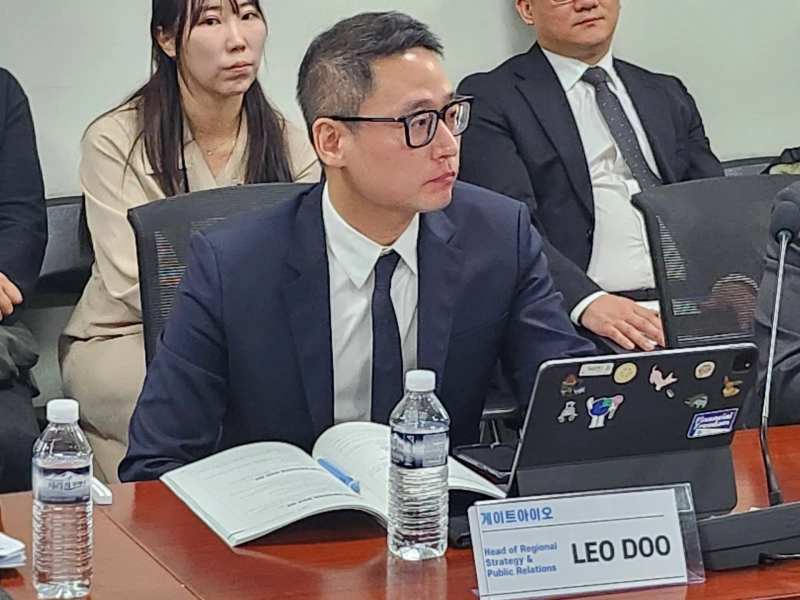
Exchanges stated that they are improving user protection systems above all to enhance global competitiveness.
Leo Doo, Strategic Planning Director at Gate.io, said, "To prevent hacking, we operate an independent trading system, separate hot and cold wallets for dual security, and a Proof of Reserve (PoR) system. We are also discussing the introduction of trusts (custody) for domestic user protection."
Steeve Young Kim, Binance APAC Director, explained, "Binance operates strong user protection policies through user education, internal compliance monitoring, and cooperation with law enforcement agencies," adding, "We plan to continue cooperation with law enforcement agencies in Korea and establish more effective user protection systems through policy exchanges between countries."
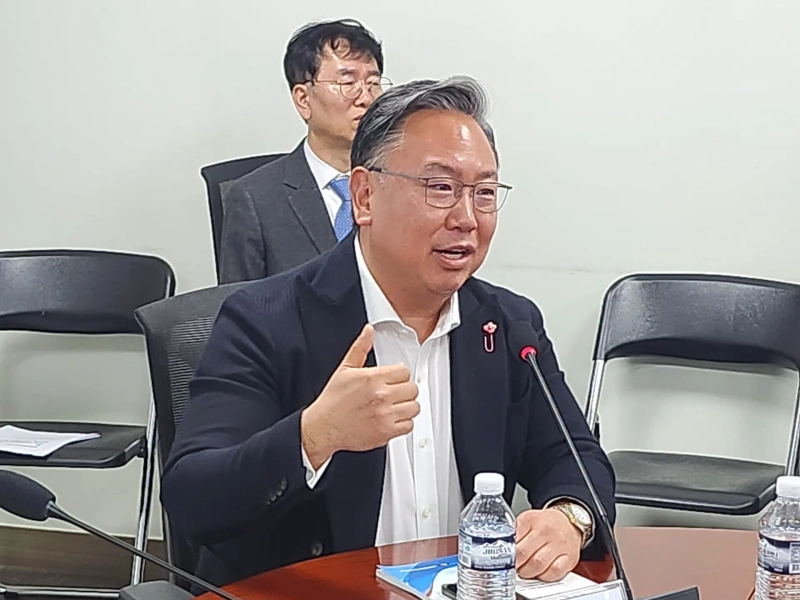
Meanwhile, there was criticism that Korea's complex regulatory environment weakens the global competitiveness of exchanges. Patrick Yoon, Korea Representative of Crypto.com, pointed out, "It took three and a half years to modify our systems because of Korea's special regulations. The biggest problem for global companies entering Korea is having to create a Korea-specific model," adding, "Like major countries such as Singapore and the United States, regulations should be simplified and a business-friendly ecosystem created to allow financial institutions and fintech companies to participate freely."
Lee Young-min, BloomingBit reporter 20min@bloomingbit.io
Lee Soo-hyun, BloomingBit reporter shlee@bloomingbit.io

Bloomingbit Newsroom
news@bloomingbit.ioFor news reports, news@bloomingbit.io