

PiCK
US Tariffs, Highest Since 1909… "Second Great Depression Possible" Bombshell Forecast
Summary
- It was reported that the Trump administration's imposition of high tariffs is expected to raise the average US tariff rate to 22%.
- The implementation of reciprocal tariffs is evaluated to likely cause a decrease in US GDP and global economic recession.
- JP Morgan and Goldman Sachs announced that they have raised the probability of a US recession to 40% and 35%, respectively.
US Enacts High Tariffs with Past Smoot-Hawley Act
Trade Volume Decreases, Deepening Global Depression
Concerns Over US Economic Growth Slowdown if Reciprocal Tariffs Implemented
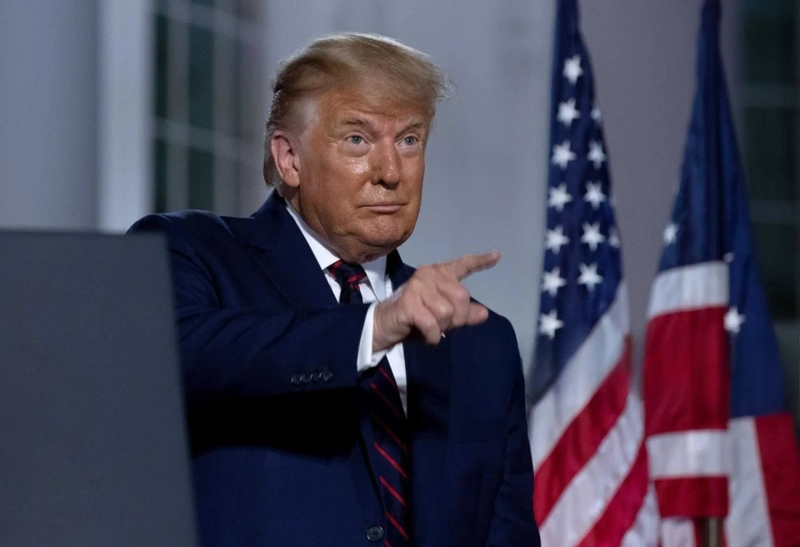
US President Donald Trump announced on the 2nd (local time) the imposition of a 10% basic tariff on all countries and reciprocal tariffs on major trading partners, raising concerns that the global economy could fall into a second Great Depression. If countries retaliate with counter-tariffs, trade volumes could decrease, worsening the profitability of global companies.
Particularly, as the US relies on consumption for two-thirds of its Gross Domestic Product (GDP), there are concerns that if inflation worsens due to tariffs, it will be difficult to avoid a recession.
Highest Tariff Rate Since 1909
According to international credit rating agency Fitch, the high tariffs imposed by the Trump administration are expected to raise the average US tariff rate from 2.5% last year to 22% this year. This is the highest record since 1909 when it hit 23%.
Olu Sonola, head of US economic research at Fitch, expressed concern, stating that "(high tariffs are) a game-changer not only for the US economy but also for the global economy," and that "many countries are likely to fall into recession."
In the past, the imposition of high tariffs by the US was a major factor that exacerbated the global economic depression of 1929. Before the Great Depression of 1929, US farmers were struggling due to a sharp drop in agricultural prices. Politicians pushed for the enactment of the Smoot-Hawley Act to impose high tariffs on foreign agricultural products to protect US farmers. During this process, various industries, including manufacturing, steel, and textiles, lobbied, and the final bill included tariff increases on about 20,000 items. However, as counterpart countries also imposed retaliatory tariffs, global trade volume plummeted, causing greater damage to US manufacturing and agriculture.
Scott Lincicome and Colin Grabow of the free-market-oriented think tank Cato Institute pointed out that "this announcement brings the US average tariff rate to the highest level since the 1930 Smoot-Hawley Tariff Act, a measure that exacerbated the Great Depression."
Inevitable GDP Impact
The imposition of high tariffs is also expected to directly lead to a deterioration in the profitability of US companies. Dan Ives, global head of technology research at Wedbush Securities, assessed that "President Trump's massive tariff policy is worse than the worst-case scenario." This is because tech stocks could face severe profitability pressures due to this measure. He analyzed that decreased demand, supply chain disruptions, and tariff measures related to China and Taiwan are fueling investor anxiety.
The Yale University Budget Research Institute also predicted that reciprocal tariffs would impact the growth rate of the US GDP. If there are retaliatory tariffs from counterpart countries, it is expected that the US GDP will drop by 1 percentage point this year. Yale University analyzed that "(reciprocal tariffs) reduce the real GDP level both in the short and long term, with the impact being greatest during the first two years of implementation." They also added that this decrease in GDP growth rate has the same effect as reducing the size of the US economy by $100 billion to $175 billion annually.
Previously, JPMorgan Chase raised the probability of a US recession from 30% to 40%. Investment bank Goldman Sachs also recently raised it from 20% to 35%.
Opposition Within the Republican Party
There is also dissatisfaction within the Republican Party regarding President Trump's tariff policy. Particularly, there are cracks among Republican lawmakers from states with high agricultural dependence or close ties with Canada.
Immediately after President Trump's announcement of reciprocal tariffs, some Republican senators collaborated with Democrats to pass a resolution to repeal the 25% tariff on Canadian imports by a vote of 51 to 48. The Wall Street Journal (WSJ) evaluated this vote as "an important warning against Trump's efforts to completely overhaul trade policy, regardless of allies or adversaries."
Republican politicians have rarely publicly criticized President Trump when he reduced or abolished several government programs supported by the Republican Party. This attempt by some Republican lawmakers to repeal the Trump administration's tariff plan is interpreted as evidence of significant internal awareness of the issue.
New York Correspondent Park Shin-young/Reporter Lim Da-yeon nyusos@hankyung.com

Korea Economic Daily
hankyung@bloomingbit.ioThe Korea Economic Daily Global is a digital media where latest news on Korean companies, industries, and financial markets.